How Long It Takes
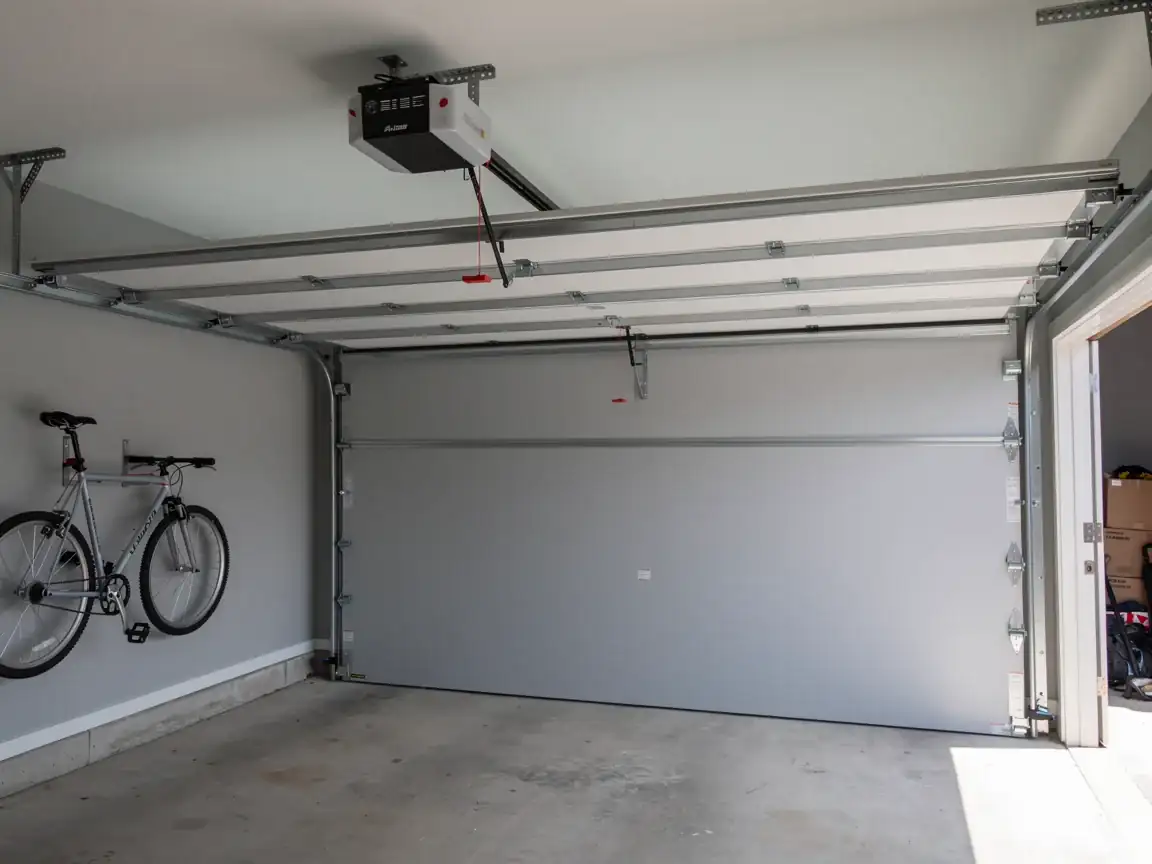
A standard maintenance visit on a single door runs well under an hour once we're on site. Doors from Wildwood's 1992-era construction tend to go faster than older torsion setups because the hardware is more standardized and parts are easier to source than the mismatched systems we find on pre-1970s houses elsewhere in the area. A two-car door with a worn opener chain or a spring close to end of life takes longer, since we're diagnosing beyond the routine checklist. We travel to Wildwood from our Chesterfield location, about 8 miles out, and we build that drive into the appointment window rather than rushing the inspection to make up time.
What the Fix Involves
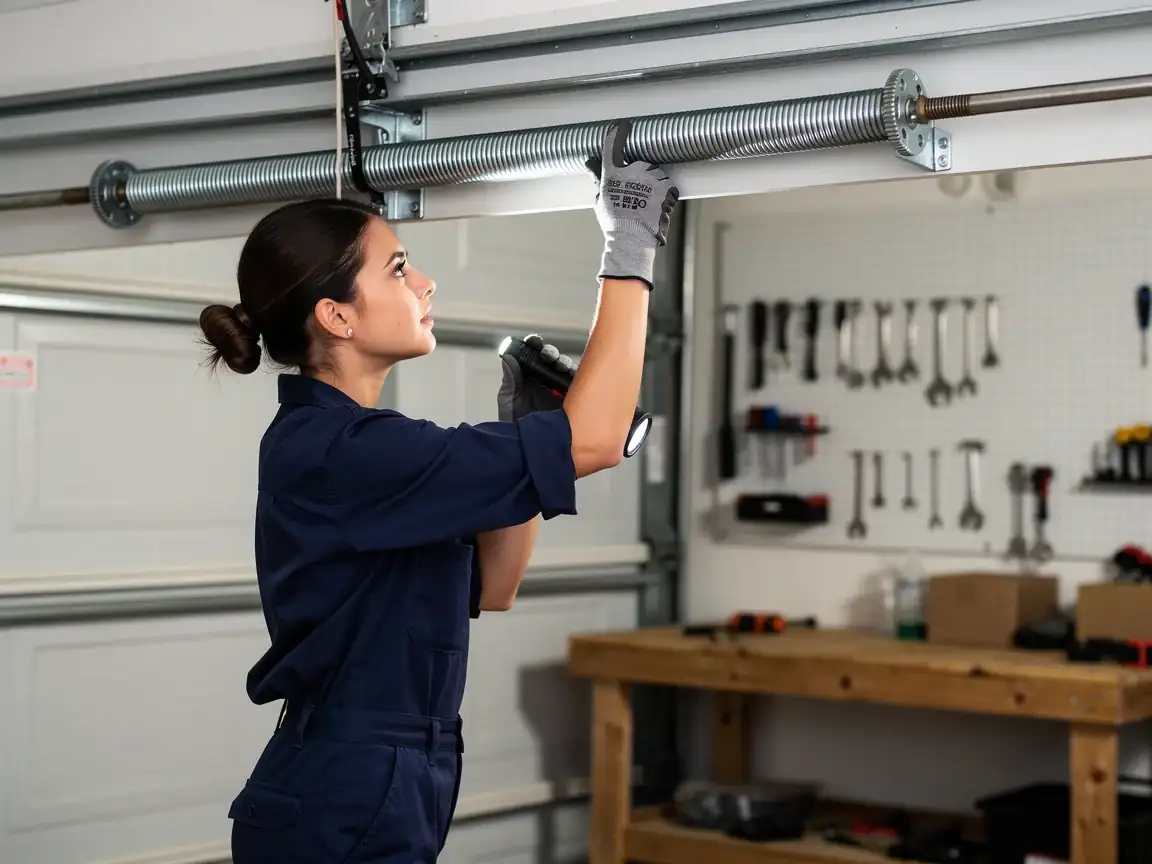
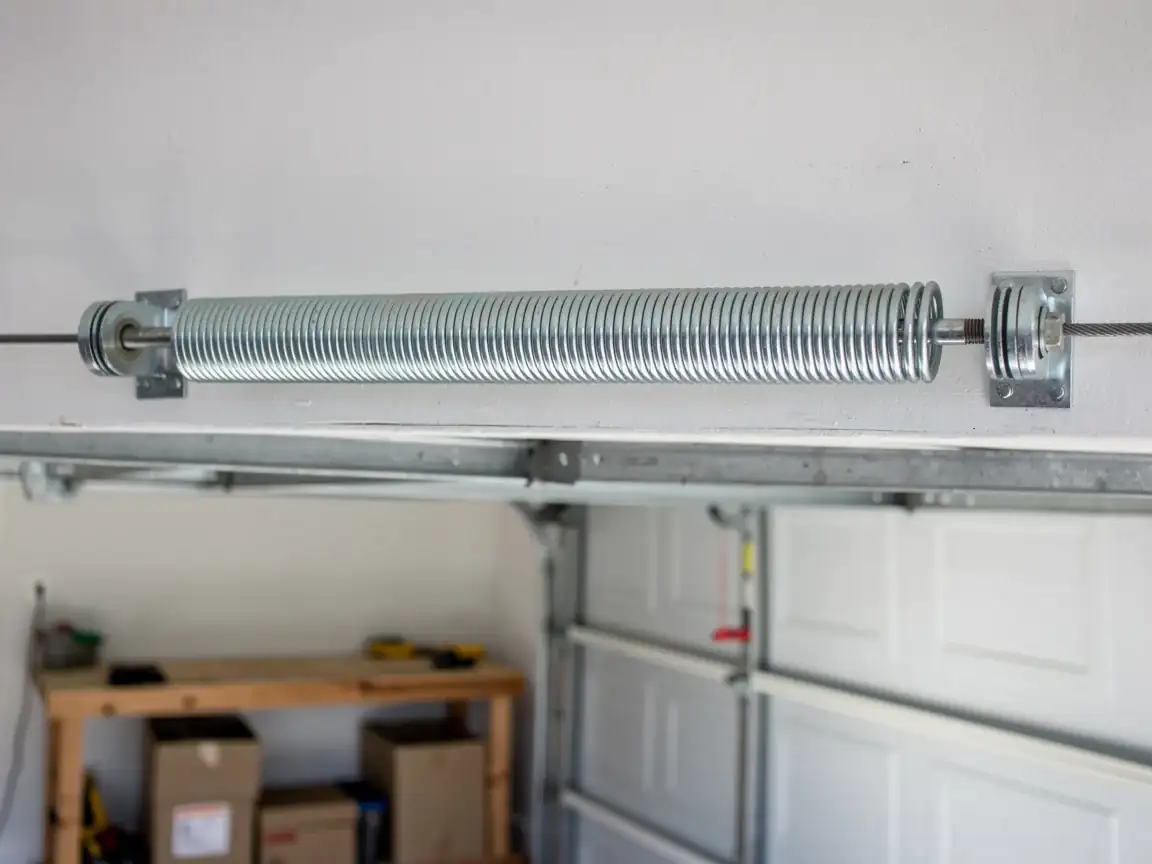
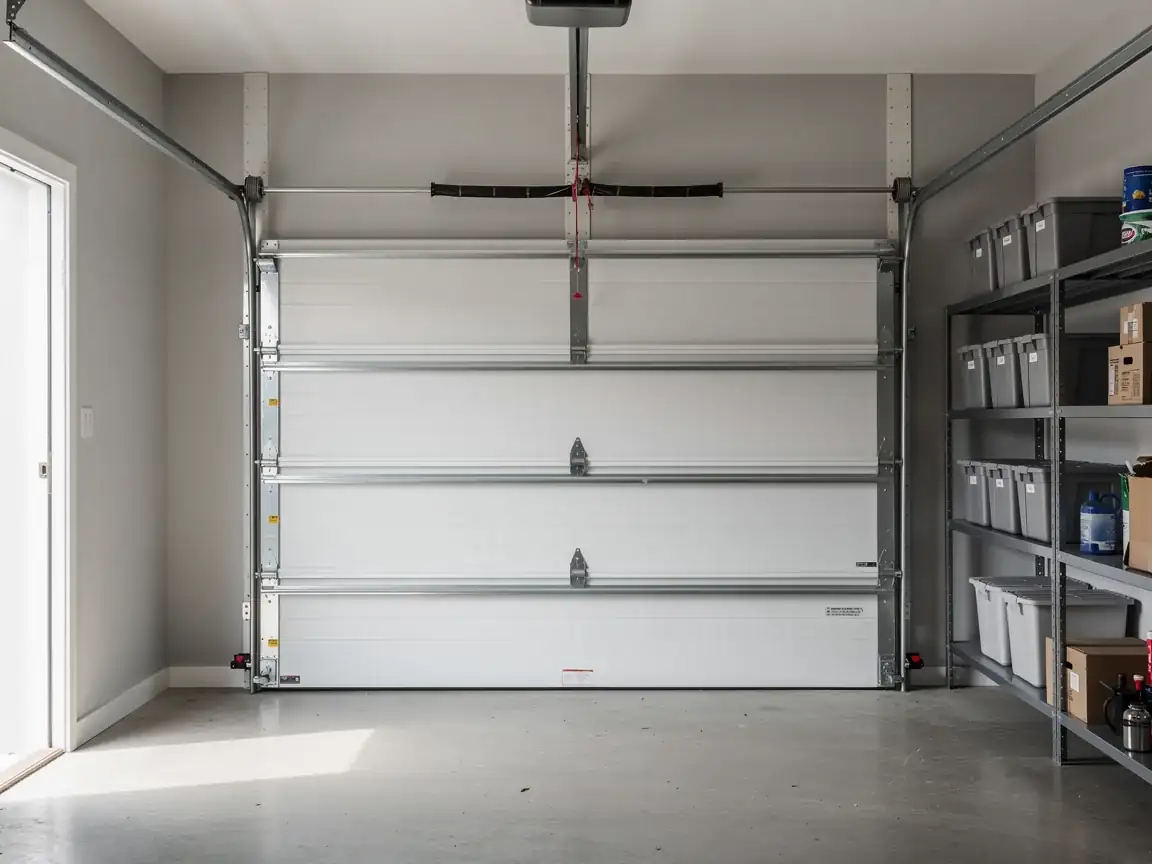
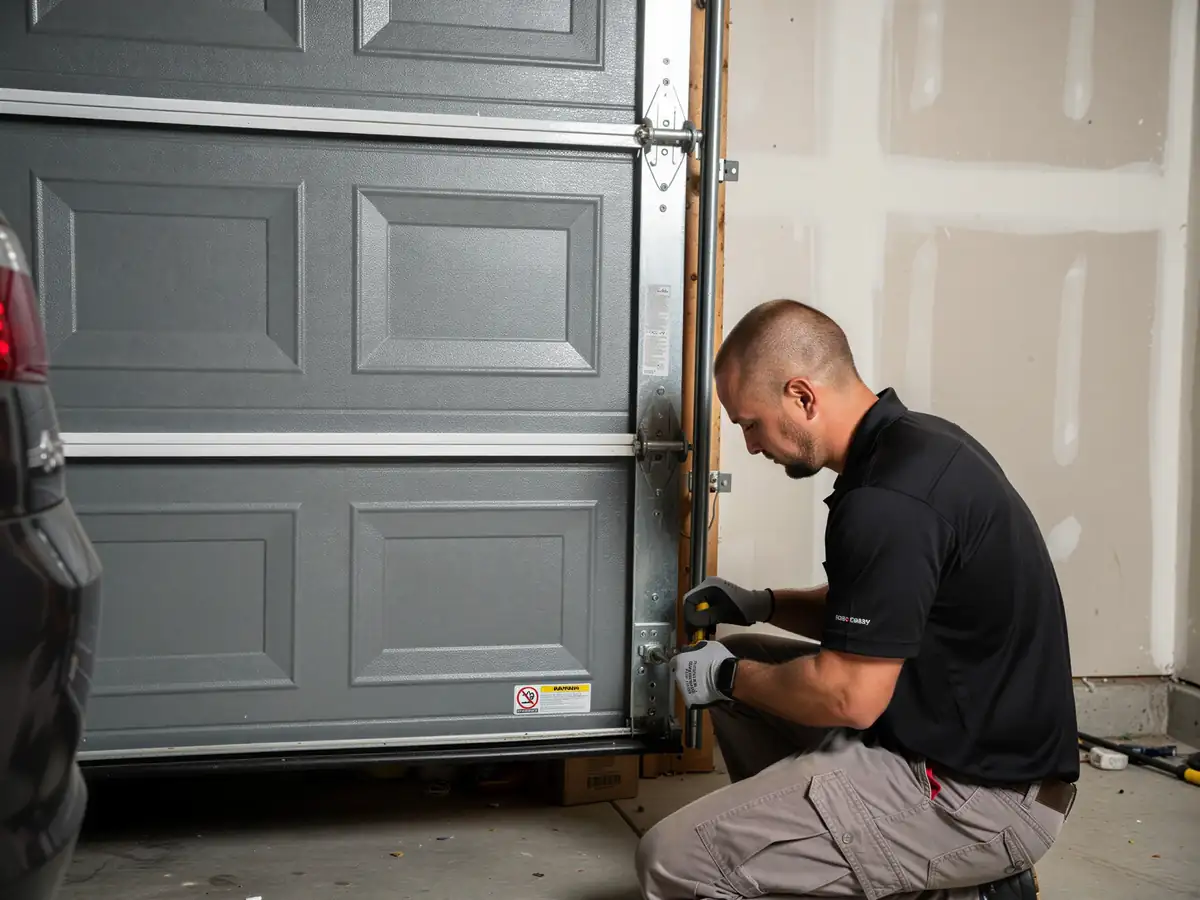
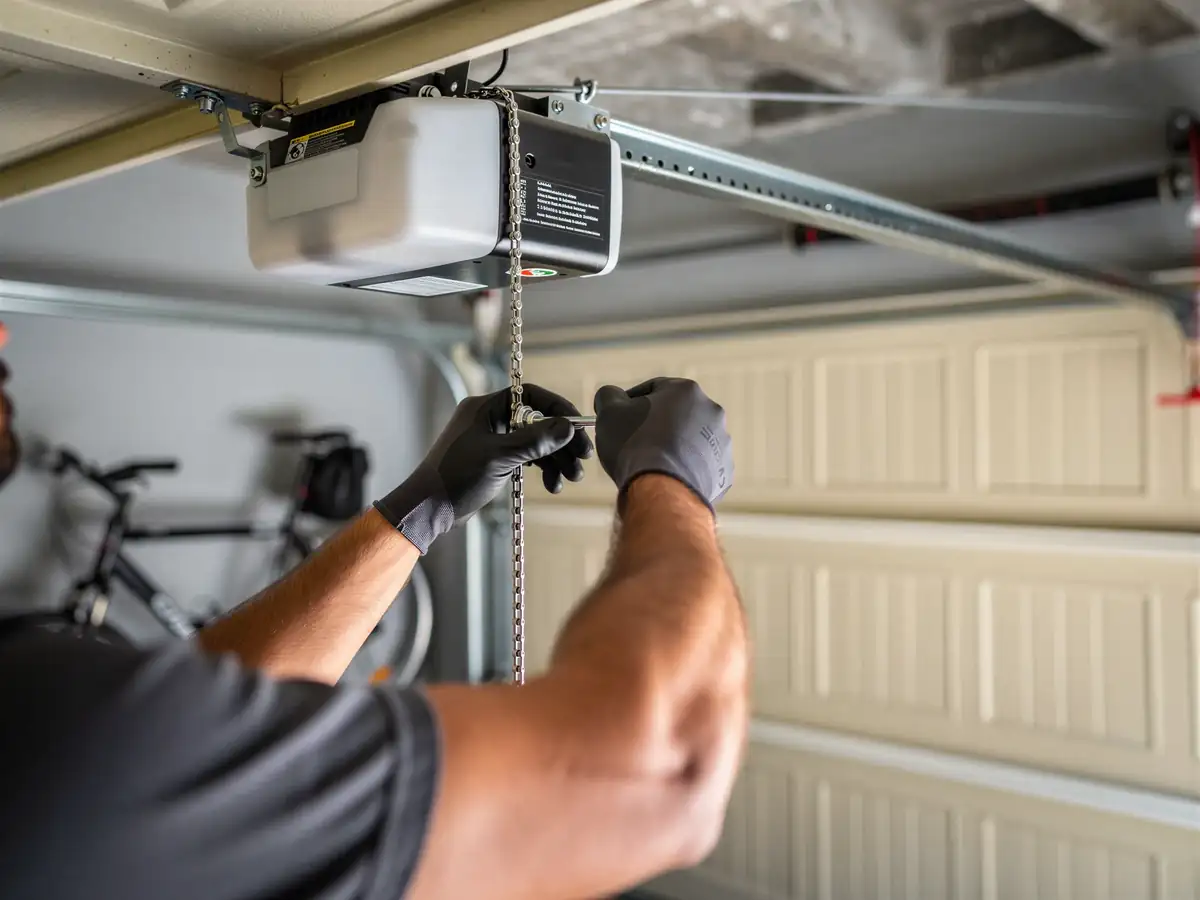
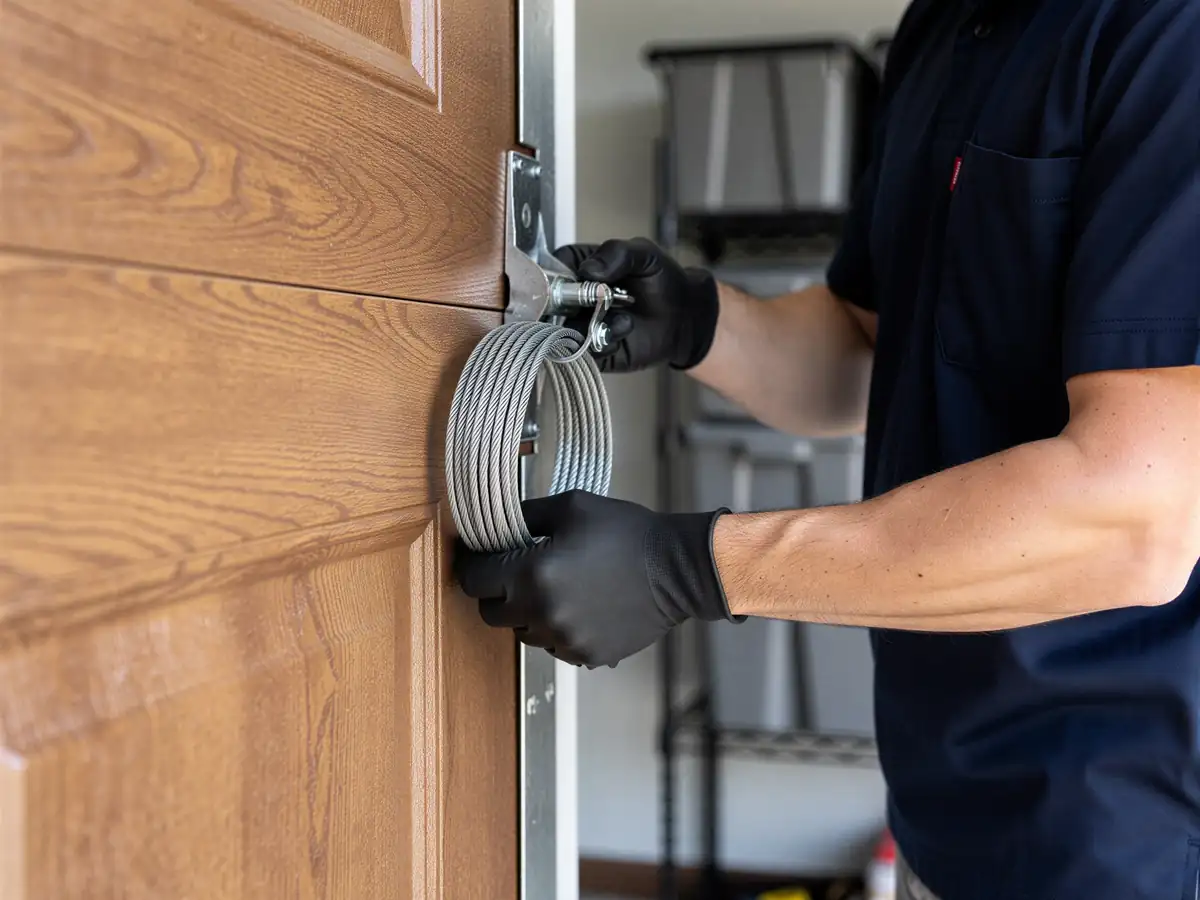
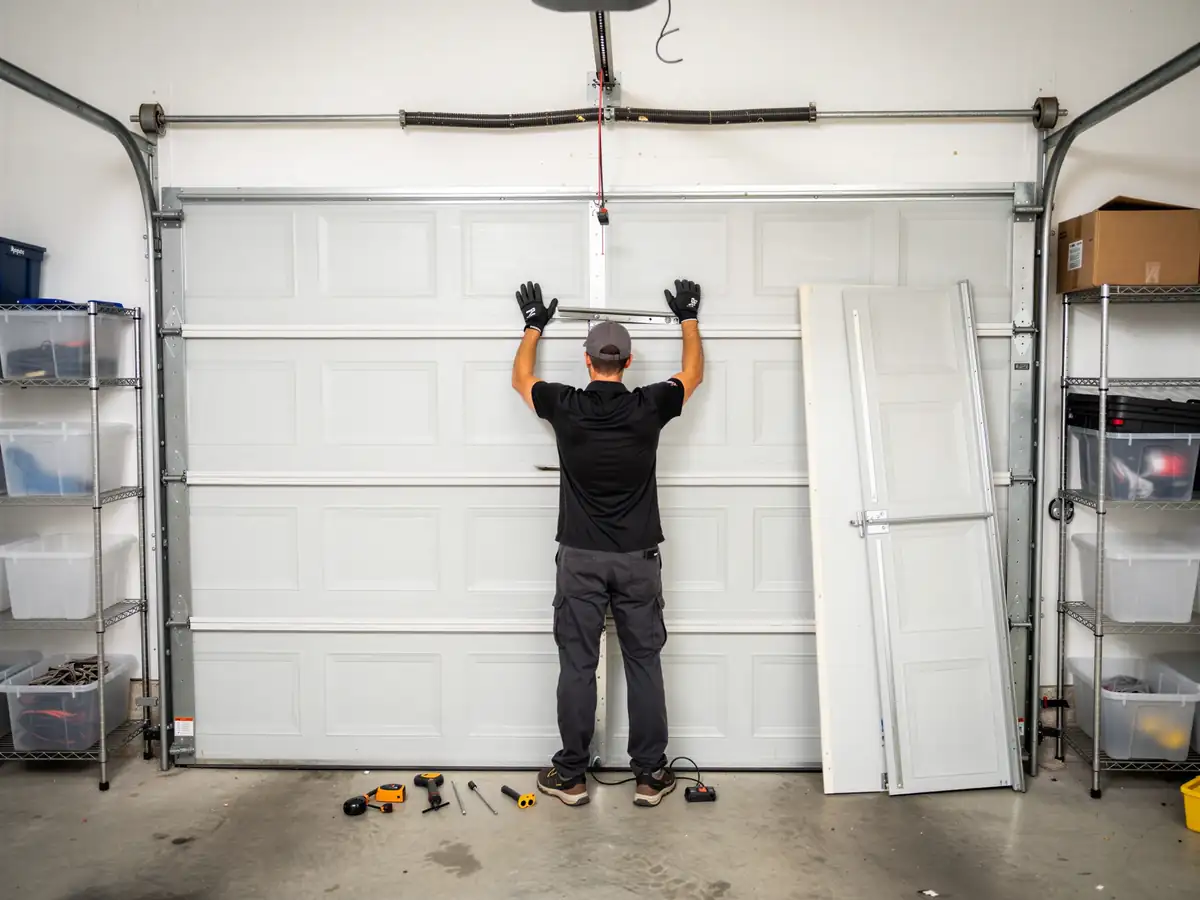
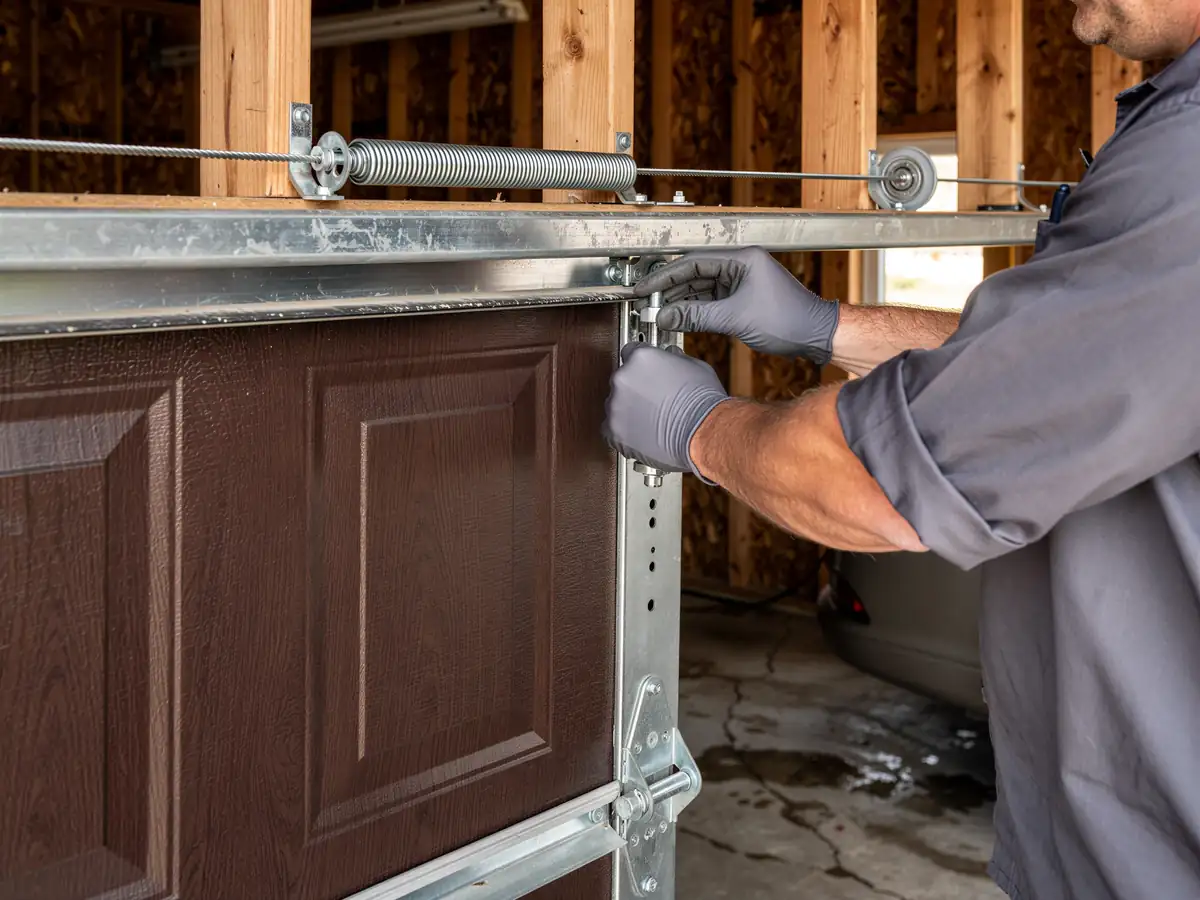
A real maintenance visit isn't just a squirt of WD-40. We check spring tension and balance, inspect cables and drums for fraying or wear, test the opener's force settings and safety reversal, and go over every roller and hinge for cracking or play. On a house from Wildwood's 1992 vintage, we're usually looking at original torsion springs that have had three decades of cycling - they're not failing yet in most cases, but they're closer to the end of their rated cycle count than a door installed in the last ten years. We also check the track alignment, since settling on newer slab foundations can pull a track out of square over time in ways that don't show up as an obvious problem until the door starts binding. If a spring is near the end of its life, we'll say so and quote the replacement rather than patching around it.
What Is on the Truck
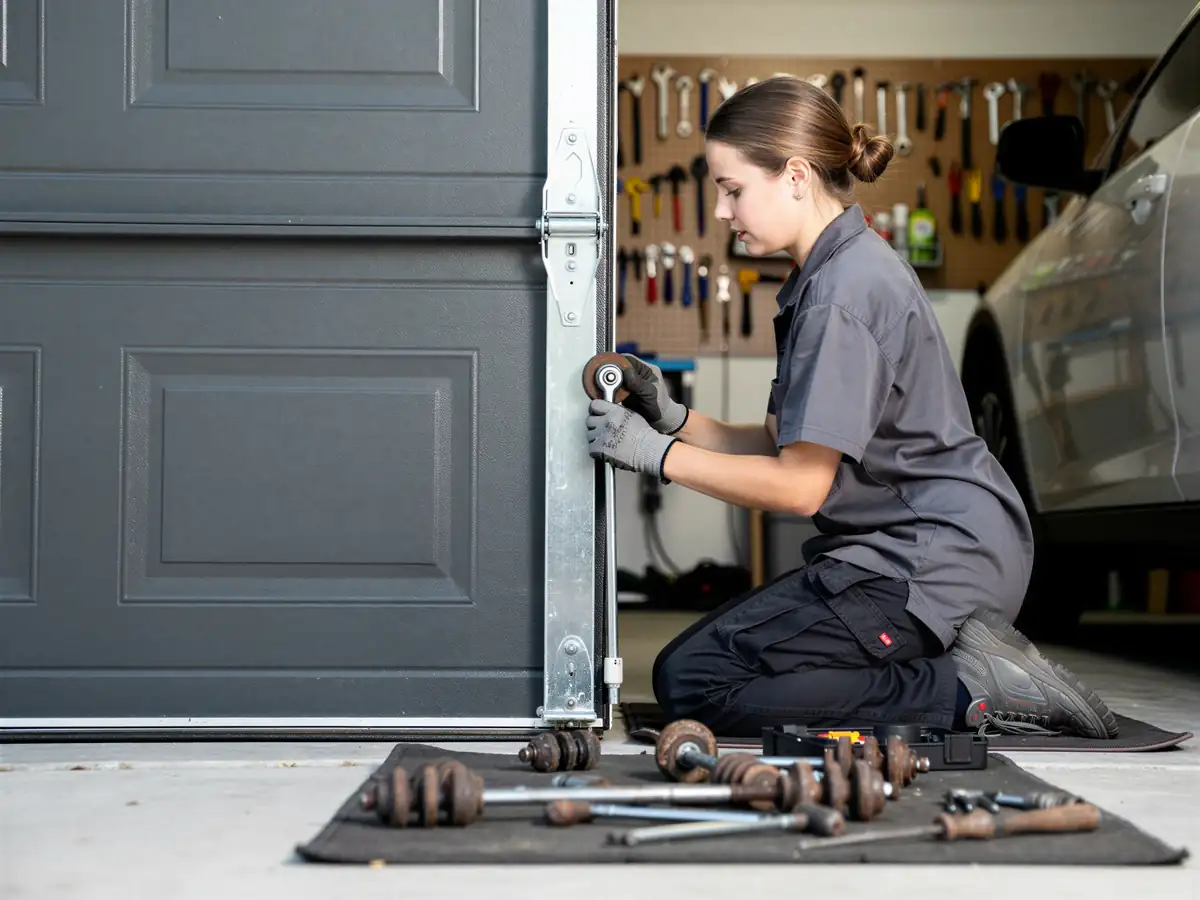
The truck carries standard torsion springs sized for residential doors, replacement cables, rollers in steel and nylon, hinges, and the lubricants and hardware for a full tune-up. Given that most Wildwood doors date to the early 1990s, the common torsion spring sizes for that era's doors are usually stock items rather than special orders, which keeps a repair-on-the-spot more likely than it would be for an unusual or discontinued setup. Opener parts are more of a mixed bag - if a house still has its original 1990s-era opener, some control boards and circuit parts for that specific model may need to be ordered rather than carried on the truck, and we'll be upfront if that's the case rather than promising a same-visit fix we can't deliver.
Why It Happens Here
The St. Louis area sits in a cold, moderate climate band, which means doors here deal with real freeze-thaw cycling every winter rather than one or the other extreme. That cycling is hard on weatherstripping and on the grease in bearings and rollers, and it's the main reason a door that ran fine in October starts binding or groaning by January. Wildwood's household income runs well above the wider service area's median, and we see that reflected in larger two-car doors and heavier opener setups built for them - more mass means more load on the spring and more wear on the opener's drive system per cycle. None of that is unique to this one street or that one house, but it's the pattern across a town built mostly in the early 1990s: hardware old enough to need attention, new enough that parts are still easy to get.