Serving Chesterfield, MO & nearby
(636) 204-2551
Chesterfield, MO

When a Chesterfield Garage Door Still Has Life Left in It

A look at when a Chesterfield garage door built in the 1960s or 70s is still worth repairing, based on this area's housing stock, climate, and the hardware that's actually out there.

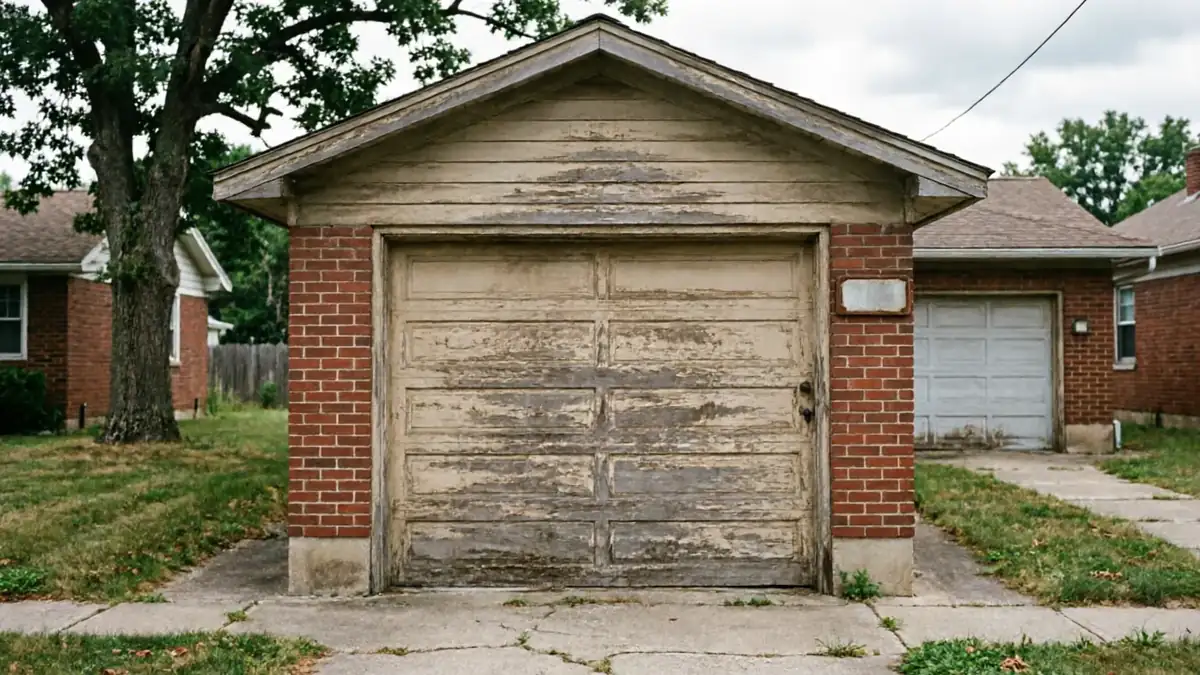
A weathered garage with peeling paint on the door and siding stands on a cloudy day.

The Cost of This Job

  1. We don't have a price list to hand you here

    And anyone who quotes one over the phone without seeing the door is guessing. What we can tell you is what drives the decision. A lot of the housing in this area was built between 1947 and 2011, with the median landing around 1969, and most of what we're called out to is that 1960s-70s stock. On a door that age, the question isn't "how much to fix it," it's "how much is left to fix." A torsion spring, a bent track section, or a bad opener on an otherwise sound steel door is usually worth doing. A door where the spring, the rollers, the bottom panel, and the opener are all original and all failing at once is a different conversation, because you're paying labor four times instead of once.

  2. With median household income in this area at $86,641

    Most owners we talk to can absorb a full replacement if the math says that's cheaper over five years than chasing parts on a door nobody makes anymore. That's not a sales pitch, it's just what the numbers tend to favor once a door crosses a certain age.

Where People Go Wrong

The most common mistake we see on these older Chesterfield houses is treating a universal replacement part as a fix when the original hardware was sized differently. Doors from that 1960s-70s build window often ran on track widths and spring cable gauges that don't match what's sold at a hardware store today. An owner swaps in a generic torsion spring that's close enough, and the door works for a few months before the drum wears unevenly or the cable jumps the track. We've been called to re-fix jobs like that more than once.

The other mistake is waiting too long on the opener. A lot of these doors still run openers from a second or third owner's upgrade, not the original hardware, and once the circuit board starts failing intermittently, people keep resetting it instead of replacing it. That's a decision we're honest about: if the opener is the only thing wrong and the door itself is sound, fixing it is worth it. If the door is also tired, pairing a new opener with an old door you're about to replace anyway is money you won't get back.

How Local Conditions Play In

Chesterfield sits in a cold-moderate climate band, which means winters here run cold enough to matter but not extreme enough to crack a slab the way harder freeze zones do. What it does do, reliably, is work on the foam insulation inside a steel sectional door. On a door built in the 1960s or 70s, that foam has usually degraded or settled inside the panel by now, which changes how the door handles temperature swings - the steel skin flexes more than it did when new, and that flex is what eventually fatigues a track roller or a hinge.

The practical effect: a door that's structurally fine but was insulated 50-plus years ago is a candidate for a panel or full-door swap, not because it's broken, but because the insulation isn't doing its job anymore and the steel is working harder than it should. That's worth fixing differently than a door with a snapped cable - one's a comfort and wear issue, the other's a this-week repair.

The Situation

  1. Across this service area

    Which covers 274,722 households and 148,813 owner-occupied houses, the bulk of the garage doors we work on fall into that same narrow build window: 1960s and 70s construction, steel sectional panels, torsion hardware that's aged past its original spec. That consistency is actually useful - it means we see the same two or three failure patterns over and over, and we can usually tell within a few minutes on site whether a door is a repair or a replacement candidate.

    • 274,722 households
    • 148,813 owner-occupied
  2. What we won't do is talk someone into patching a door that's failing in three places at once just to avoid a bigger ticket now

    We'll also tell you straight if a part isn't worth chasing down for an obsolete opener model - sometimes the lead time and cost of a hard-to-find board exceeds what a new opener runs, and in that case fixing it isn't the right call even if it's technically possible.
How it works

From “it’s stuck” to “it’s fixed”

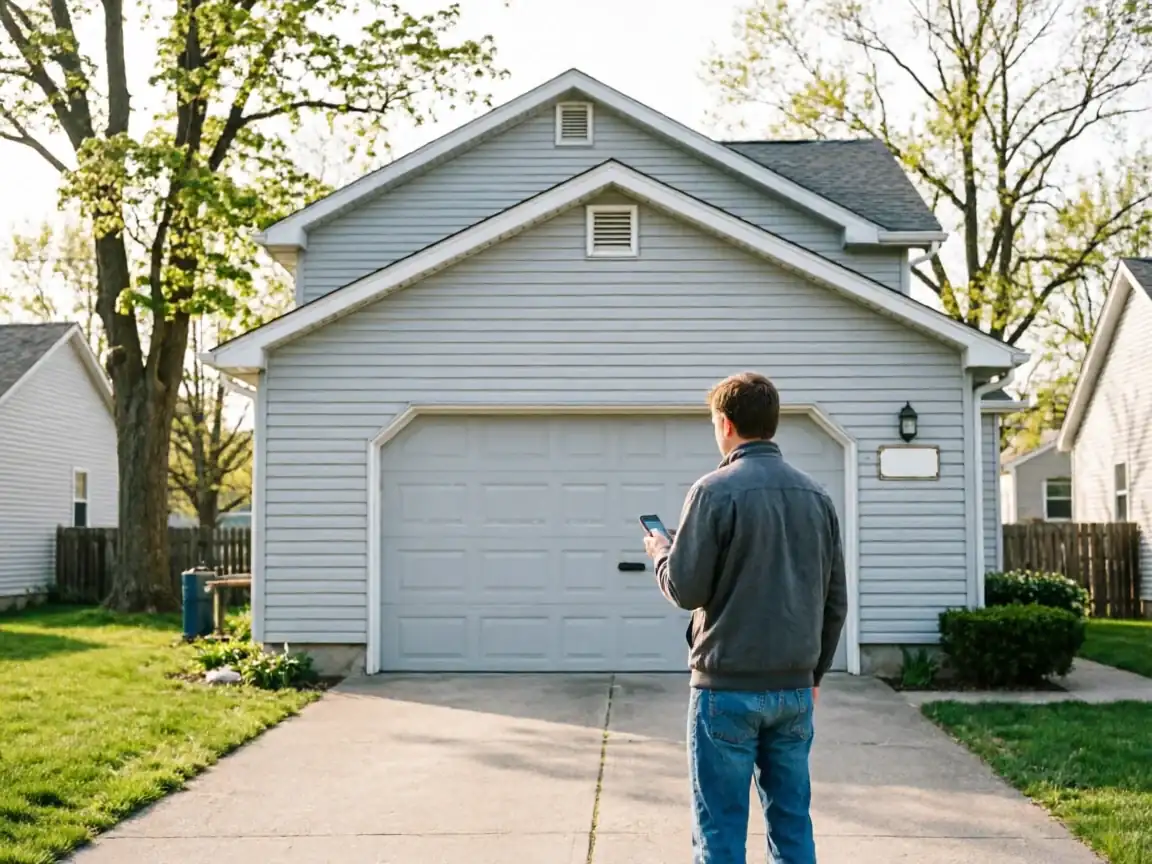
A man stands in a driveway looking at his phone in front of a house.

Tell us what’s wrong

Describe the symptom - won’t open, loud bang, opener runs but the door won’t move.

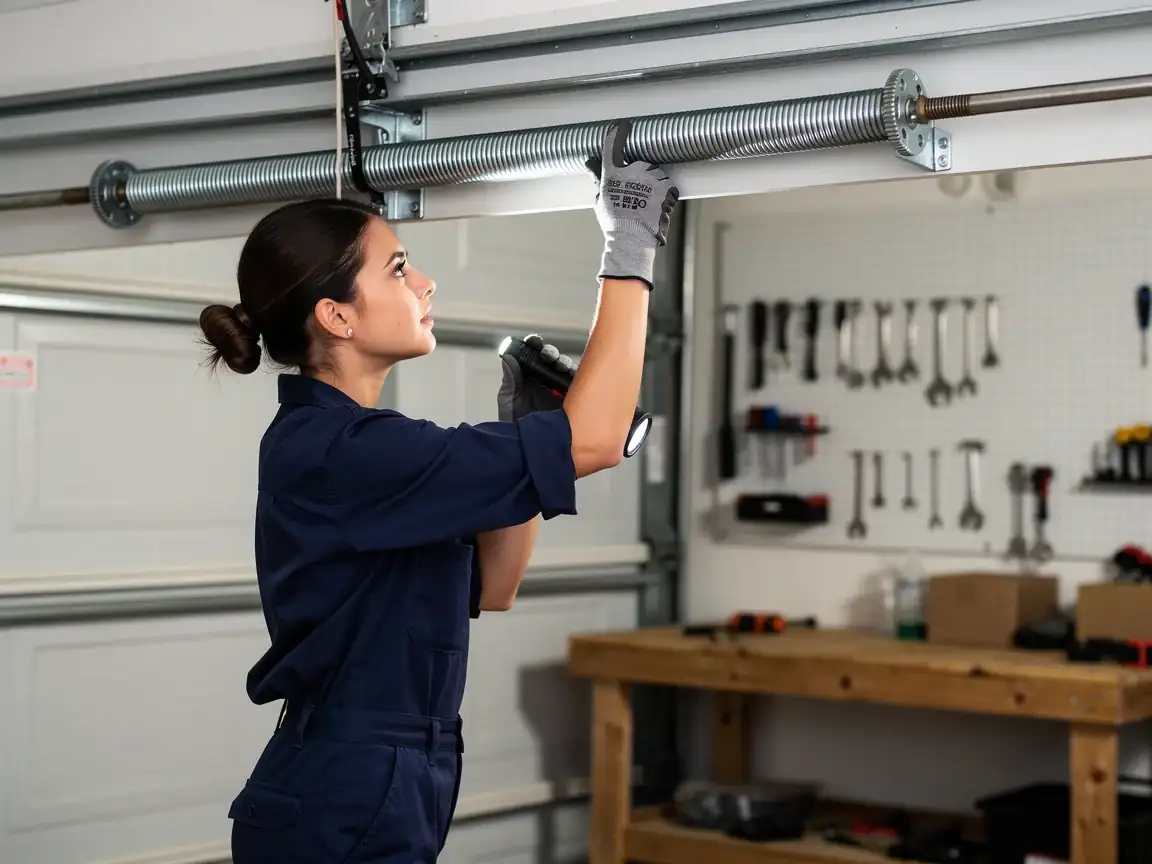
A technician in a blue jumpsuit inspects a garage door torsion spring with a flashlight.

On-site diagnosis

A technician tests the door under power and by hand and finds what actually failed.

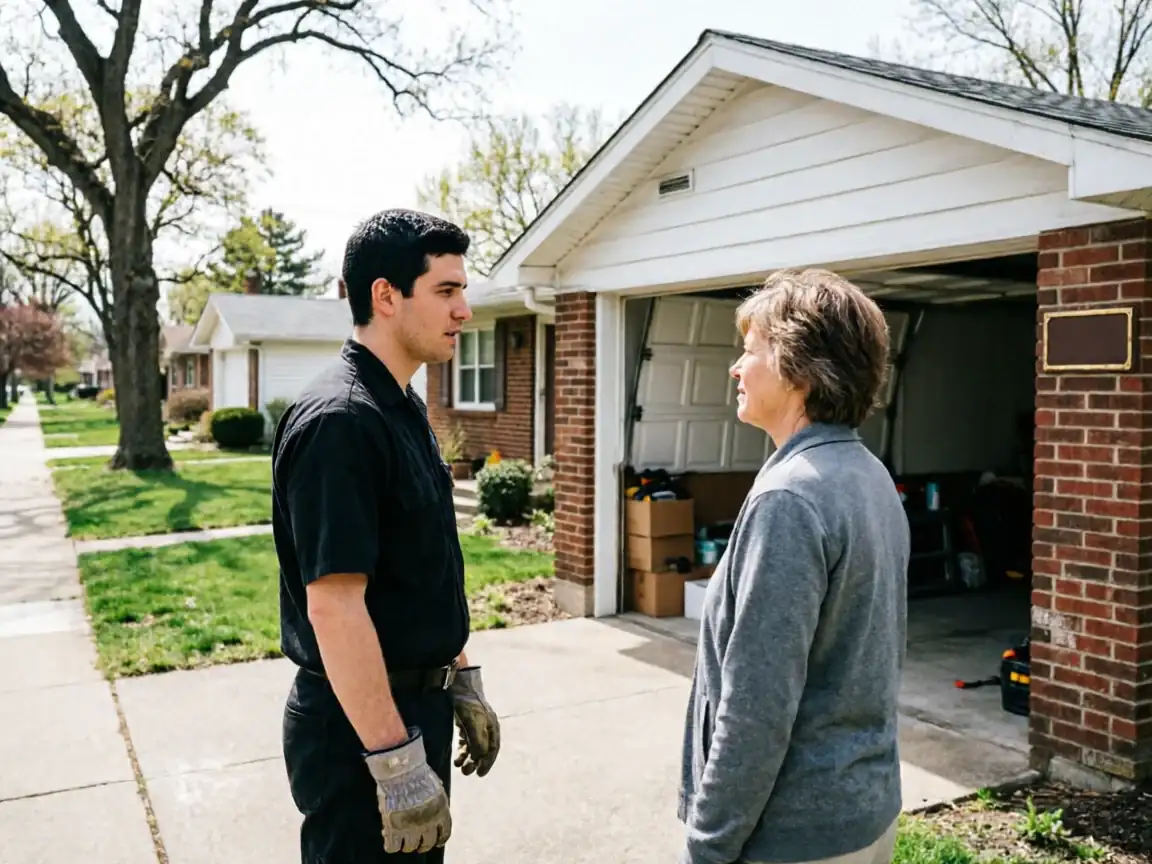
A technician in a black shirt talks to a woman in front of a garage.

Clear, up-front plan

You get the fix that’s needed and what drives the cost - before any work starts.

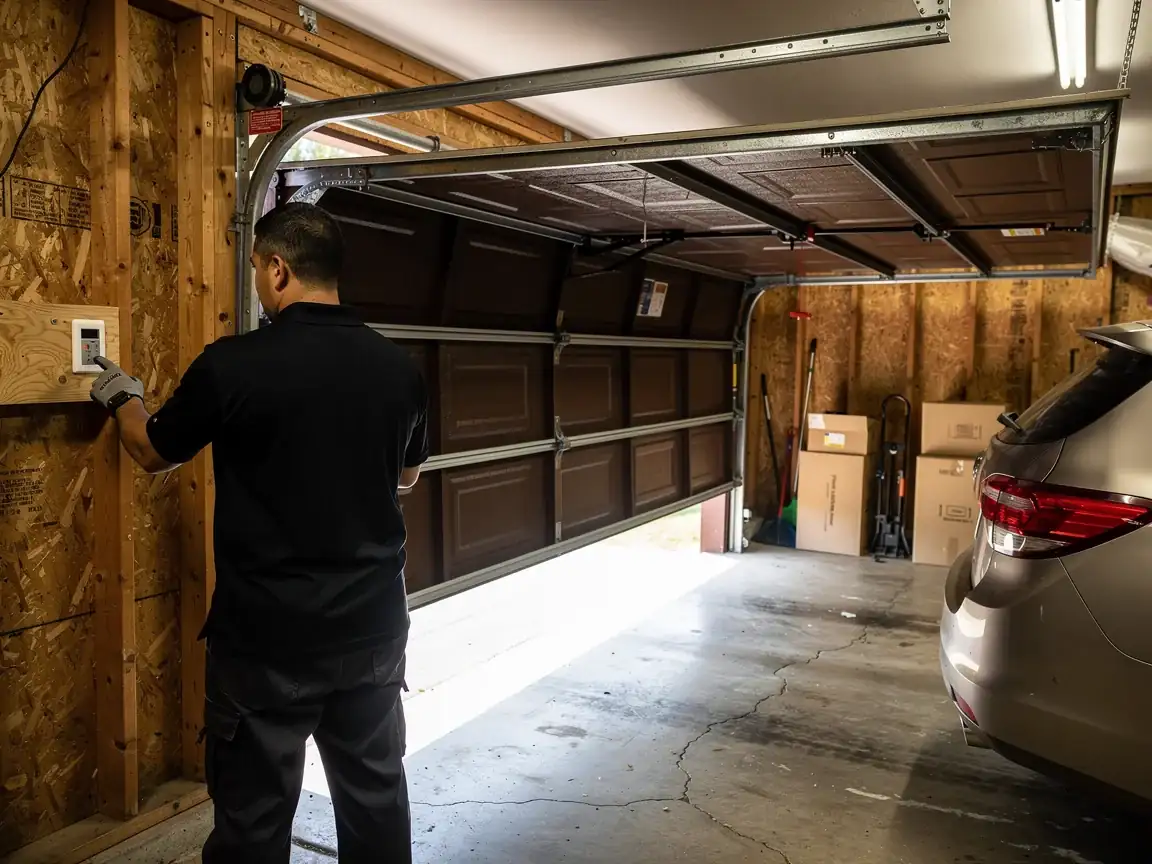
A technician operates a brown garage door from a wall-mounted control panel.

Repaired & tested

The repair is done, the door is set true and tested, and the work area left clean.

Not sure which repair your door needs in Chesterfield, MO? Describe what it’s doing - every job starts with a diagnosis.

How we work

What to expect

Diagnosis firstEvery visit starts by finding what actually failed - not a pre-written parts list.
The right part for the doorSprings and openers matched to the door’s weight and age, so the fix holds up.
Straight answersWhen a repair makes more sense than a replacement - or the reverse - you hear it plainly.
Clean, careful workTension released safely, hardware set true, the door tested under power before we leave.
What we do

Garage Door Services

Repair and installation work for Chesterfield homes and businesses.

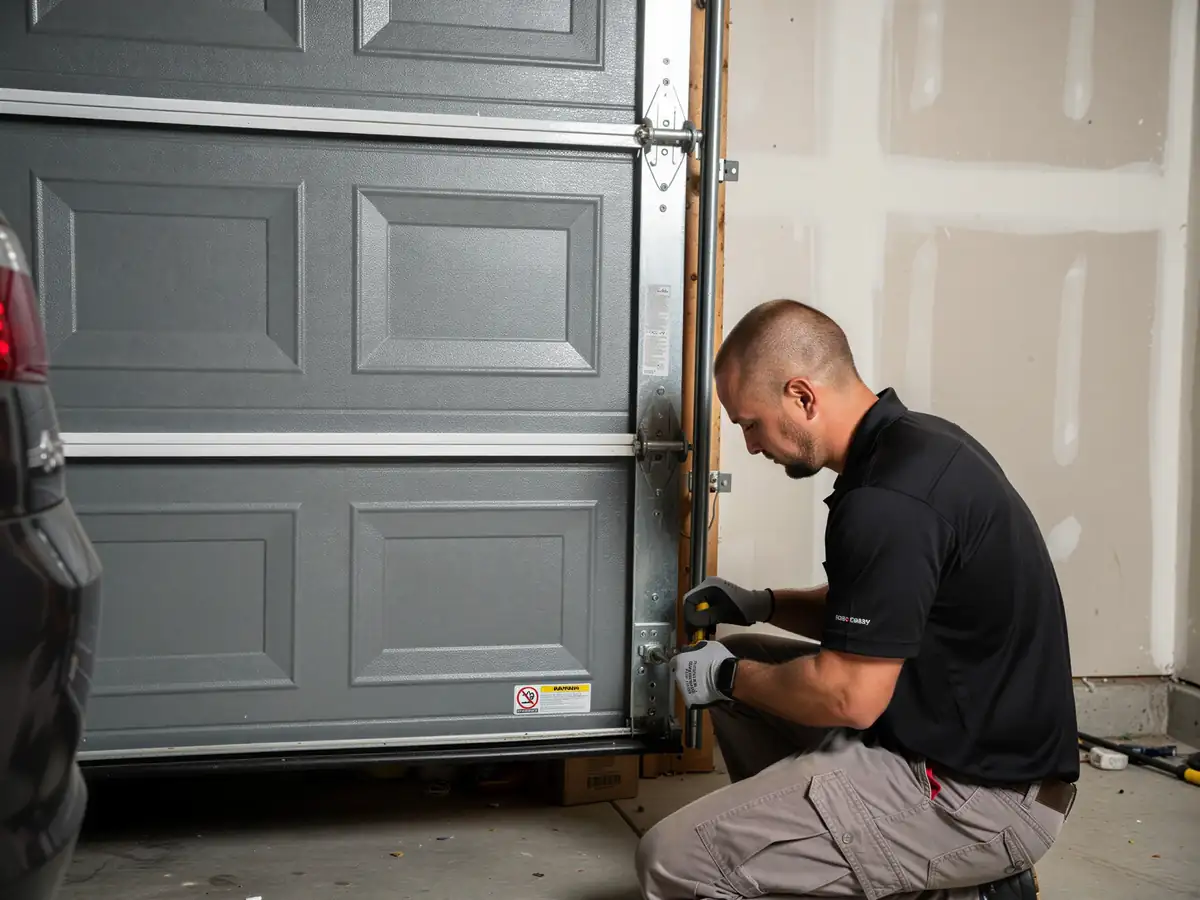
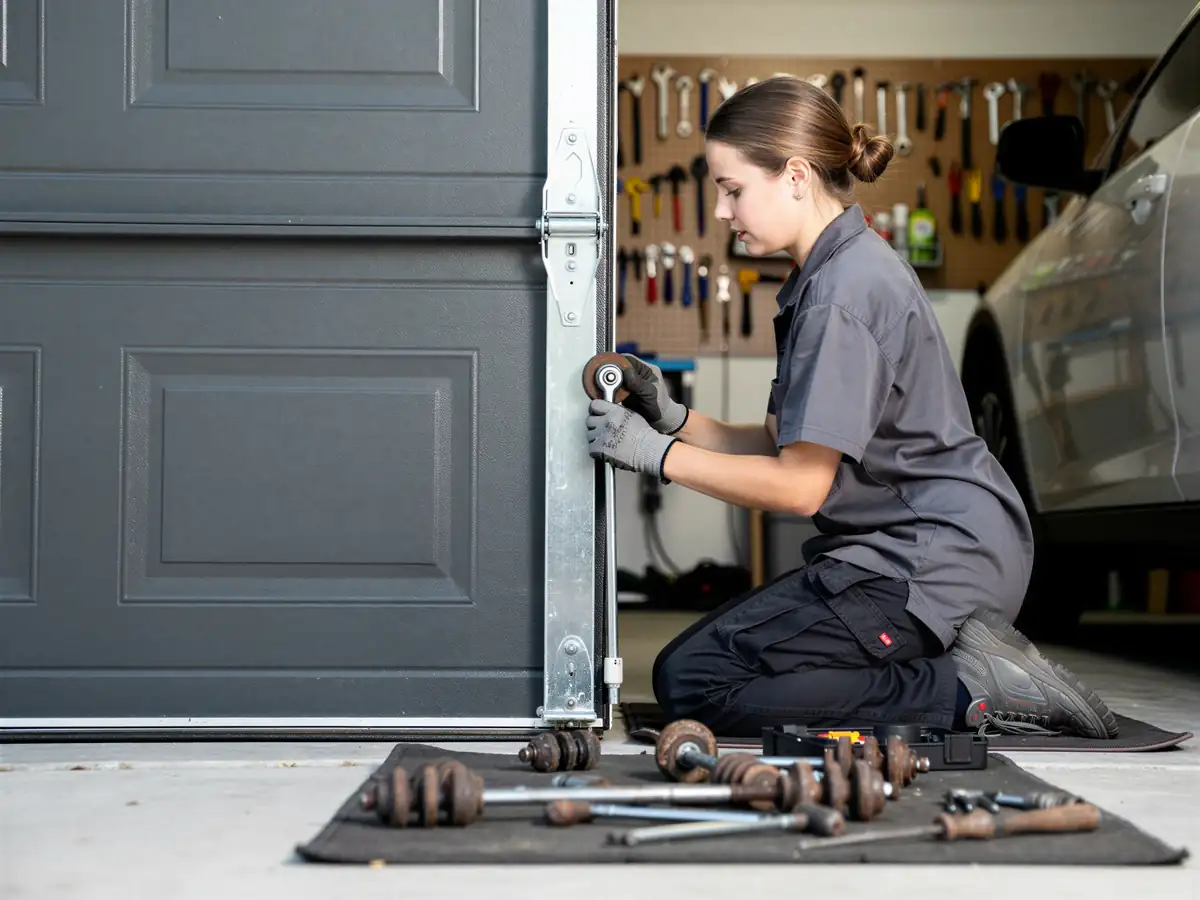
A technician in a black shirt and gray pants works on a gray garage door.

Garage Door Repair

Chesterfield homes built mostly in the 1960s and 70s carry original torsion hardware that wasn't made for Missouri cold snaps. We fix springs, openers, and tracks on original equipment.

Learn more
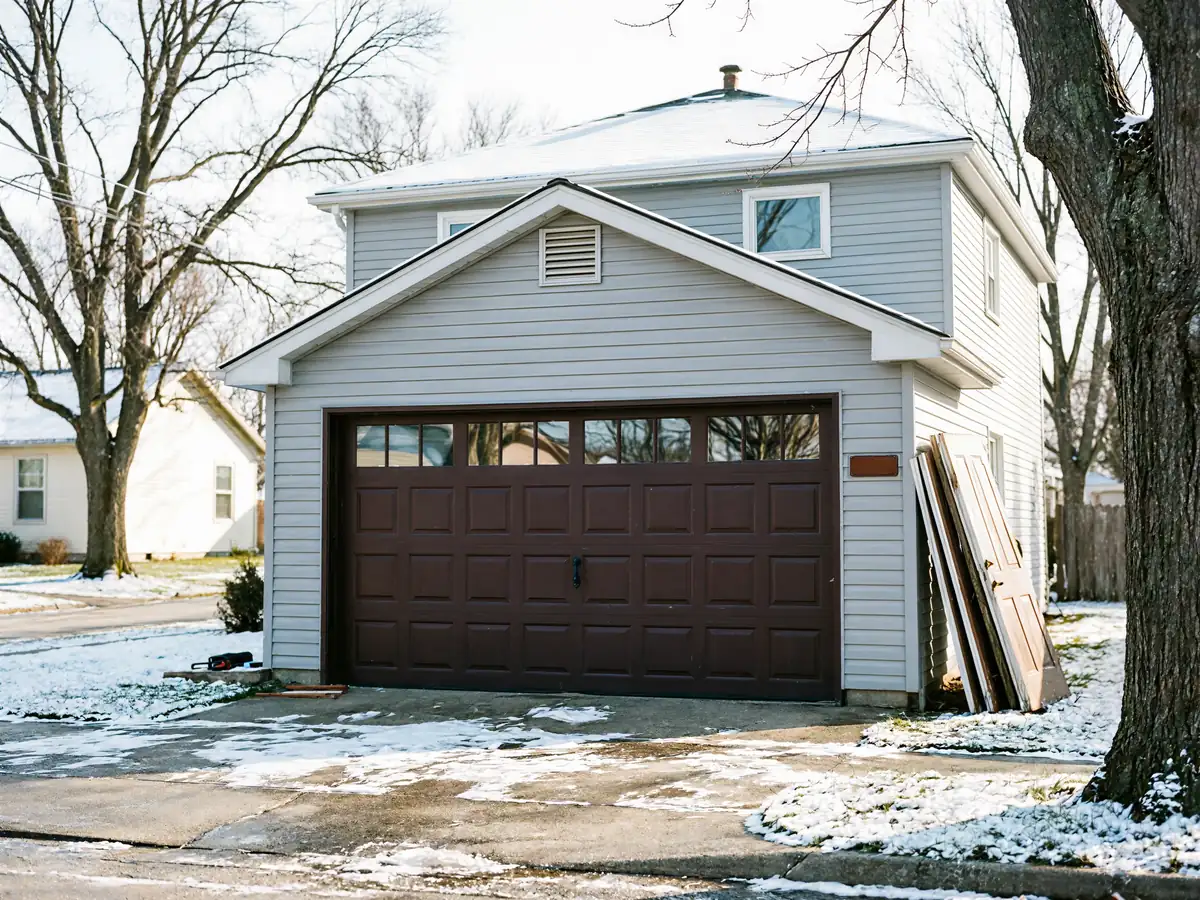
A two-story house with a brown garage door and old doors leaning against the wall.

Garage Door Installation

Chesterfield's garage doors mostly date to the 1960s-70s building boom. We install insulated replacements sized for this area's cold winters and original openings.

Learn more
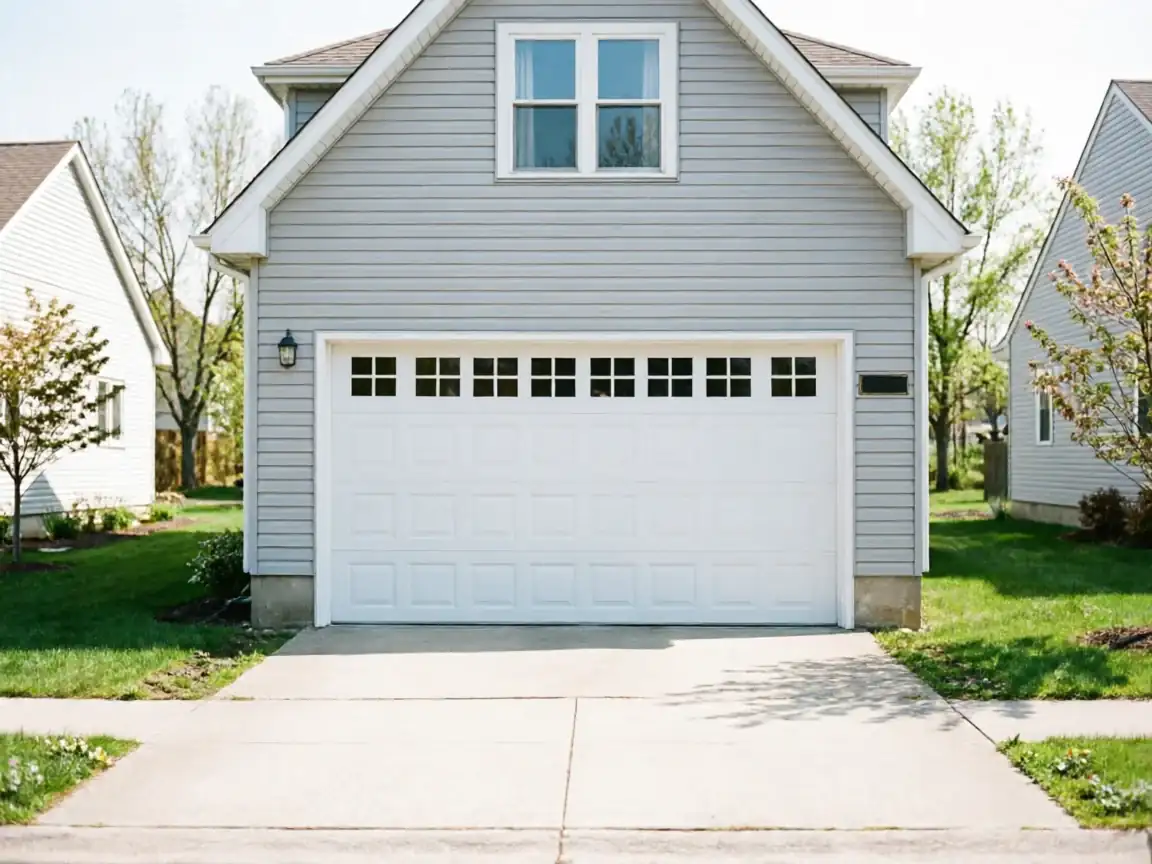
The house has light gray siding and a white garage door with windows.

Garage Door Service

Garage door service for Chesterfield homes built 1947-2011, where cold winters stress original springs, cables, and track hardware on aging doors.

Learn more
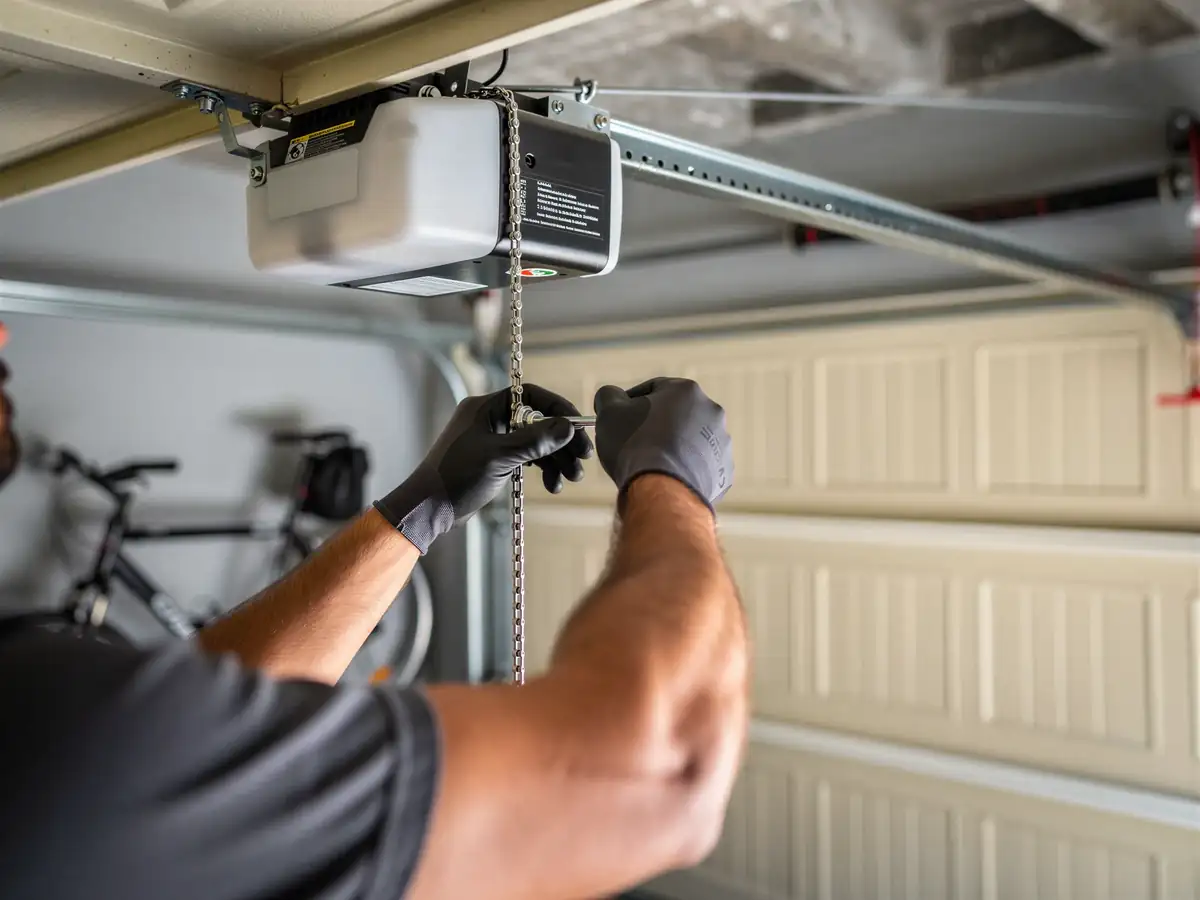
A technician adjusts the chain on a garage door opener.

Opener Repair

Opener repair for Chesterfield homes built 1947-2011, where cold winters and aging drive systems cause the same failures again and again. Same-area service.

Learn more
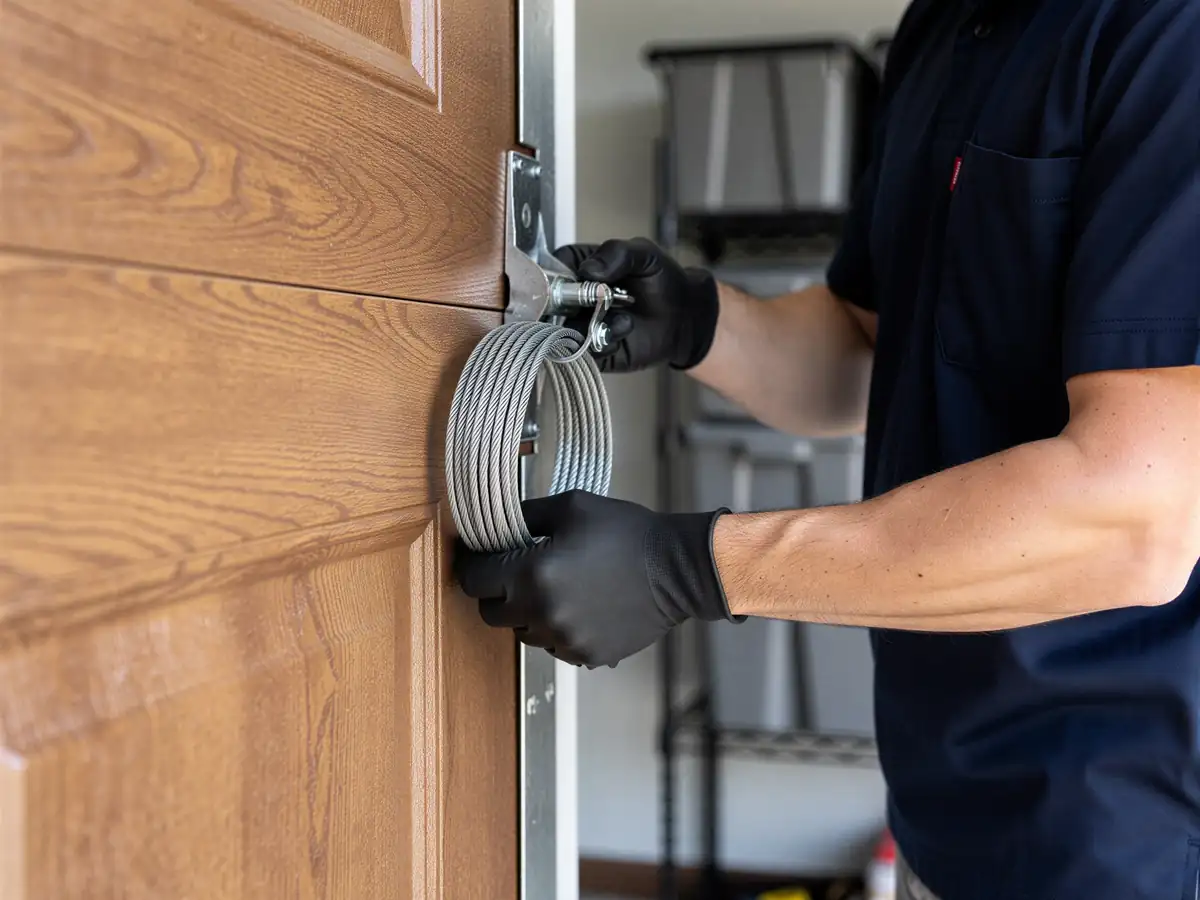
A technician wearing black gloves holds a coiled garage door cable next to a brown garage door.

Cable Repair

Cable repair for Chesterfield-area garage doors built mostly in the 1960s-70s, where cold winters and original hardware wear through lift cables fast.

Learn more
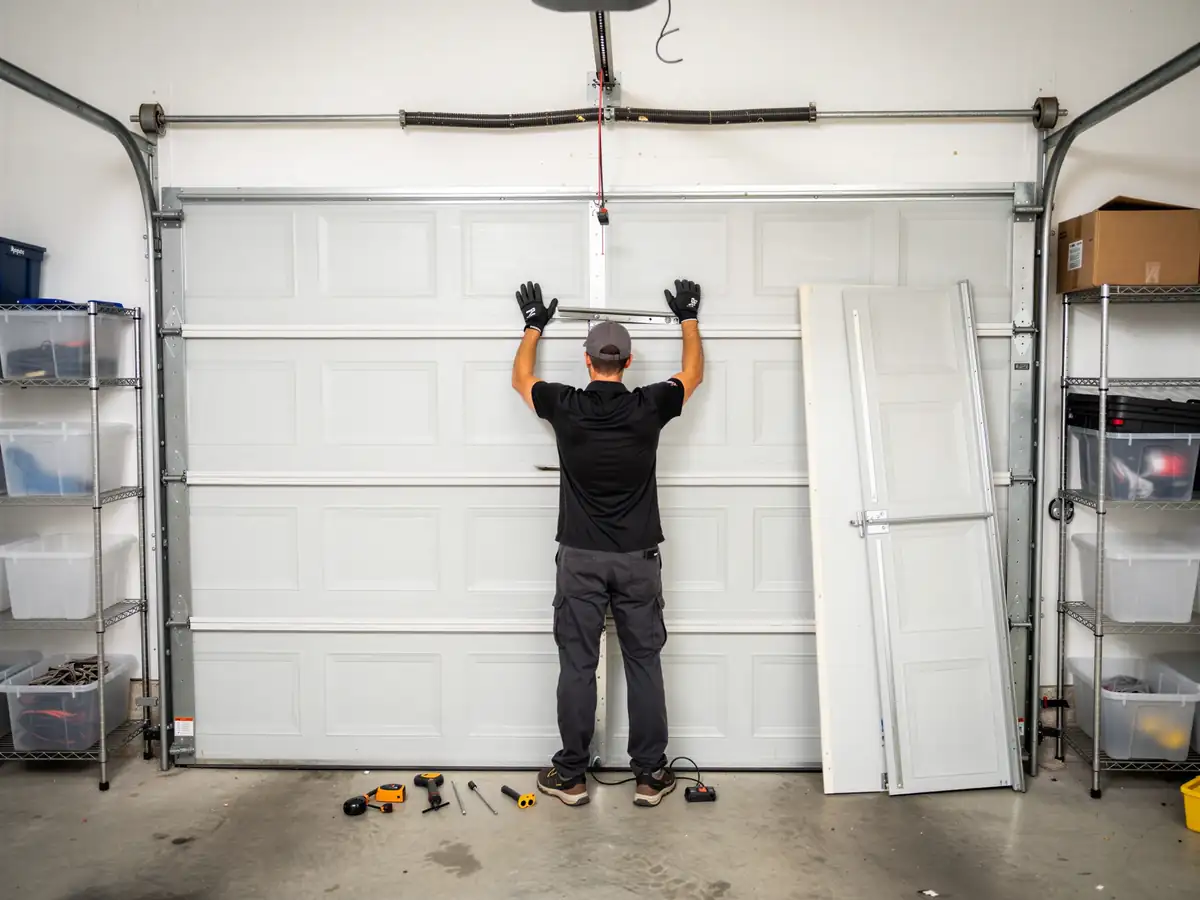
A technician installs a white garage door panel in a garage.

Panel Replacement

Panel damage is common on Chesterfield-area garage doors built in the 1960s and '70s. We match sections or replace the door outright, serving homes across the St. Louis area.

Learn more
A technician kneels to work on a gray garage door roller and hinge.

Roller Replacement

Worn or cracked rollers on Chesterfield-era garage doors, explained: why 1960s-70s hardware fails in cold winters and what a proper roller swap involves.

Learn more
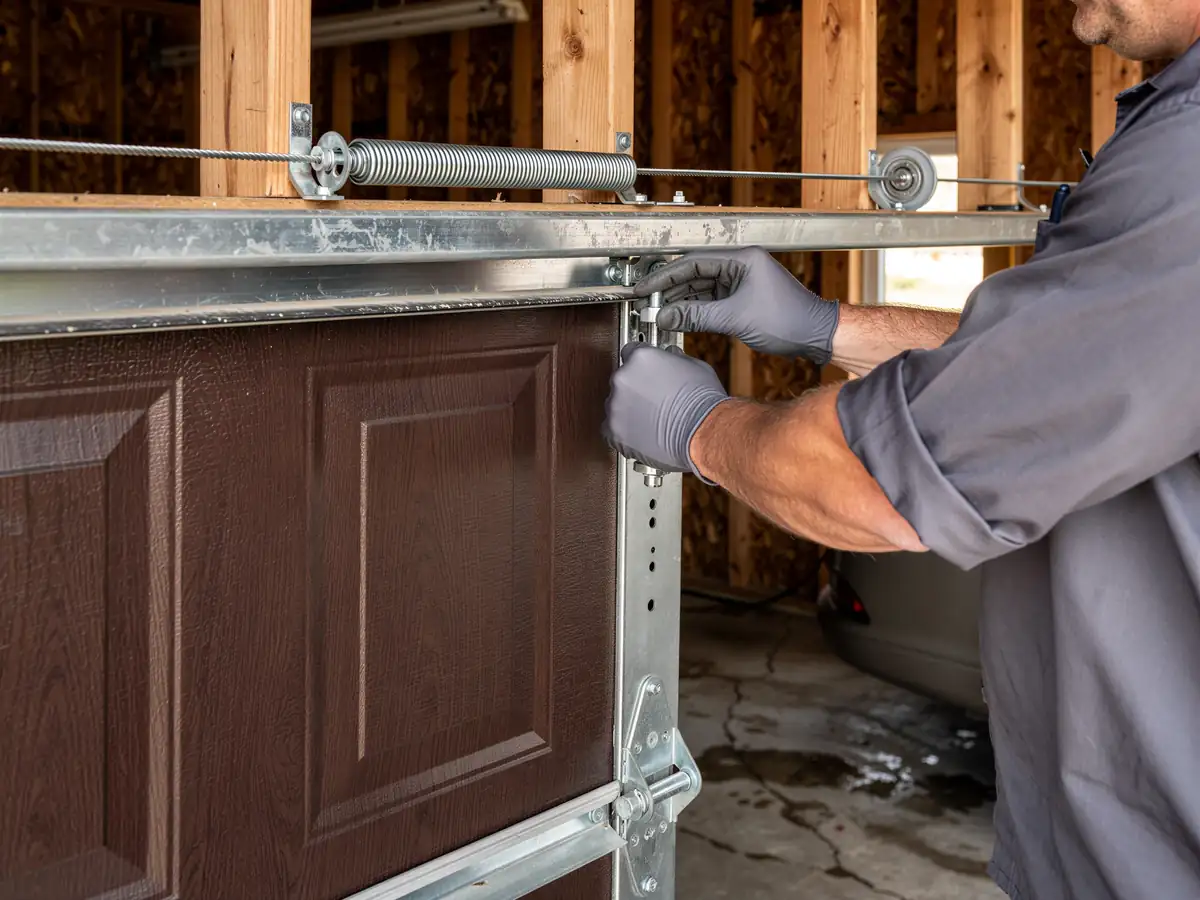
A technician wearing gloves adjusts a brown garage door with a spring and cable system.

Maintenance

Chesterfield homes built 1947-2011 run original hardware through cold winters. Maintenance tuned to this area's housing stock and climate band, not a generic checklist.

Learn more
Questions

Frequently asked

Straight answers about garage door repair in Chesterfield. Still unsure? Ask us directly.

Is it worth fixing a garage door from the 1960s or 70s instead of replacing it?

Often yes, if the problem is isolated - a broken spring, a bent track, a failed opener on a door that's otherwise sound. Where it stops being worth it is when several original parts are failing at once, since you end up paying for separate repairs on a door that's near the end of its service life anyway.

Why does my old garage door feel harder to lift in winter?

On a door built decades ago, the foam insulation inside the panels has usually broken down, so the steel skin flexes more in cold weather. That added flex puts more strain on rollers and hinges, which is often what finally fails first on an older door here.

Can you still get parts for a garage door built in the 1960s or 70s?

Sometimes, but not always as a direct match - a lot of these doors ran track widths and spring specs that aren't standard today. We'll tell you honestly if a part has to be special-ordered or if a near-match retrofit is the more practical route.

Ready to get your garage door sorted?

Tell us what it’s doing and where you are in Chesterfield - we’ll take it from there.

Request a QuoteCall