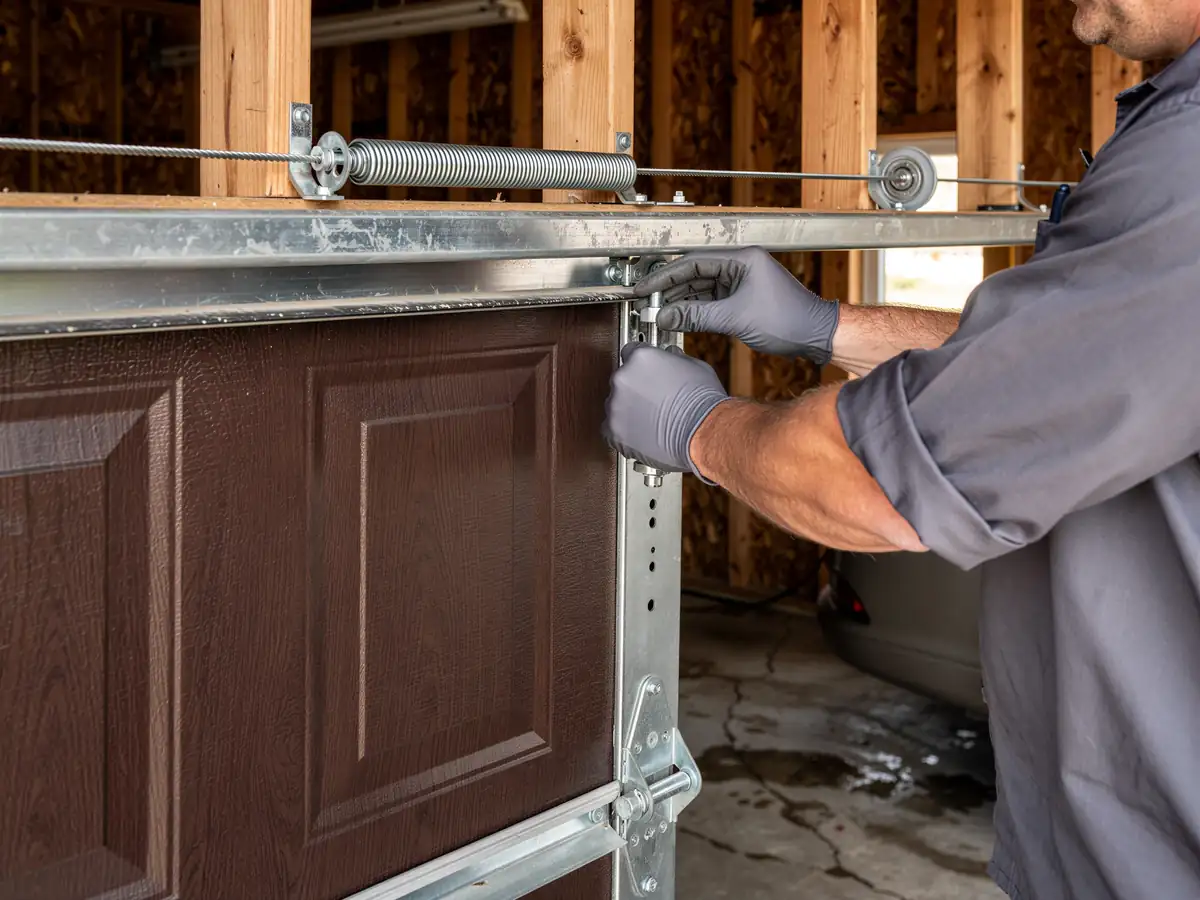
Stopping Draughts at the Garage Door in Chesterfield
Why garage doors in Chesterfield, MO leak cold air, what drives the cost of fixing weather seals, and the mistakes homeowners make with this era of housing stock.
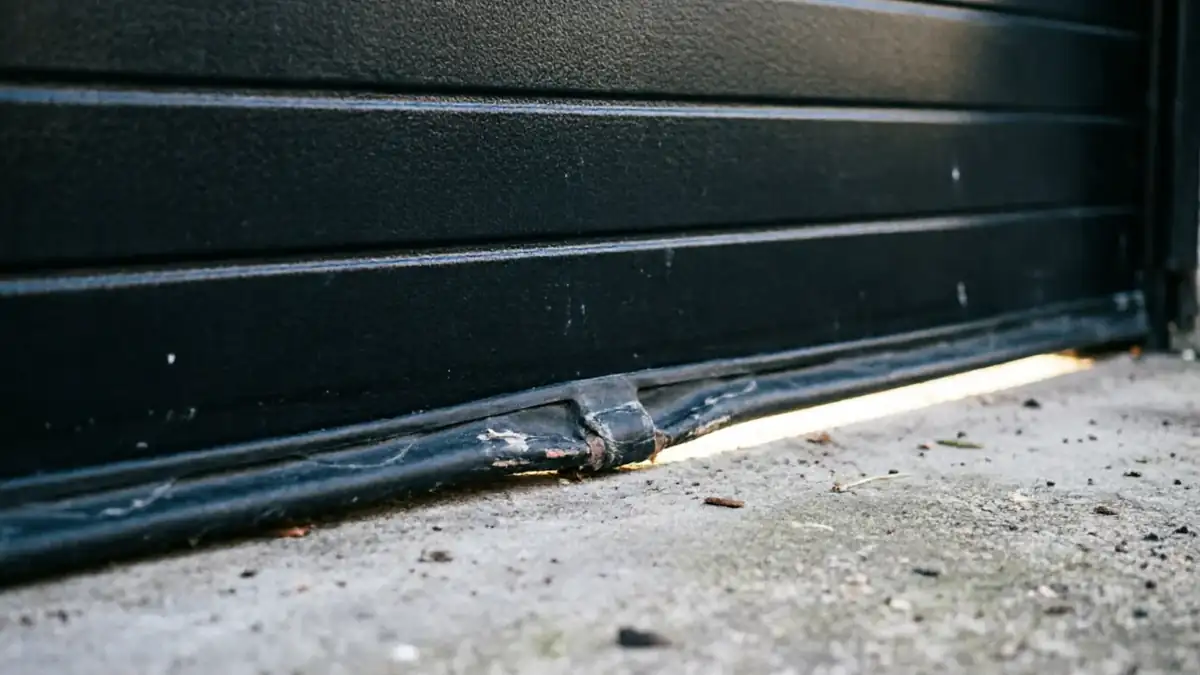
We don't have a flat number for you here, and giving you one without seeing the door would be a lie. What drives the price on a seal job is the door size, whether you need the bottom astragal, the side and top perimeter seal, or all three, and whether the track or threshold has warped enough that a new seal still won't close the gap. Houses in this area were built mostly between 1947 and 2011, with the bulk going up in the 1960s and 70s, so a good share of doors still have original tracking and framing that isn't square anymore. That changes the job. A seal that would snap onto a newer door sometimes needs trimming, shimming, or a threshold ramp to actually seat against an uneven slab. If your door is from that older stock, expect the quote to include labor for fitting, not just the strip of rubber itself. Anyone who quotes you a seal job sight unseen, before checking the frame and the floor, is guessing.
Where People Go Wrong
The most common mistake we see is buying a universal bottom seal off a shelf and jamming it into a track that was never built to that profile. Doors from the 1960s and 70s stock common to this area often used a T-style or bulb seal retainer that doesn't match what's sold today, so the new seal pulls loose within a season. The second mistake is sealing the bottom and ignoring the sides. A door can have a tight bottom seal and still leak cold air all along the vertical jambs if the stop molding has shrunk or warped, which happens a lot on original wood-framed openings from that era. People also skip the space where the track bolts to the jamb - a gap most homeowners never think to check because it's hidden behind the trim. Fixing the bottom seal and calling it done feels like progress, but it often just moves the draught six inches to the left.
How Local Conditions Play In
Chesterfield sits in a cold moderate climate band, which means the seal isn't fighting one hard freeze a year - it's cycling through freeze and thaw repeatedly across the winter. That cycling is what actually wears rubber and vinyl seals out faster than straight cold would. The material contracts hard overnight, softens some during the day, and over several seasons it cracks or loses its memory and stops springing back against the floor. On the older end of the housing stock here, concrete slabs have had decades to settle unevenly, so the gap the seal has to bridge isn't uniform corner to corner. A seal rated for a straight, flat threshold can still leave a draught at one end even when it's brand new. This is also why foam tape alone rarely holds up here past a year - it doesn't have the flex to keep up with that repeated expansion and contraction.
The Situation
We work across a service area that covers roughly 55 named communities, with houses close by like Clarkson Valley two miles out and Ellisville and Weldon Spring at about five. The housing stock across that whole stretch is consistent: built mostly from 1947 through 2011, with a median year around 1969, so the draught problems we see in one town tend to repeat block after block. Across the broader area there are 274,722 households, with 148,813 of those owner-occupied houses, which is the bulk of our calls. Median household income here runs $86,641, which generally means owners choose a proper seal replacement sized to the door rather than a patch job, and that's the advice we give when the frame and track are otherwise sound. Where the frame has shifted too far out of square, no seal is going to fix that - at that point you're looking at a new door, not a new strip of rubber.
How it works
From “it’s stuck” to “it’s fixed”
01
Tell us what’s wrong
Describe the symptom - won’t open, loud bang, opener runs but the door won’t move.
02
On-site diagnosis
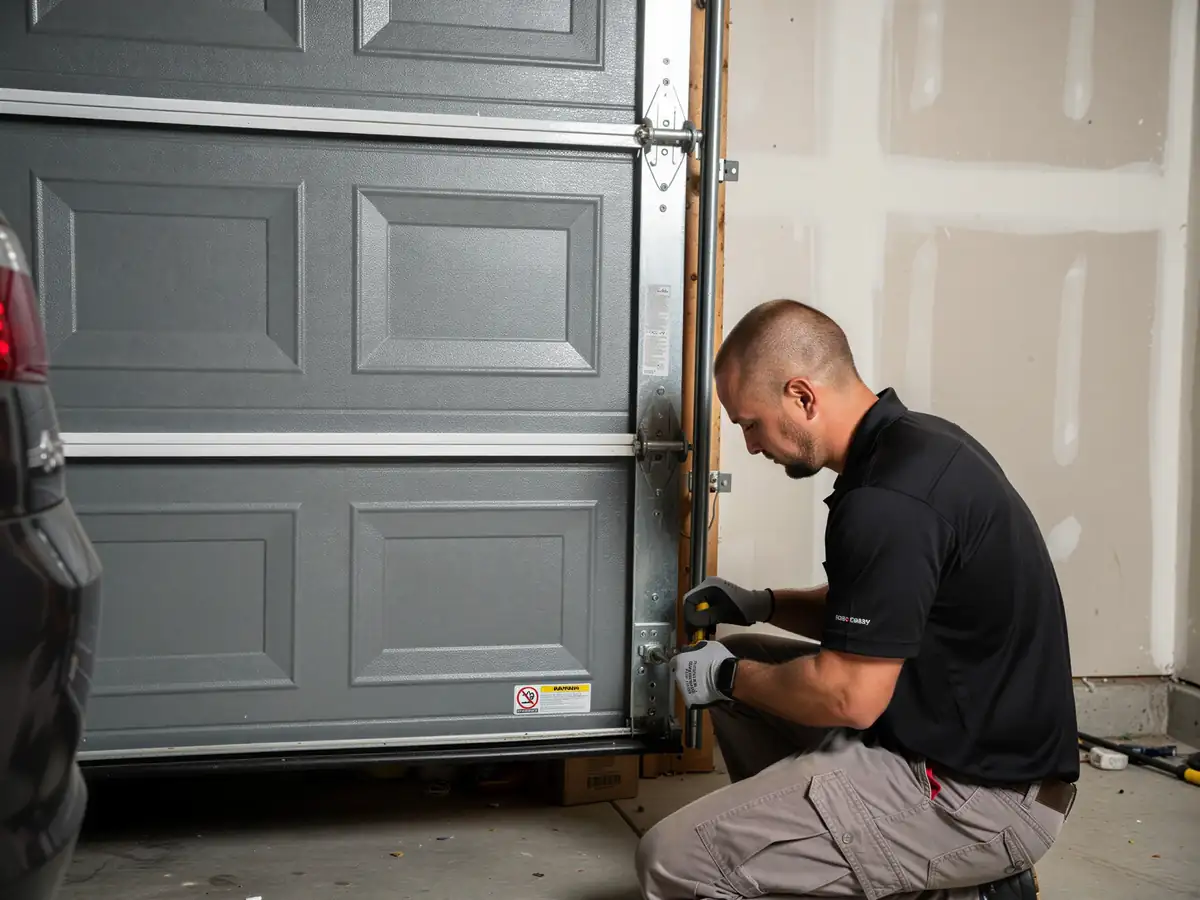
A technician tests the door under power and by hand and finds what actually failed.
03
Clear, up-front plan
You get the fix that’s needed and what drives the cost - before any work starts.
04
Repaired & tested
The repair is done, the door is set true and tested, and the work area left clean.
Not sure which repair your door needs in Chesterfield, MO? Describe what it’s doing - every job starts with a diagnosis.
Why does my garage door still let in cold air after I replaced the bottom seal?
If your house is part of the common 1960s-70s stock in this area, the side jambs and top stop molding may have shrunk or warped independently of the bottom seal. A new bottom seal fixes one leak point, not the whole perimeter. We check all three before calling a seal job finished.
How often do garage door seals need replacing in a cold moderate climate like this?
We don't have a fixed interval to give you, since it depends on the seal material and how exposed the door is. What we can say is that freeze-thaw cycling here wears seals faster than a steady cold climate would, so a seal that looks fine in October can be cracked by February.
Is a new seal enough, or do I need a new door?
If the frame and track are square and the slab is reasonably level, a seal usually solves it. If the opening has shifted out of square, which happens on some of the older houses in this area, a seal won't close the gap and you're better off pricing a replacement door instead.
Ready to get your garage door sorted?
Tell us what it’s doing and where you are in Chesterfield - we’ll take it from there.