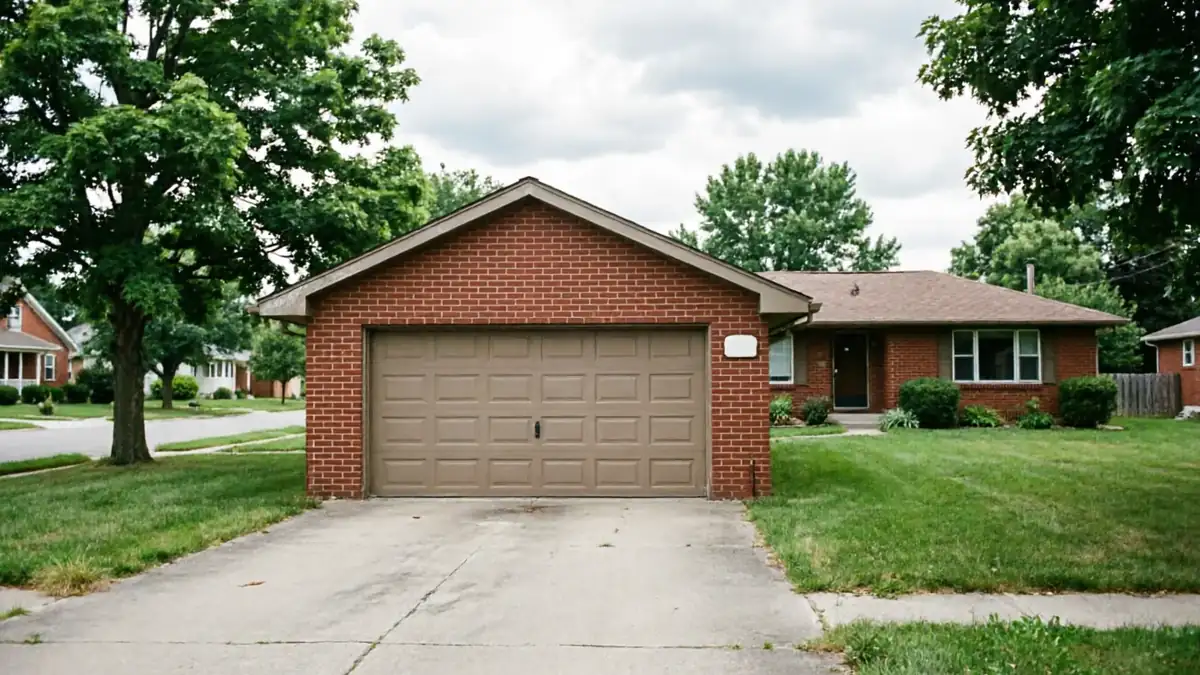
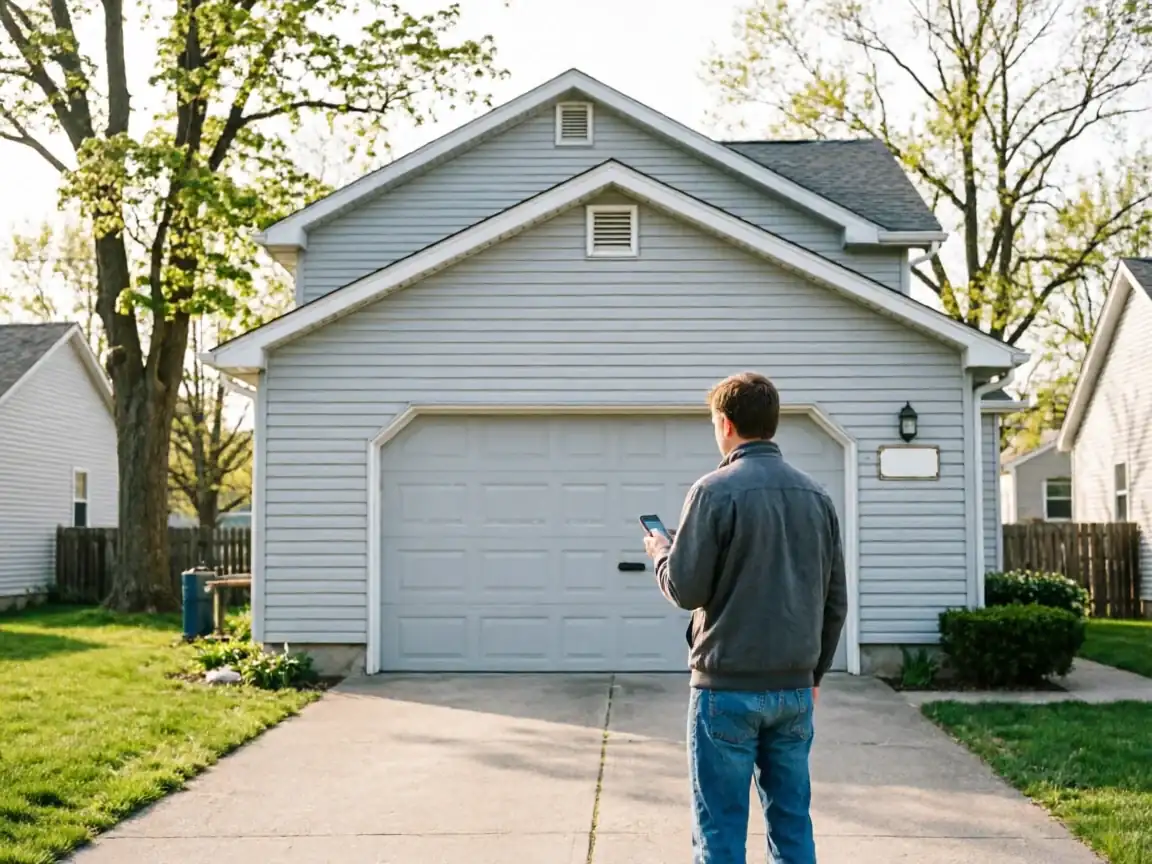
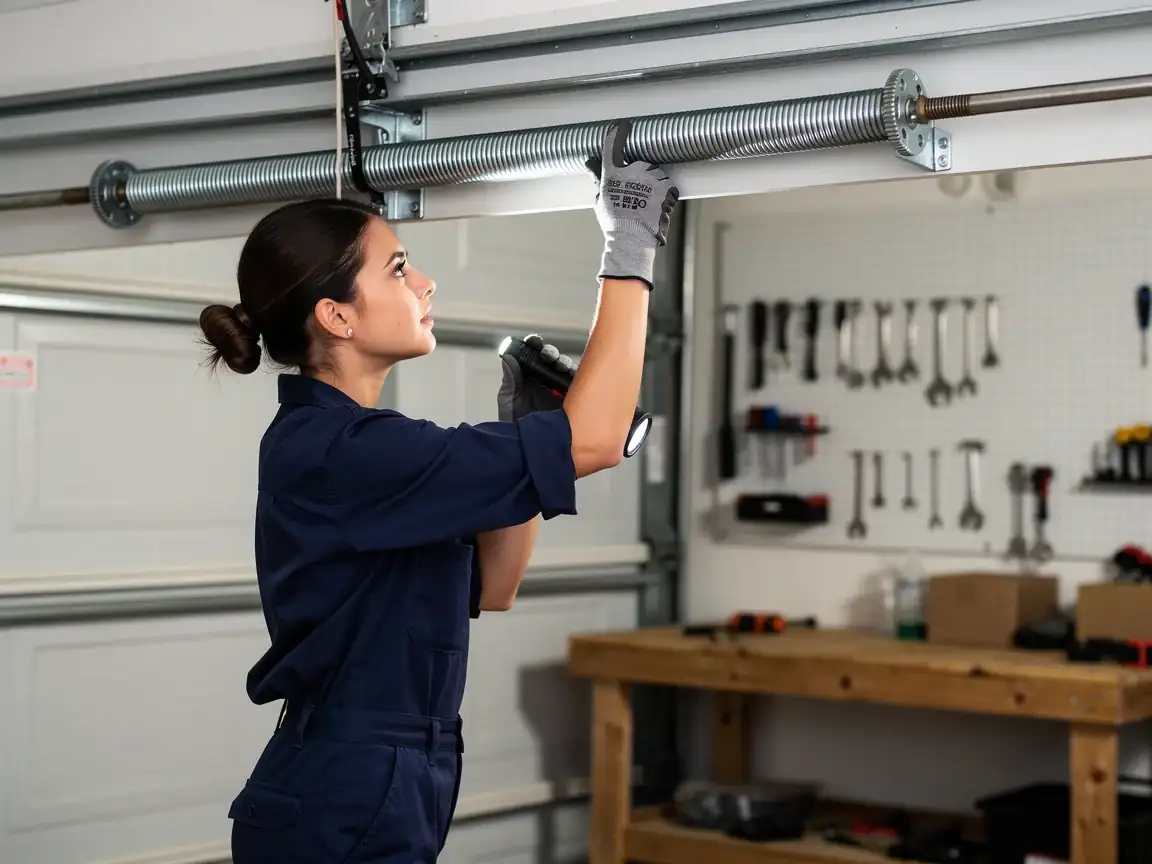
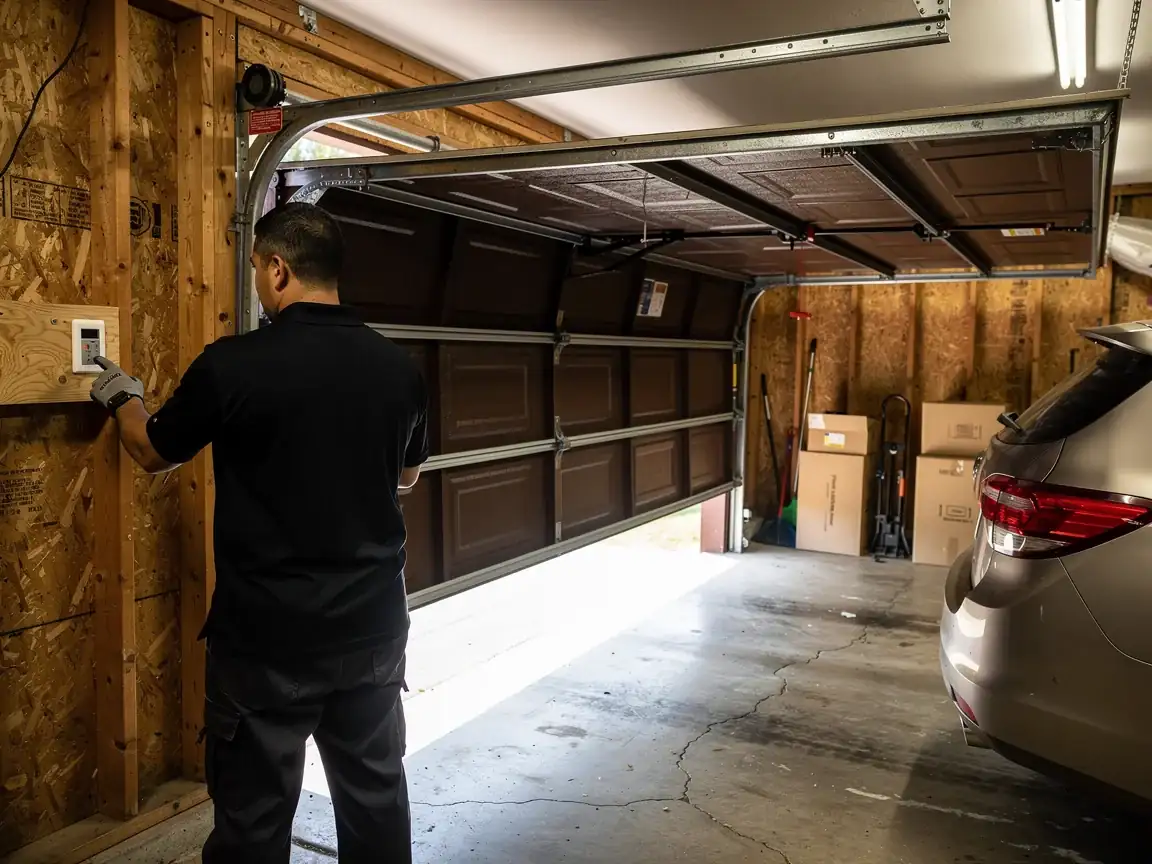
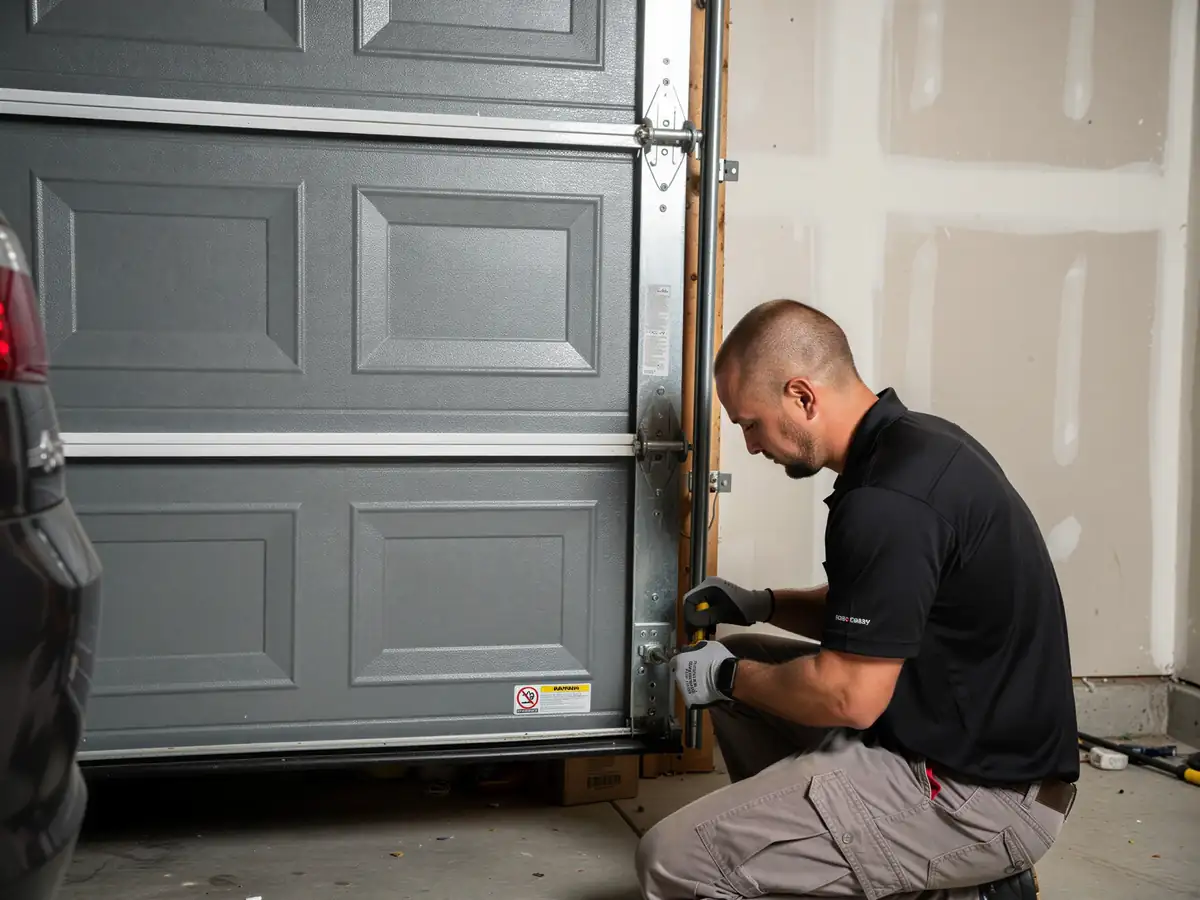
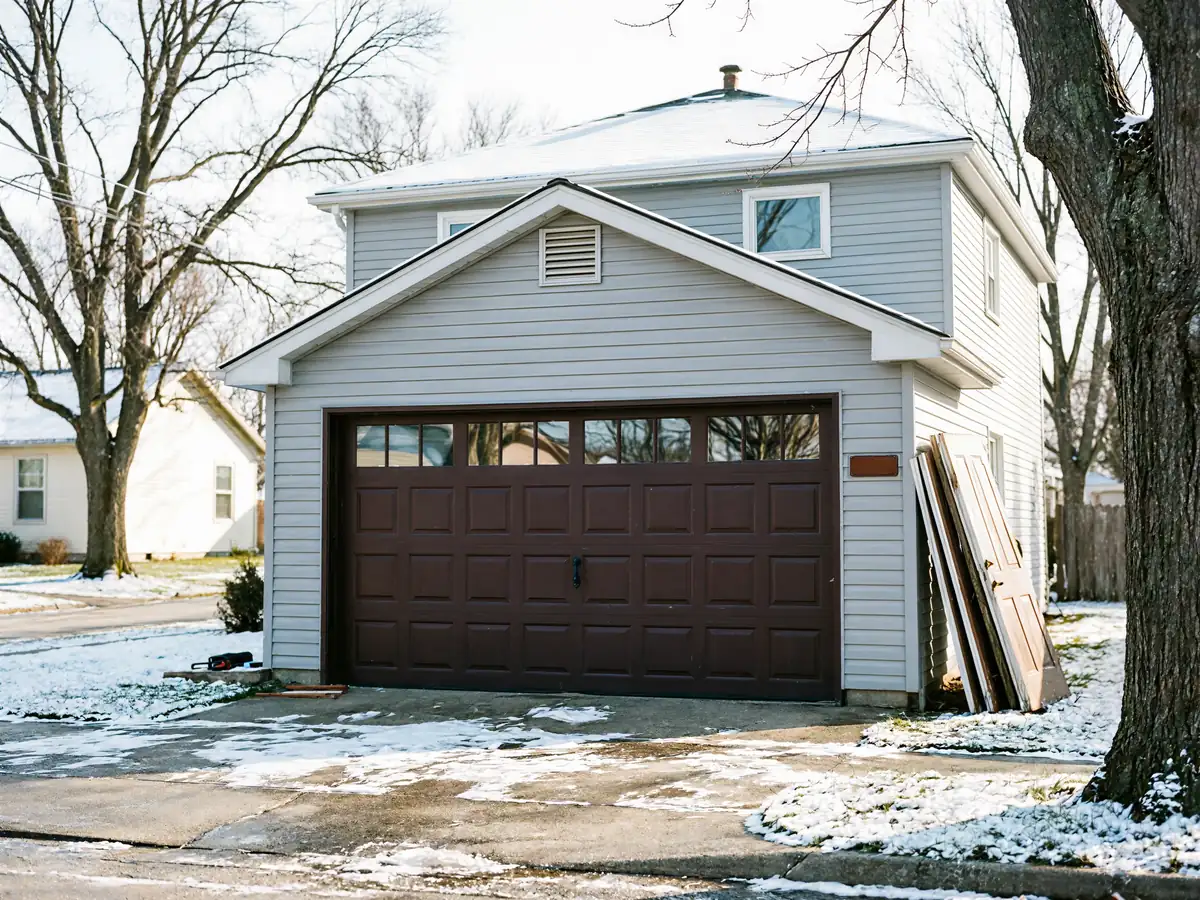
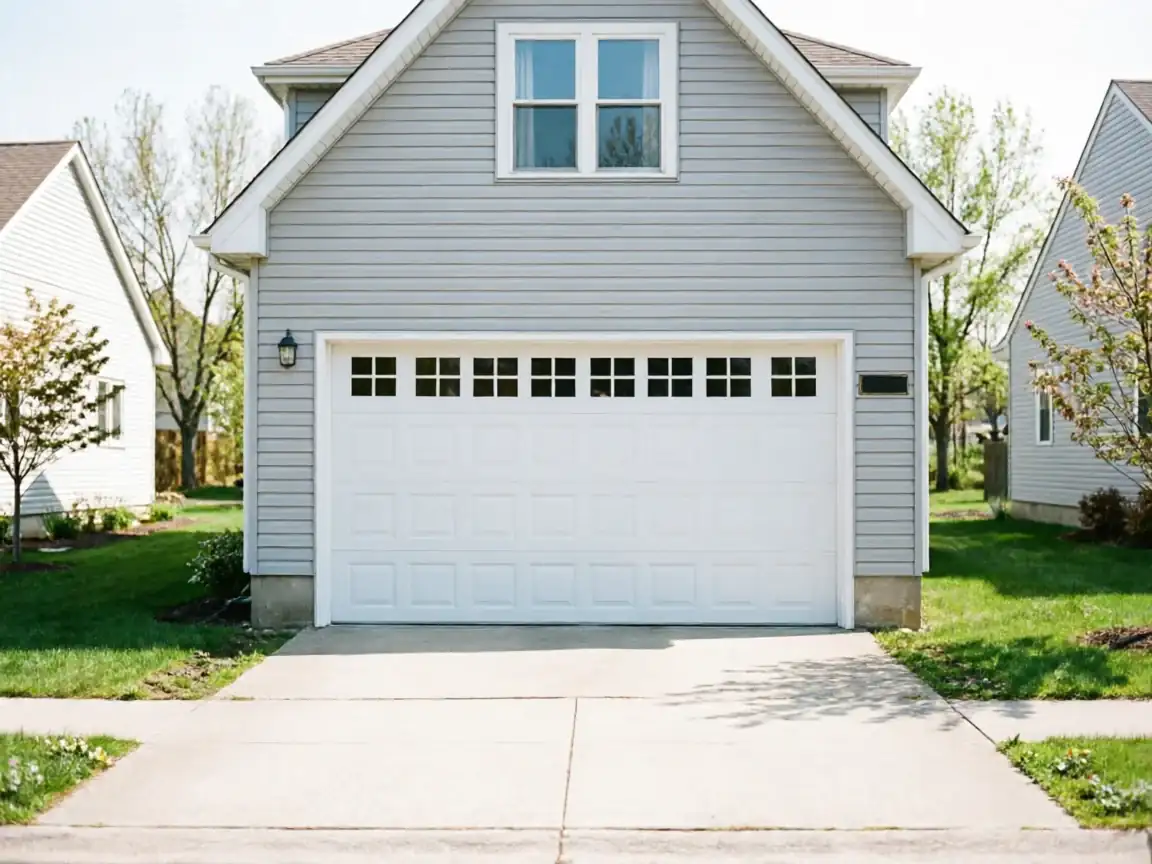
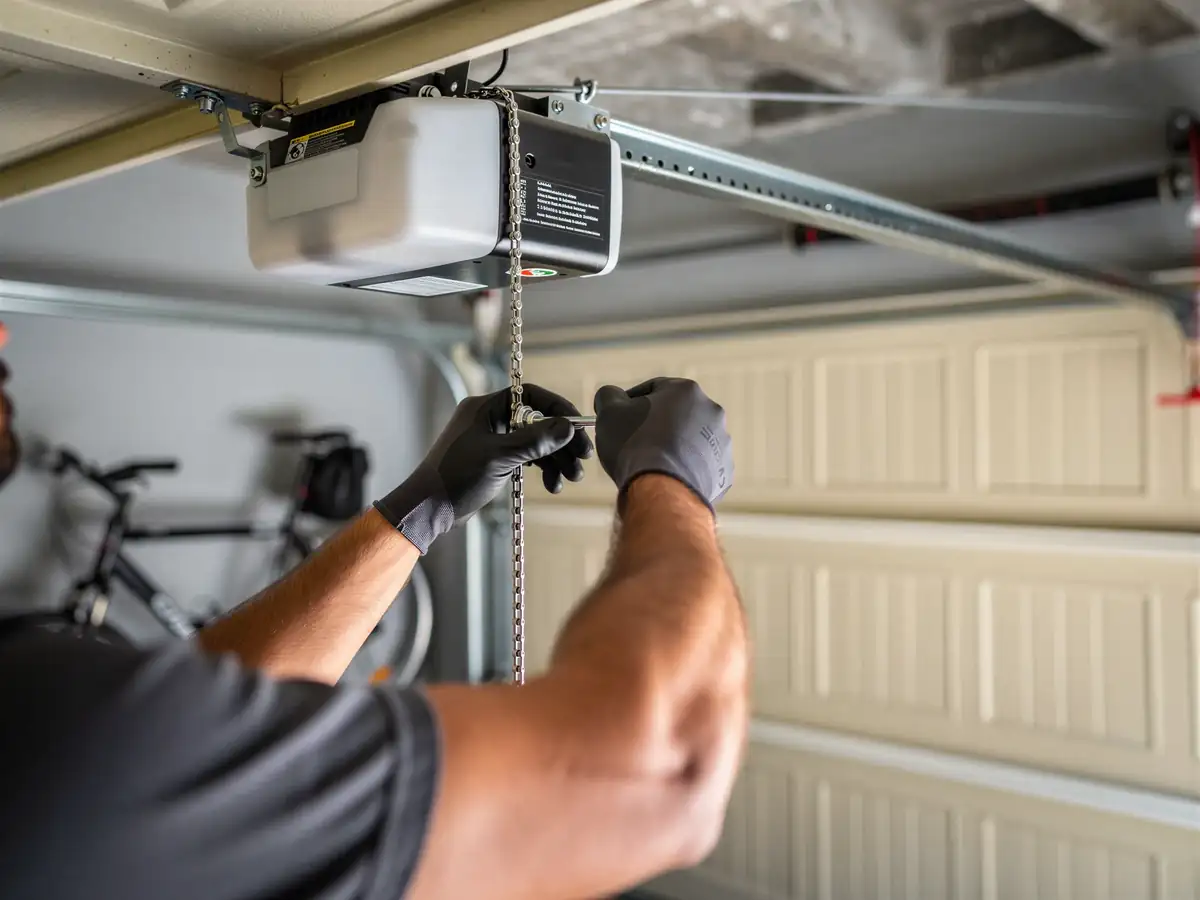
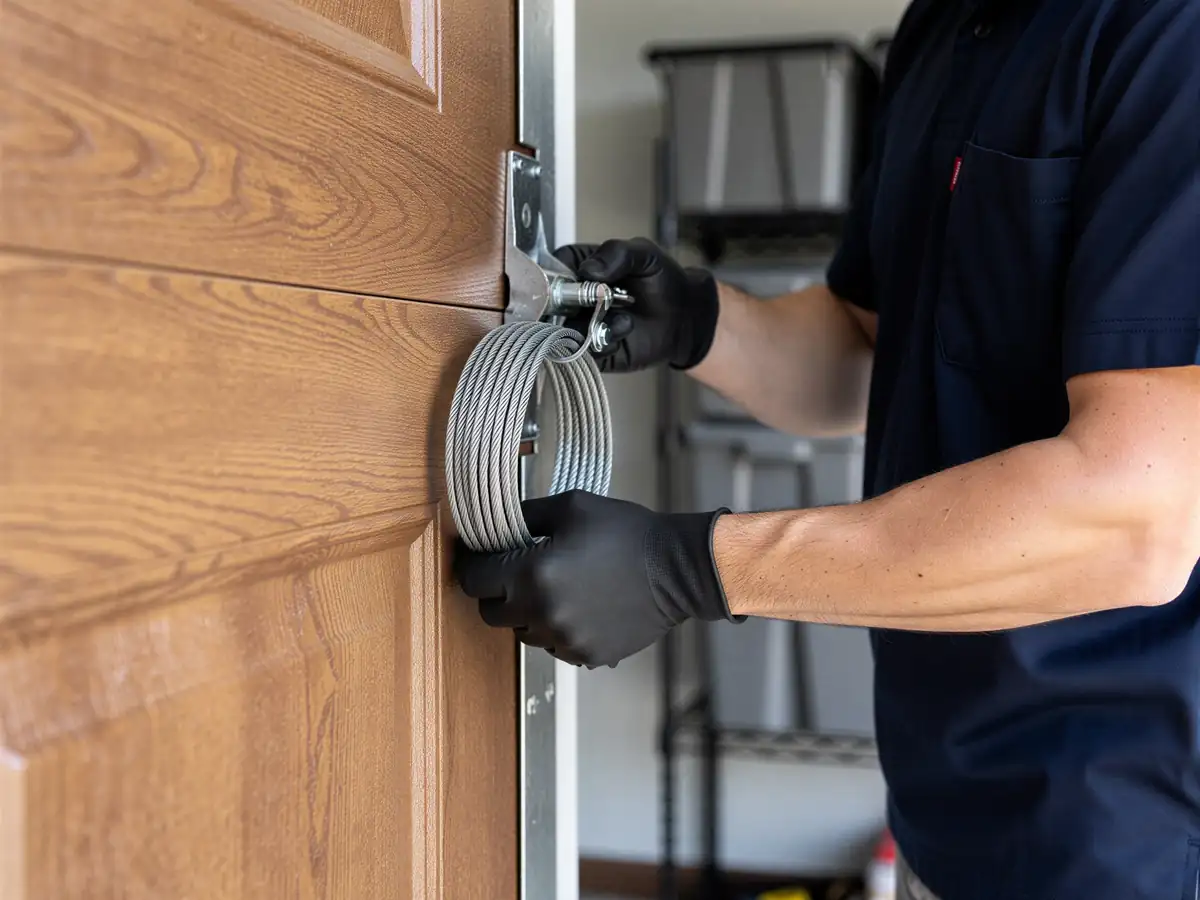
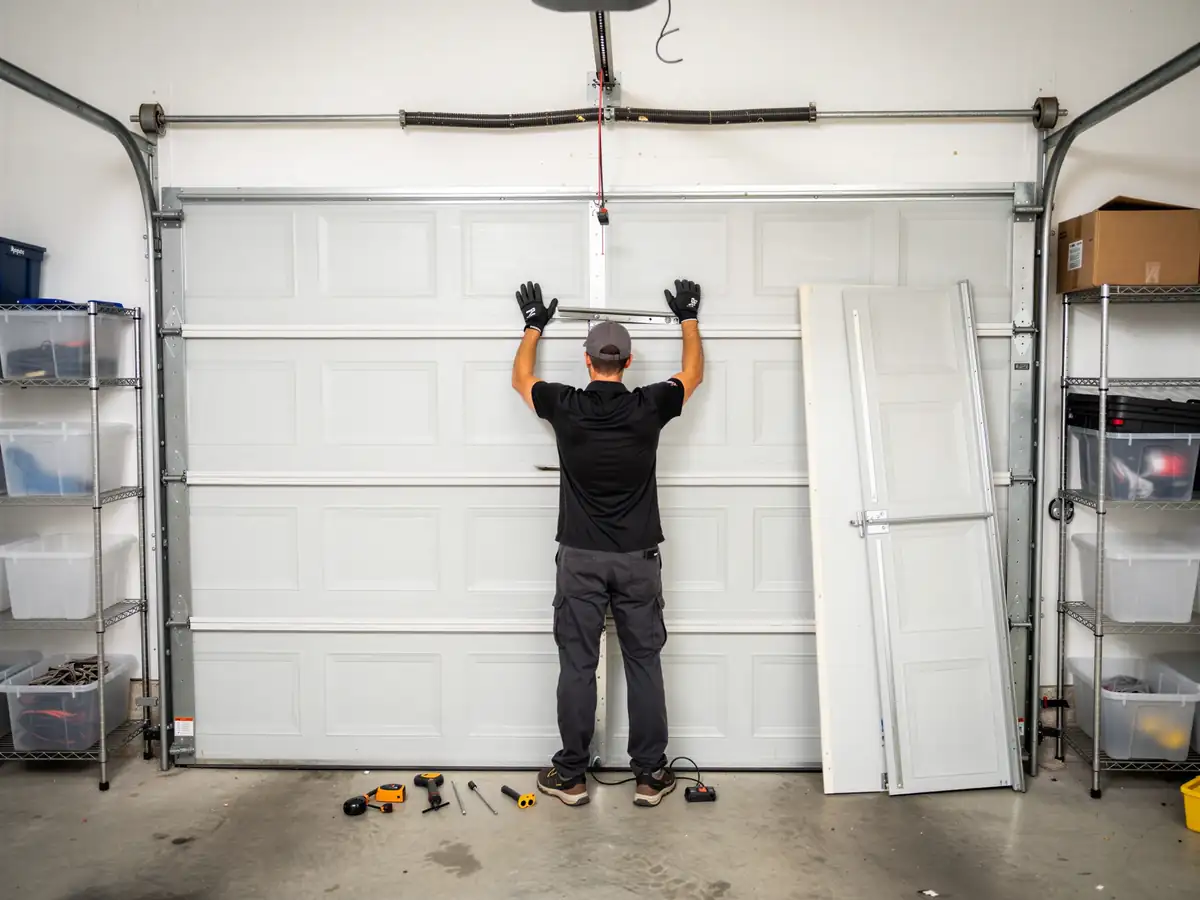
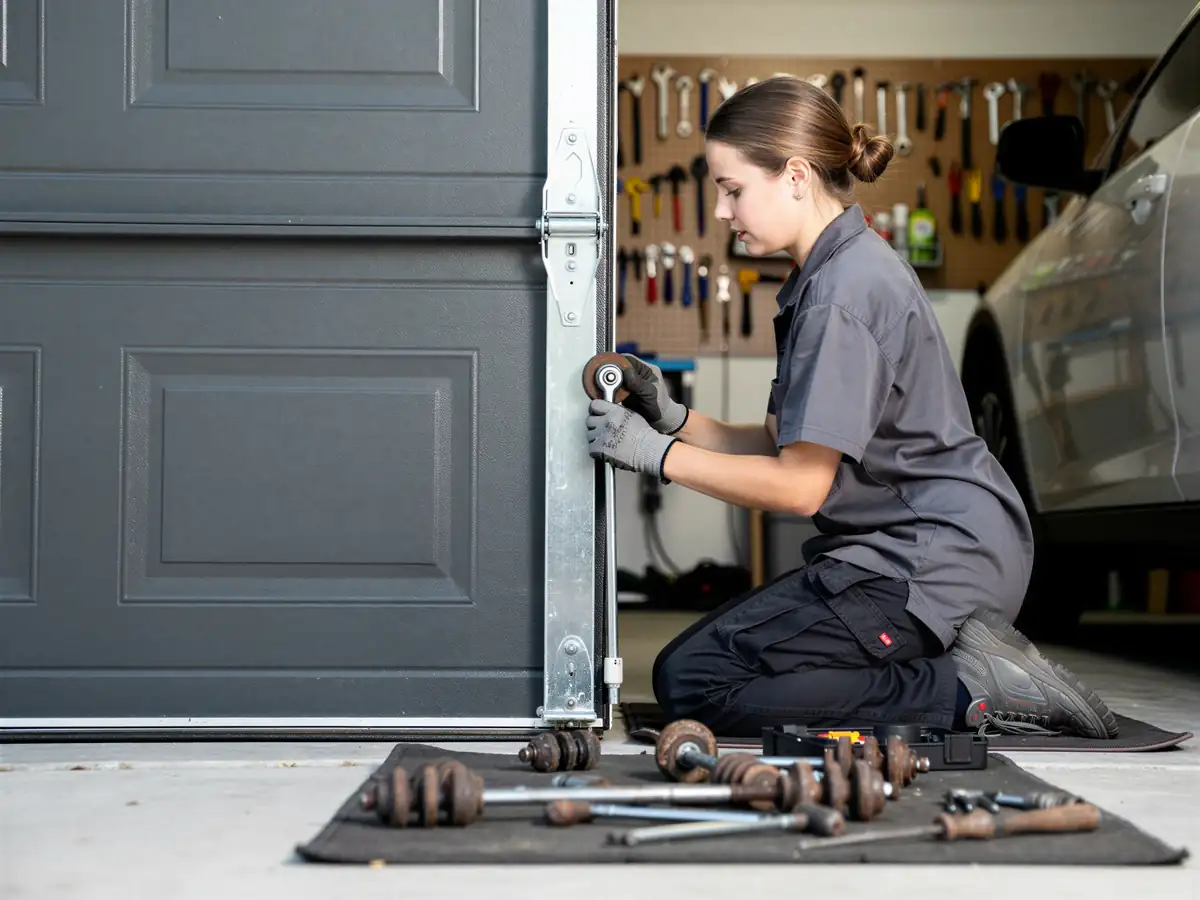
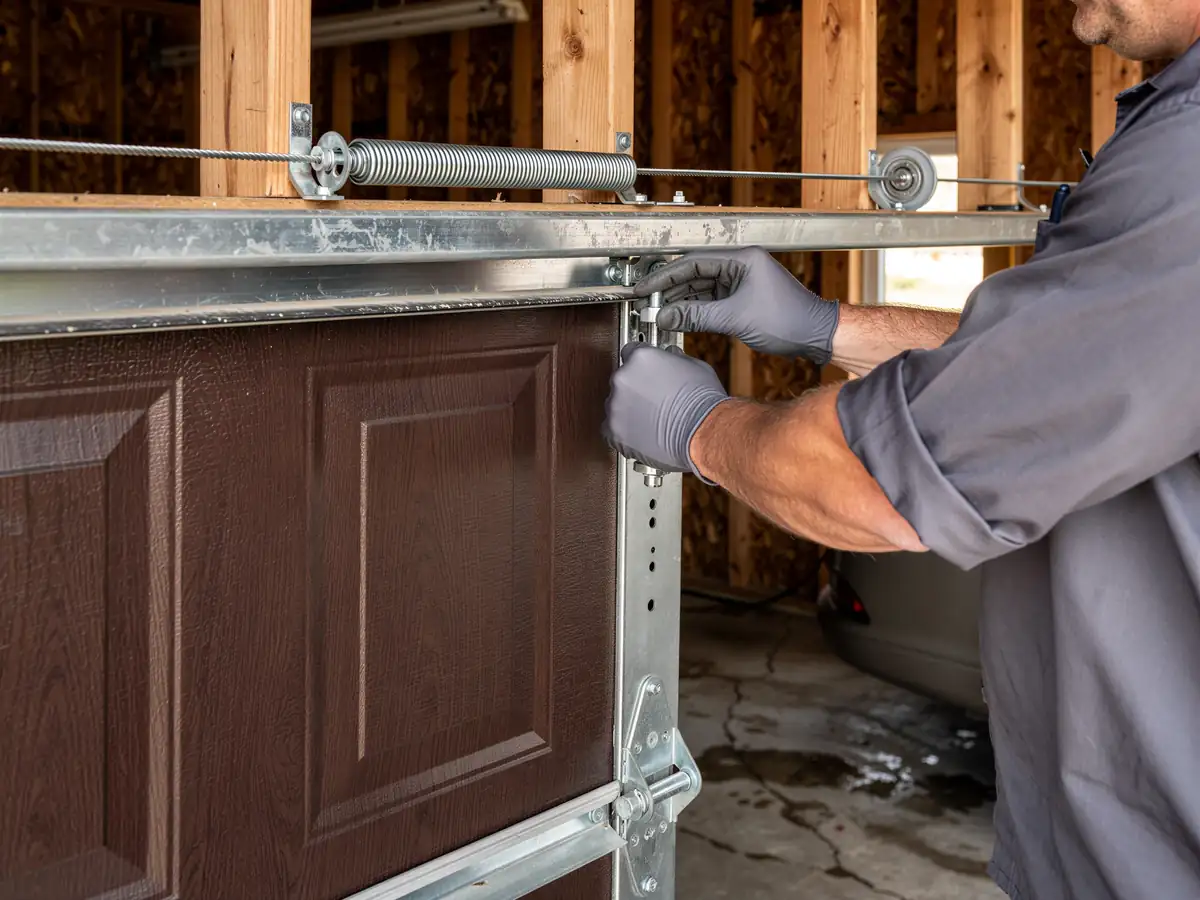
What a job costs on a detached garage versus an attached one in Chesterfield usually comes down to what's behind the drywall, not the door panel itself. Most of the housing stock here was built between 1947 and 2011, with the heaviest concentration in the 1960s and 70s, and that era treated the two structures differently. A detached garage from that period often has its own short run of wiring and a track bolted to exposed framing you can get at from three sides. An attached garage from the same build window usually has the opener tied into house power, the track running tight against a shared wall, and less room to work a torsion bar safely. That difference changes labor time before it changes anything about the door itself. We won't quote a number here we don't have, but we will tell you plainly: if your opener on a detached structure needs a new circuit run, that's electrical work layered on top of the door work, and it's worth asking about up front rather than finding out mid-job. The honest limitation is that we can't price this sight unseen - too much depends on what decade your framing is from and whether anyone's touched it since.
Where People Go Wrong
The most common mistake we see in this area is treating a detached garage door like it's just a smaller version of the attached one. It isn't. On a lot of the 1960s and 70s stock here, the detached structure was framed as a standalone box with its own header, which means the track mounting points were never built to carry the same load as a door tied into the main house wall. People replace a detached door with a heavier insulated panel and don't upsize the spring or reinforce the header to match, and within a year the opener is straining and the track is pulling loose. On the attached side, the error runs the other way - owners assume the shared wall gives them more structural slack than it does, and they skip bracing that the original 1960s framing never had because insulated doors weren't standard when the house went up. Either way, the fix isn't complicated, but it does mean actually looking at what decade and structure you're working with before ordering parts, not just measuring the opening.
How Local Conditions Play In
Chesterfield sits in a cold-moderate climate band, and that matters more for a detached garage than an attached one. An attached garage picks up some ambient heat from the house through the shared wall even with no insulation of its own. A detached garage doesn't get that benefit - it swings with the outside temperature all day, every day. On the older end of the local stock, built when insulated steel doors weren't the default, that temperature swing works on wood jambs and original hardware in a way that shows up as swelling, sticking tracks, and springs that lose tension faster than they would in a milder band. If your detached garage still has its original door from the 1960s or 70s construction wave that makes up most of this area's housing, that's the structure most likely to be feeling the cold-moderate swings right now, not the attached one next to the heated house.
The Situation
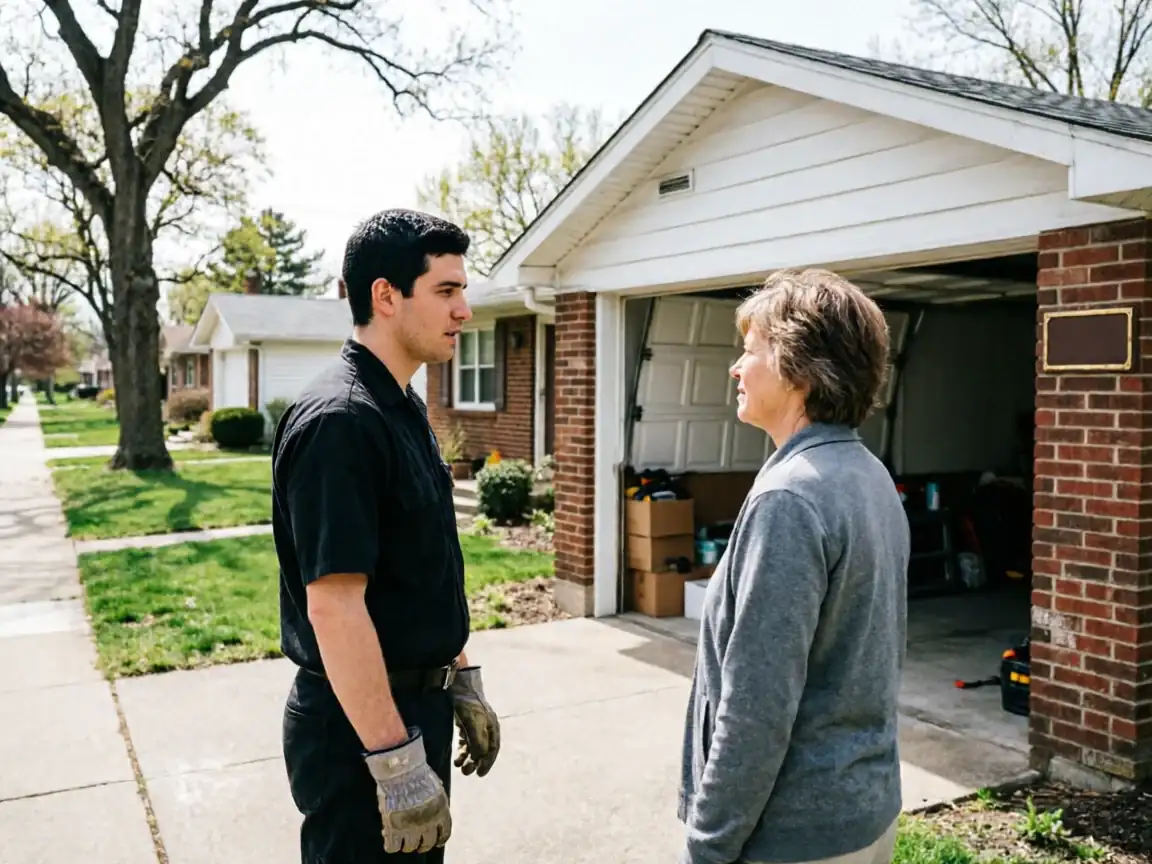
Across this corridor - Chesterfield out to Clarkson Valley two miles off, Ellisville and Weldon Spring five miles out, Town and Country and Manchester a few miles past that - the build era doesn't change much. Housing here mostly dates to the 1960s and 70s, spread across dozens of named subdivisions rather than one or two big tracts, and that means the detached-versus-attached mix varies block by block more than town by town. With roughly 149,000 owner-occupied houses in the broader service area and a median household income north of $86,000, we see a fair number of original detached structures still standing next to additions where an attached garage got built on later - sometimes on the same lot. If you're not sure which category your garage falls into structurally, that's a five-minute look, not a guess.
How it works
From “it’s stuck” to “it’s fixed”
01
Tell us what’s wrong
Describe the symptom - won’t open, loud bang, opener runs but the door won’t move.
02
On-site diagnosis
A technician tests the door under power and by hand and finds what actually failed.
03
Clear, up-front plan
You get the fix that’s needed and what drives the cost - before any work starts.
04
Repaired & tested
The repair is done, the door is set true and tested, and the work area left clean.
Not sure which repair your door needs in Chesterfield, MO? Describe what it’s doing - every job starts with a diagnosis.
Does a detached garage door cost more to replace than an attached one here?
Not because of the door itself - the difference is usually wiring and framing access. A lot of detached structures from this area's 1960s-70s build wave have their own electrical run and open framing, which can mean more or less labor depending on condition. We'd need to see it before quoting.
Why does my detached garage door freeze up more than my neighbor's attached one?
Chesterfield sits in a cold-moderate climate band, and a detached garage swings with outside temperature all day since it doesn't borrow heat through a shared wall like an attached garage does. Older wood jambs and original hardware feel that swing more than newer insulated setups.
Can I put a heavier insulated door on my old detached garage?
Sometimes, but the header and track mounts on a lot of this area's 1960s and 70s detached structures were built for the lighter original doors. Upsizing the panel without checking the spring and framing is where we see opener strain show up within a year.
Ready to get your garage door sorted?
Tell us what it’s doing and where you are in Chesterfield - we’ll take it from there.