Serving Chesterfield, MO & nearby
(636) 204-2551
Chesterfield, MO

When a Torsion Spring Breaks in a Chesterfield Cold Snap

Torsion springs snap more in a Chesterfield cold snap because of the area's housing age and climate. Here's what drives the cost and what homeowners get wrong.

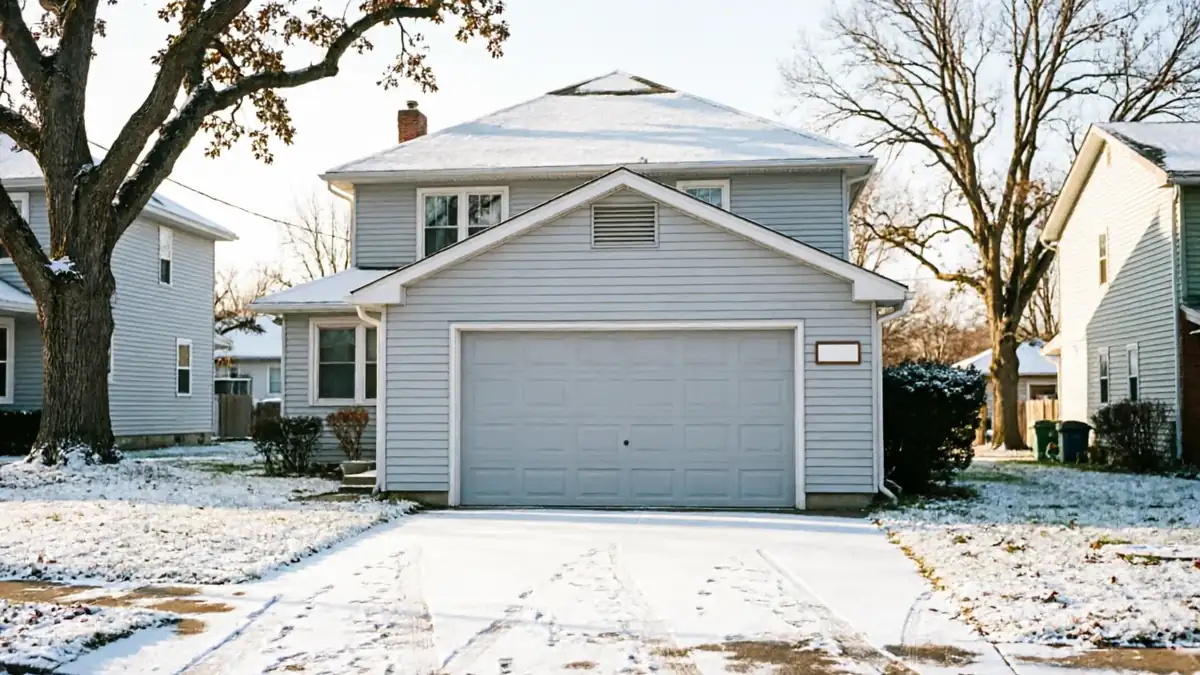
A light blue house with a gray garage door is covered in snow.

The Cost of This Job

We don't have a price list to hand you here, so I won't invent one. What I can tell you is what moves the number up or down. A single-spring setup, common on older garages in this area, costs less to swap than a double-spring system because there's only one part and one set of cables to deal with. Houses in this part of the county were built anywhere from 1947 to 2011, with the median landing around 1969, so you'll find both. If your garage is original to a house from that era, odds are decent it's still running one spring, and the job is simpler than on a newer double-door setup with two.\n\nWhat pushes a job from simple to not-simple: a cable that jumped the drum when the spring let go, a bent track from the door slamming down unevenly, or an opener that got strained trying to lift a door with no spring tension left. Any of those adds parts and labor on top of the spring itself.\n\nThe honest limitation here: if your garage has the older single-spring hardware and that spring snaps in a hard freeze, we may not have an exact match on the truck. Some of those parts aren't stocked anymore and have to be ordered, which means a short wait instead of a same-visit fix.

Where People Go Wrong

The biggest mistake we see is someone trying to force the door open or closed after a spring breaks. Without spring tension, the door's full weight is on the opener or on whoever's pulling the rope, and that's how tracks bend and cables snag. The door isn't stuck, it's unsupported, and treating it like a stuck door usually turns a one-part repair into a three-part repair.\n\nThe second mistake is ignoring a spring that's already struggling: slow travel, a door that doesn't quite seat at the bottom, or a loud bang from the garage on a cold morning. That bang, most of the time, is the spring. People wait because the door still technically opens. In houses built in that 1960s-70s wave that makes up most of the stock out here, original springs are well past the age where that kind of bang is a warning you can put off.\n\nThe third is assuming both springs need replacing just because one did. On a double-spring door, we replace both since they age together, but on an older single-spring setup there's nothing to match it to.

How Local Conditions Play In

This area sits in a cold-moderate climate band, which matters more for springs than most people realize. Steel contracts in the cold and loses a bit of flex. A spring that's been carrying a door's weight for years without issue can go from fine to snapped the moment the temperature drops hard overnight, especially one that's already fatigued from age. That's when a spring goes in cold weather, not usually during a heat wave or in the middle of a mild afternoon.\n\nAcross this service area, which covers 274,722 households with 148,813 of them owner-occupied, and a median household income of $86,641, most people call us to replace the spring outright rather than try to stretch it through another cold front. That's the practical call once a spring shows its age: a $30 part attitude doesn't apply when the alternative is a door that could drop on a car or a kid's bike.\n\nDrive five miles out to Ellisville or Weldon Spring, or two miles to Clarkson Valley, and you're in the same housing wave and the same cold snaps. The pattern holds across this whole stretch of the county, not just here.
The Situation

Put the pieces together and you get a predictable pattern: houses built mostly between 1960 and 1979, a lot of them still on original torsion hardware, sitting in a climate band that swings cold enough to stress steel every winter. That combination is why a spring snapping on a cold morning isn't bad luck, it's just what happens when thirty- or forty-year-old steel meets a hard freeze.\n\nIf your garage is in that older bracket and you've heard a bang, felt the door get heavy, or noticed it's not closing all the way, don't wait for the next cold front to test it further. A spring at the end of its life doesn't usually fail gently.\n\nWe work across this part of the county, from Chesterfield out through places like Town and Country, Manchester, and Creve Coeur, and we see the same aging hardware in most of them. If you're not sure whether what you're hearing is the spring or something else, that's worth a look before it decides for you.

How it works

From “it’s stuck” to “it’s fixed”

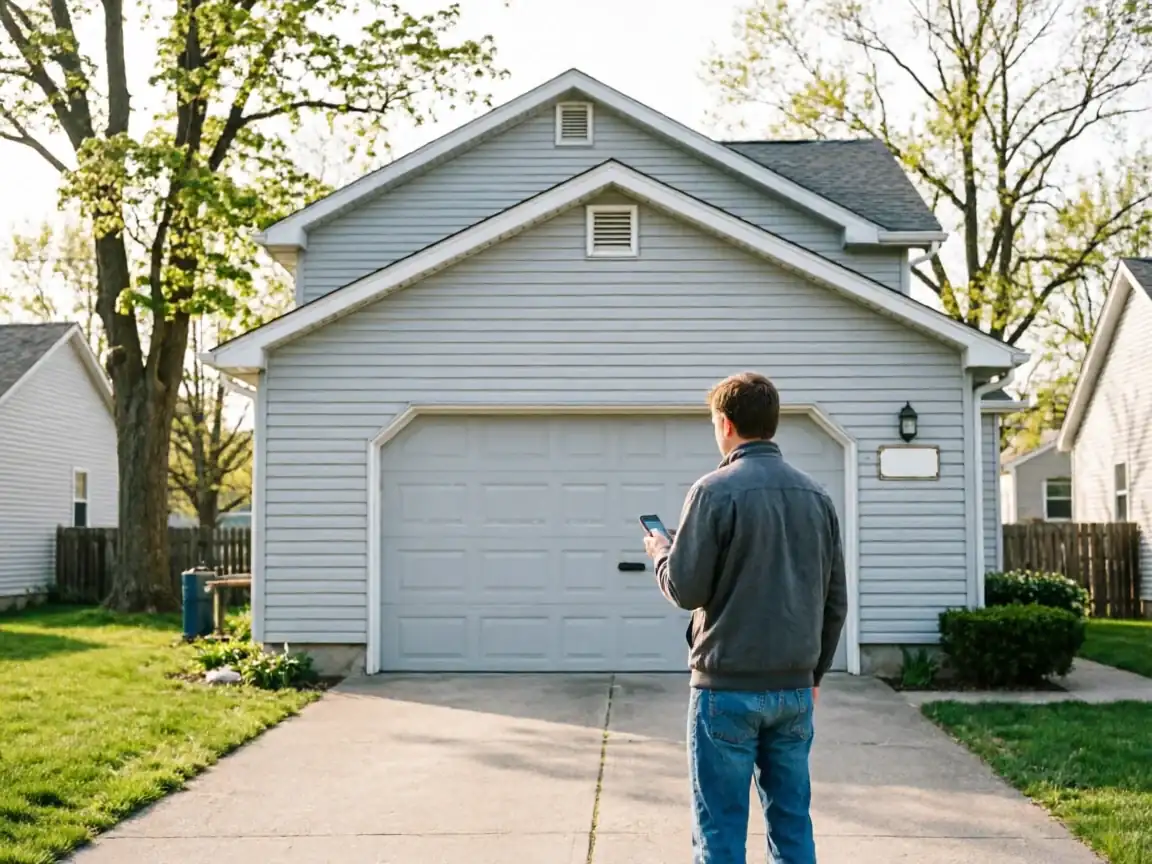
A man stands in a driveway looking at his phone in front of a house.

Tell us what’s wrong

Describe the symptom - won’t open, loud bang, opener runs but the door won’t move.

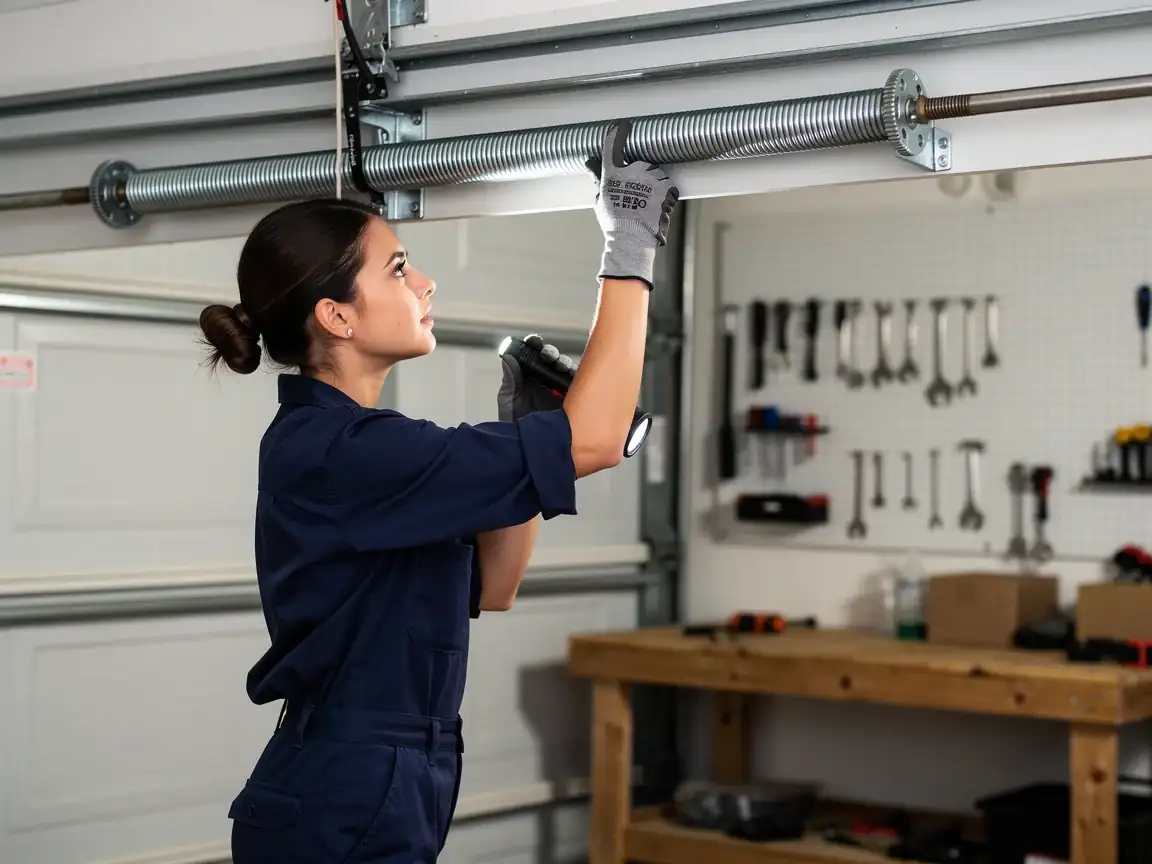
A technician in a blue jumpsuit inspects a garage door torsion spring with a flashlight.

On-site diagnosis

A technician tests the door under power and by hand and finds what actually failed.

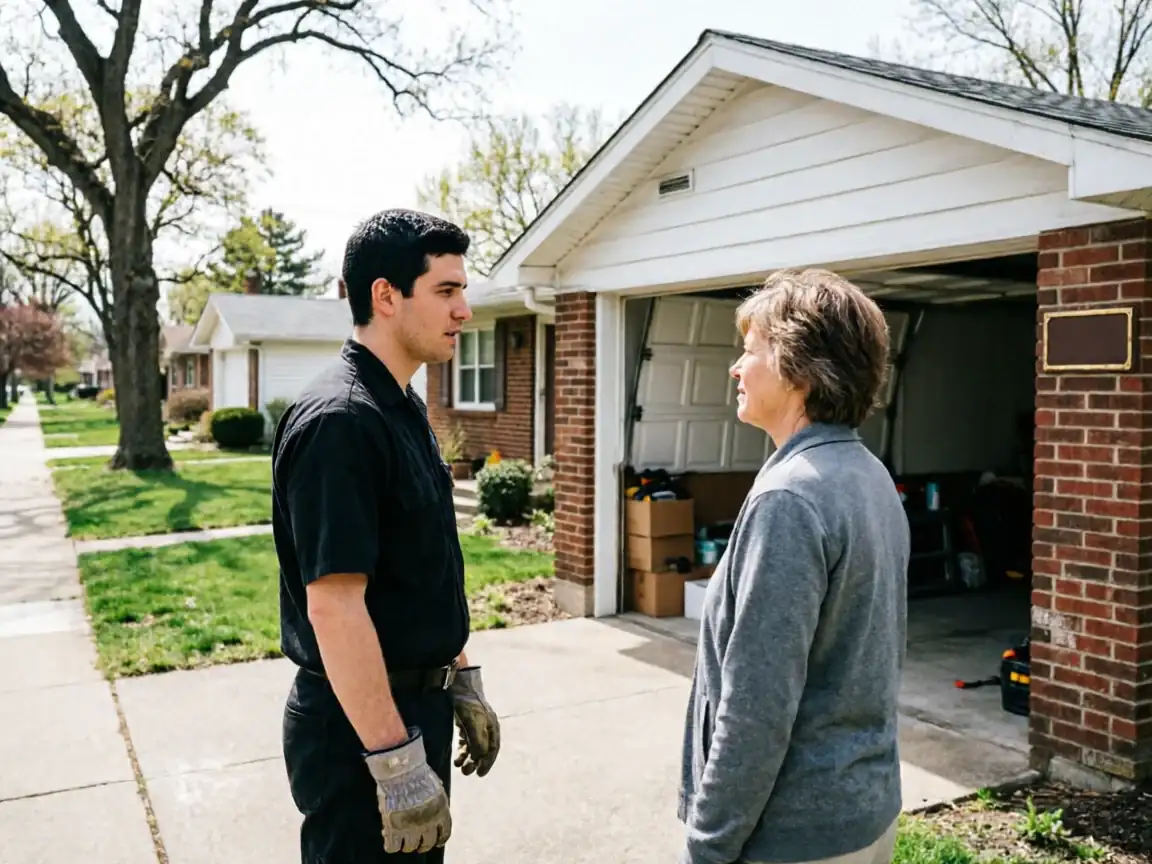
A technician in a black shirt talks to a woman in front of a garage.

Clear, up-front plan

You get the fix that’s needed and what drives the cost - before any work starts.

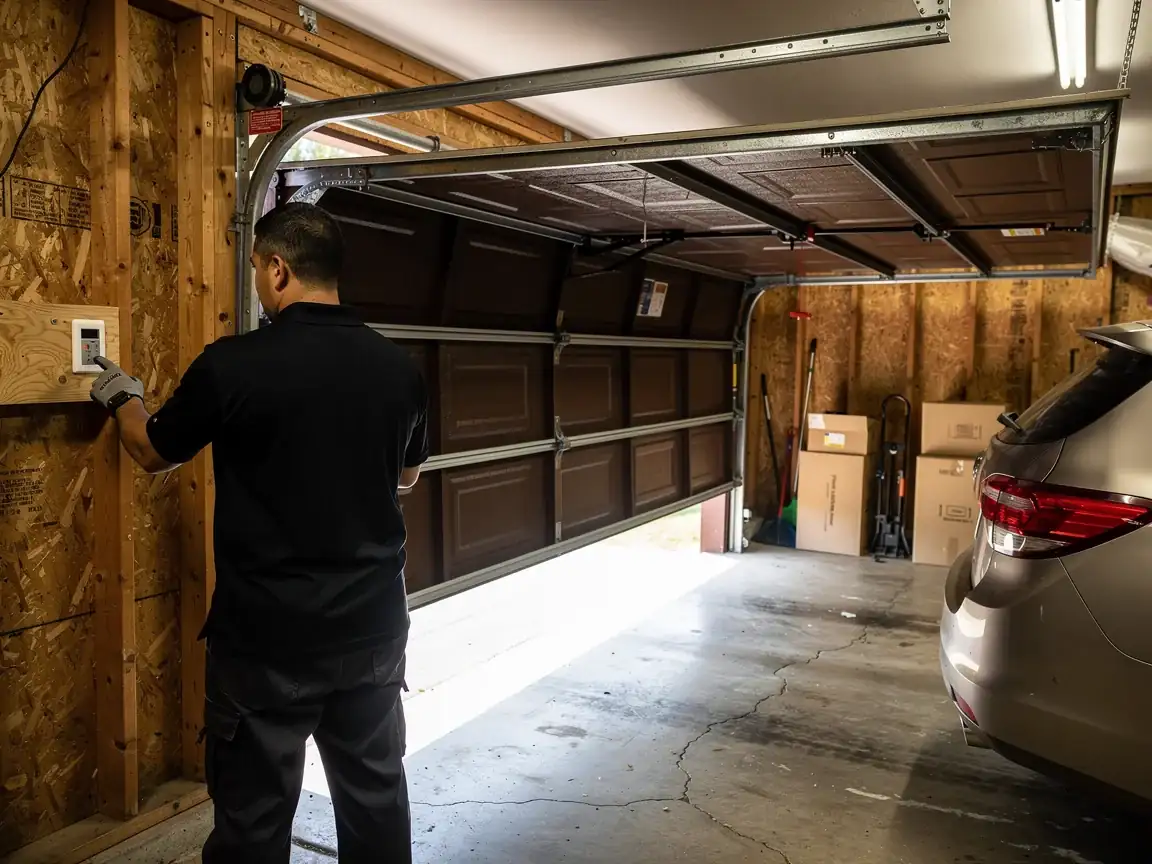
A technician operates a brown garage door from a wall-mounted control panel.

Repaired & tested

The repair is done, the door is set true and tested, and the work area left clean.

Not sure which repair your door needs in Chesterfield, MO? Describe what it’s doing - every job starts with a diagnosis.

How we work

What to expect

Diagnosis firstEvery visit starts by finding what actually failed - not a pre-written parts list.
The right part for the doorSprings and openers matched to the door’s weight and age, so the fix holds up.
Straight answersWhen a repair makes more sense than a replacement - or the reverse - you hear it plainly.
Clean, careful workTension released safely, hardware set true, the door tested under power before we leave.
What we do

Garage Door Services

Repair and installation work for Chesterfield homes and businesses.

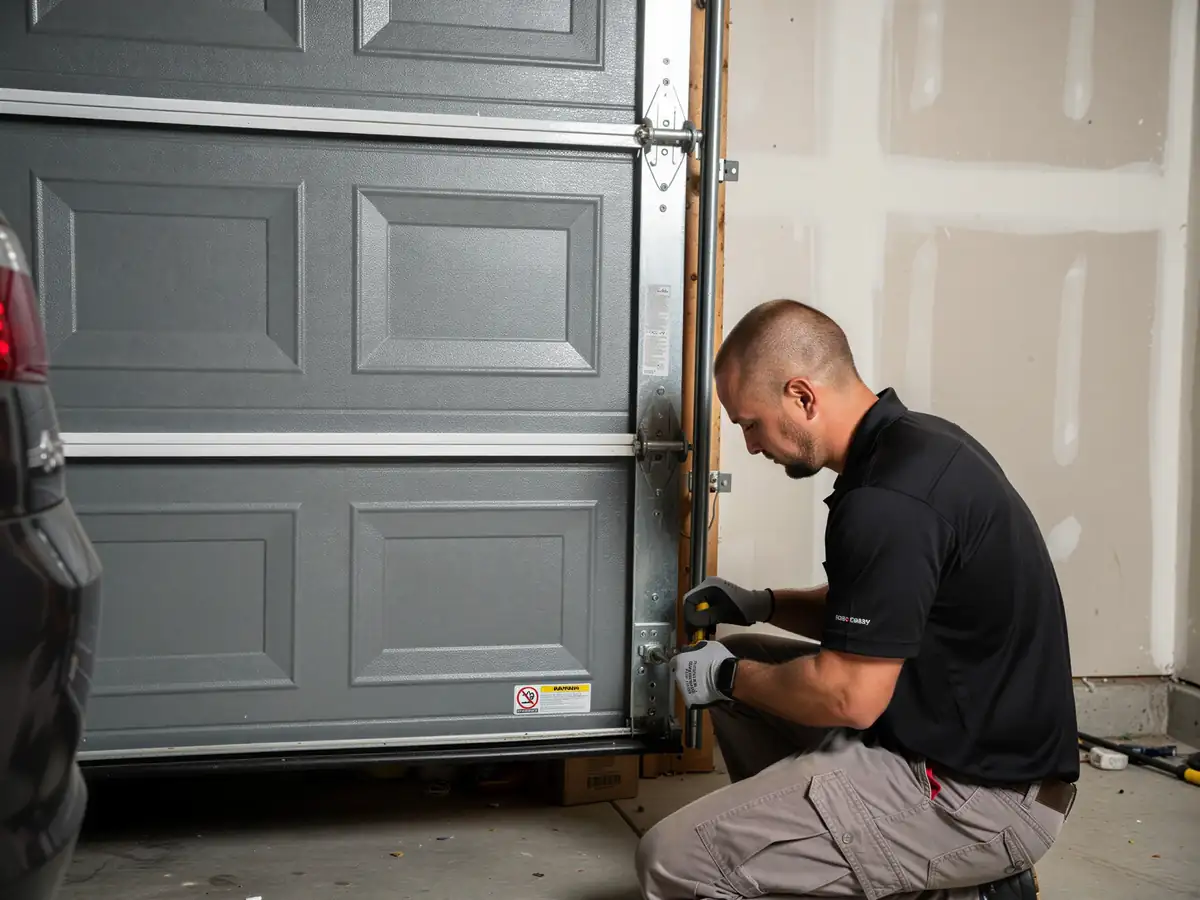
A technician in a black shirt and gray pants works on a gray garage door.

Garage Door Repair

Chesterfield homes built mostly in the 1960s and 70s carry original torsion hardware that wasn't made for Missouri cold snaps. We fix springs, openers, and tracks on original equipment.

Learn more
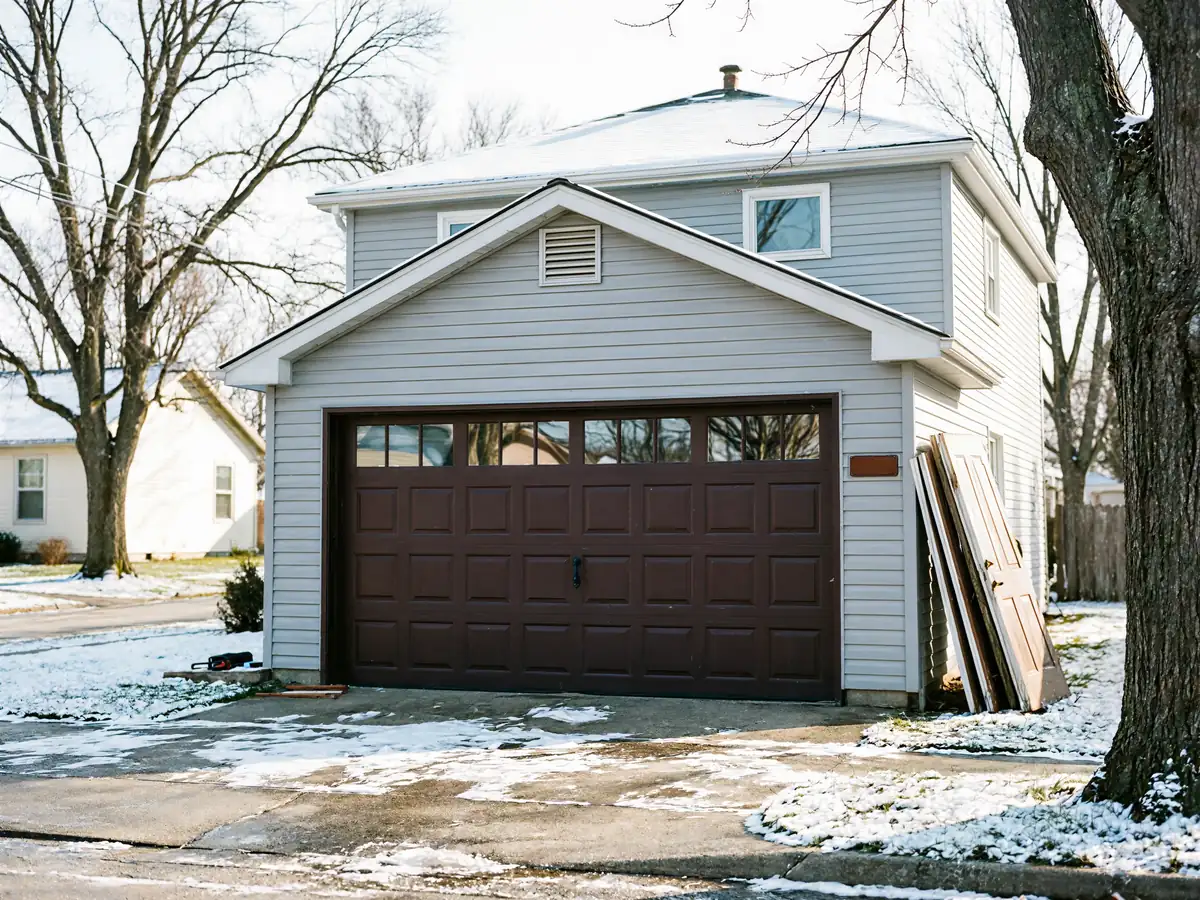
A two-story house with a brown garage door and old doors leaning against the wall.

Garage Door Installation

Chesterfield's garage doors mostly date to the 1960s-70s building boom. We install insulated replacements sized for this area's cold winters and original openings.

Learn more
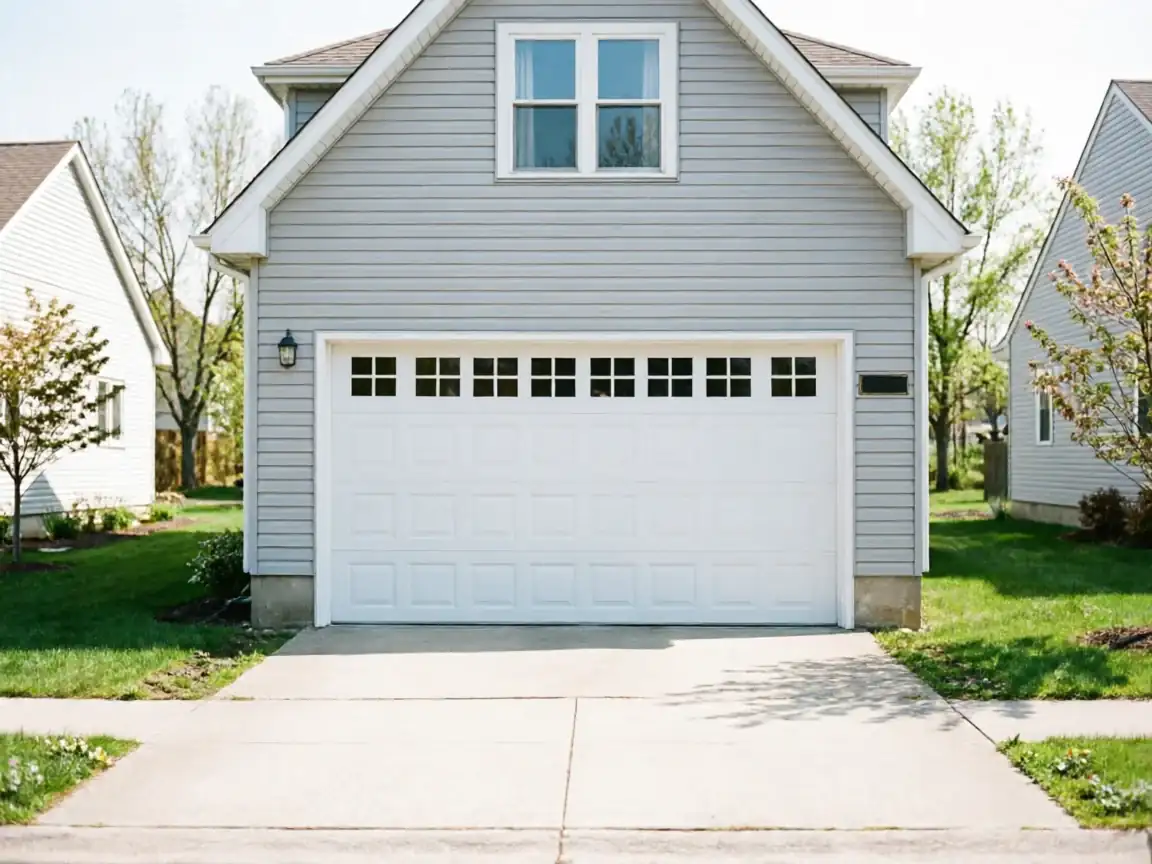
The house has light gray siding and a white garage door with windows.

Garage Door Service

Garage door service for Chesterfield homes built 1947-2011, where cold winters stress original springs, cables, and track hardware on aging doors.

Learn more
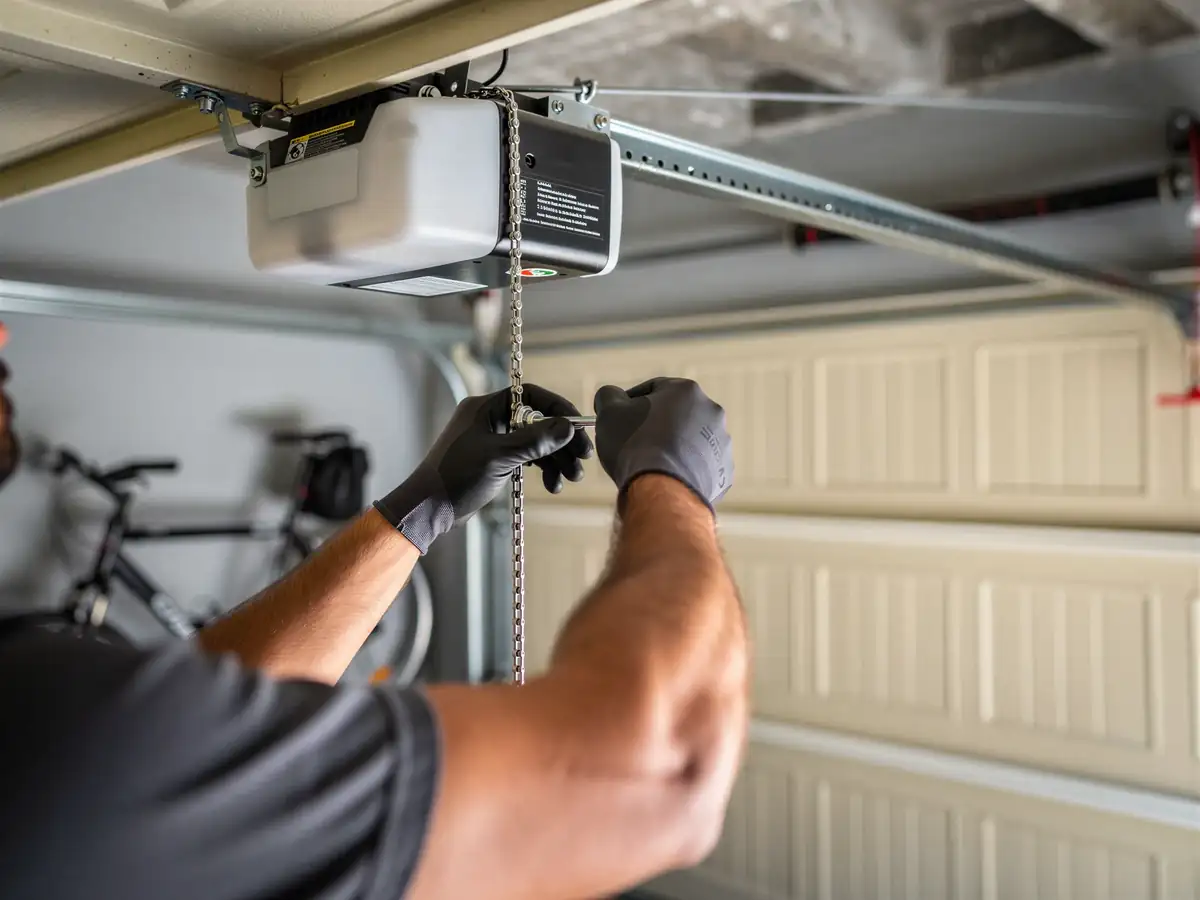
A technician adjusts the chain on a garage door opener.

Opener Repair

Opener repair for Chesterfield homes built 1947-2011, where cold winters and aging drive systems cause the same failures again and again. Same-area service.

Learn more
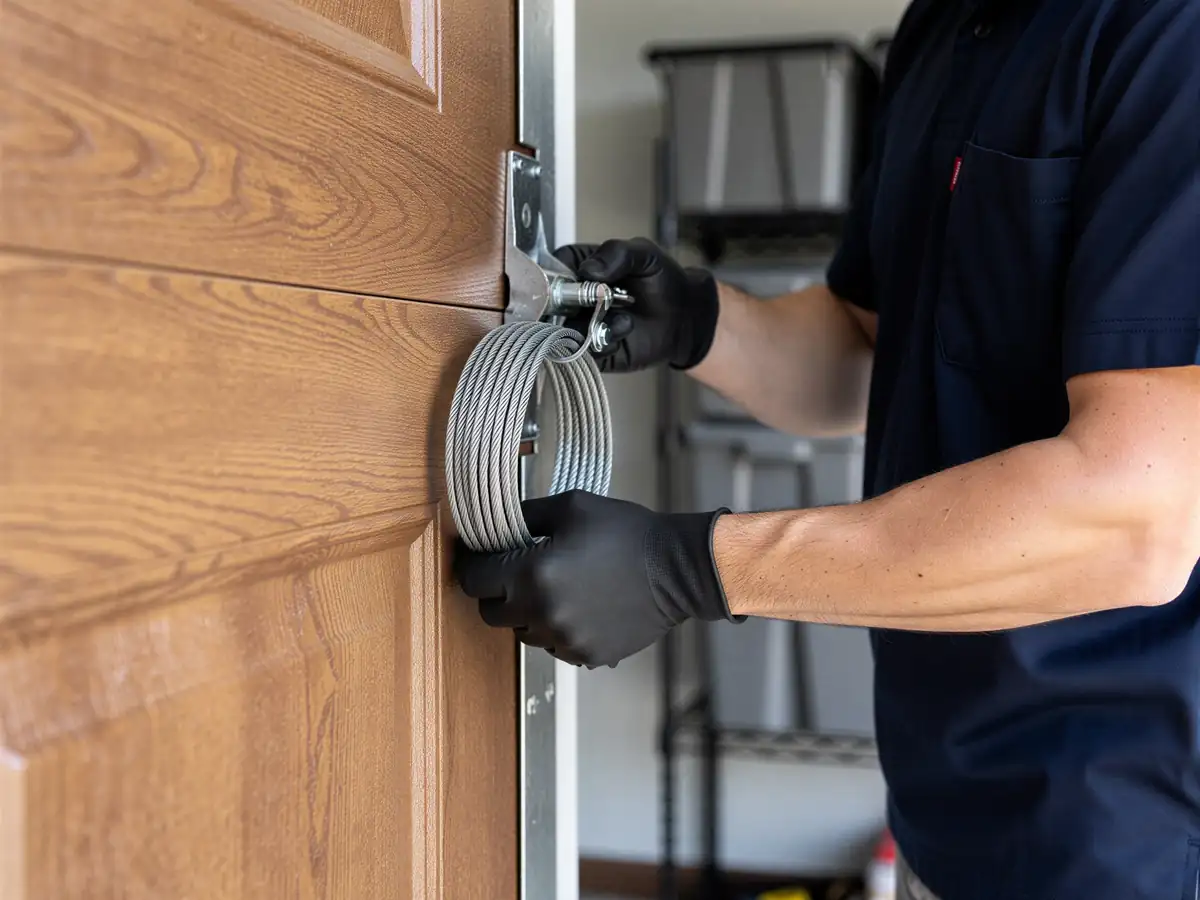
A technician wearing black gloves holds a coiled garage door cable next to a brown garage door.

Cable Repair

Cable repair for Chesterfield-area garage doors built mostly in the 1960s-70s, where cold winters and original hardware wear through lift cables fast.

Learn more
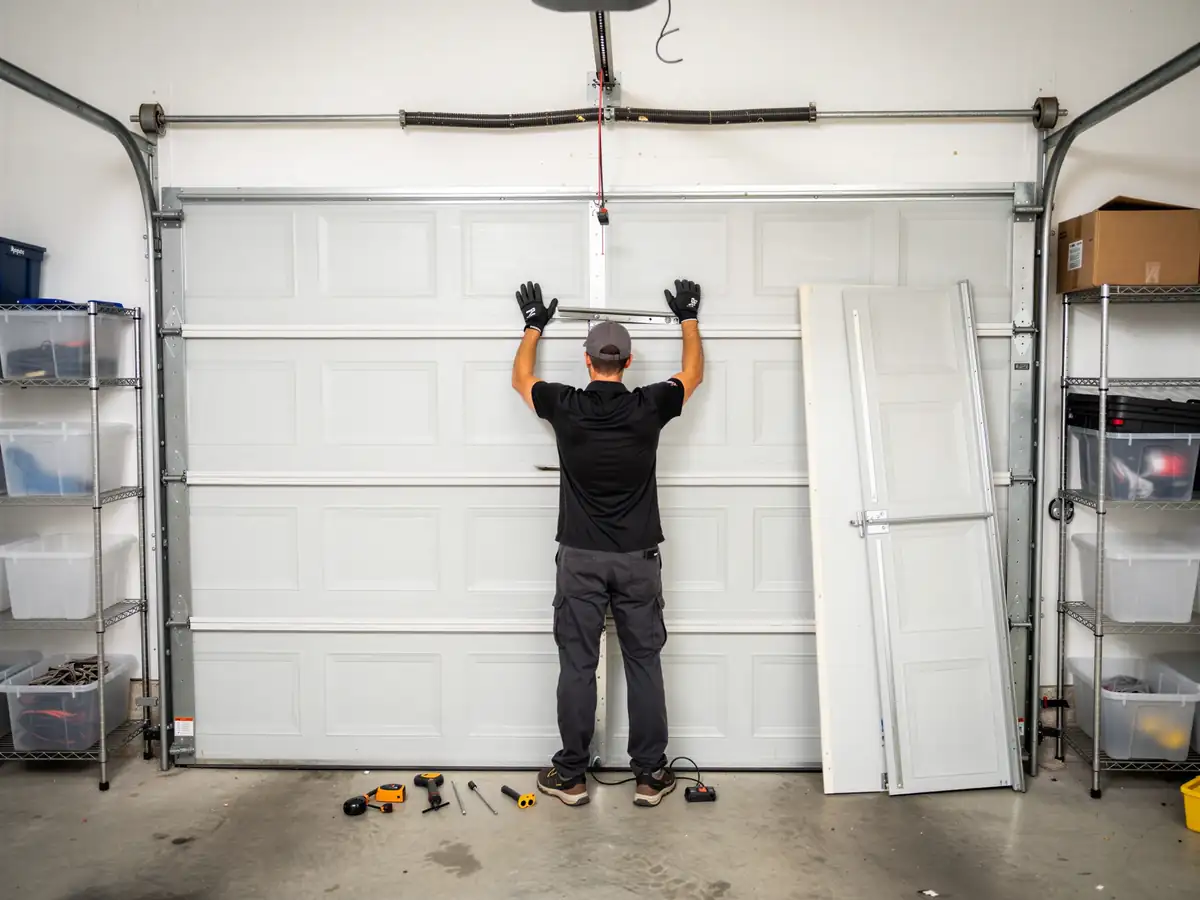
A technician installs a white garage door panel in a garage.

Panel Replacement

Panel damage is common on Chesterfield-area garage doors built in the 1960s and '70s. We match sections or replace the door outright, serving homes across the St. Louis area.

Learn more
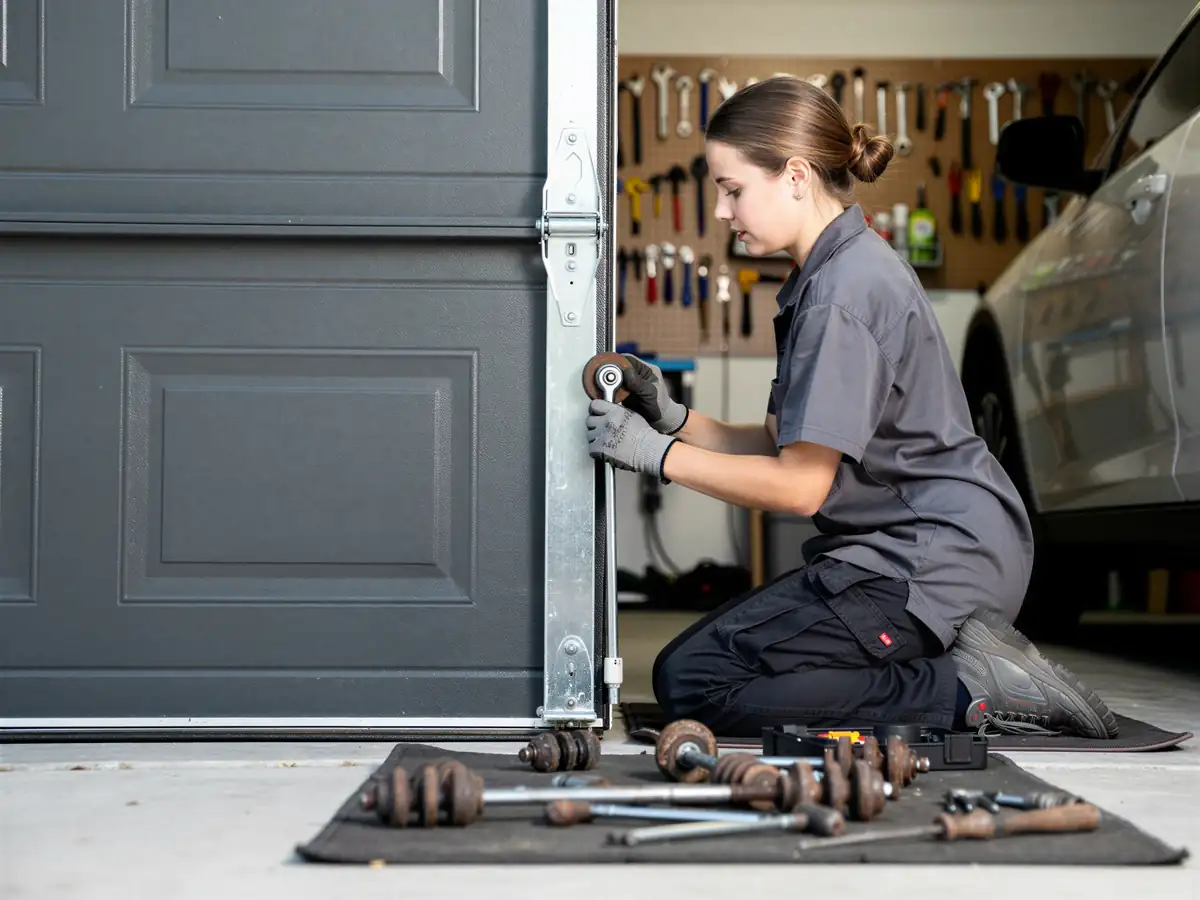
A technician kneels to work on a gray garage door roller and hinge.

Roller Replacement

Worn or cracked rollers on Chesterfield-era garage doors, explained: why 1960s-70s hardware fails in cold winters and what a proper roller swap involves.

Learn more
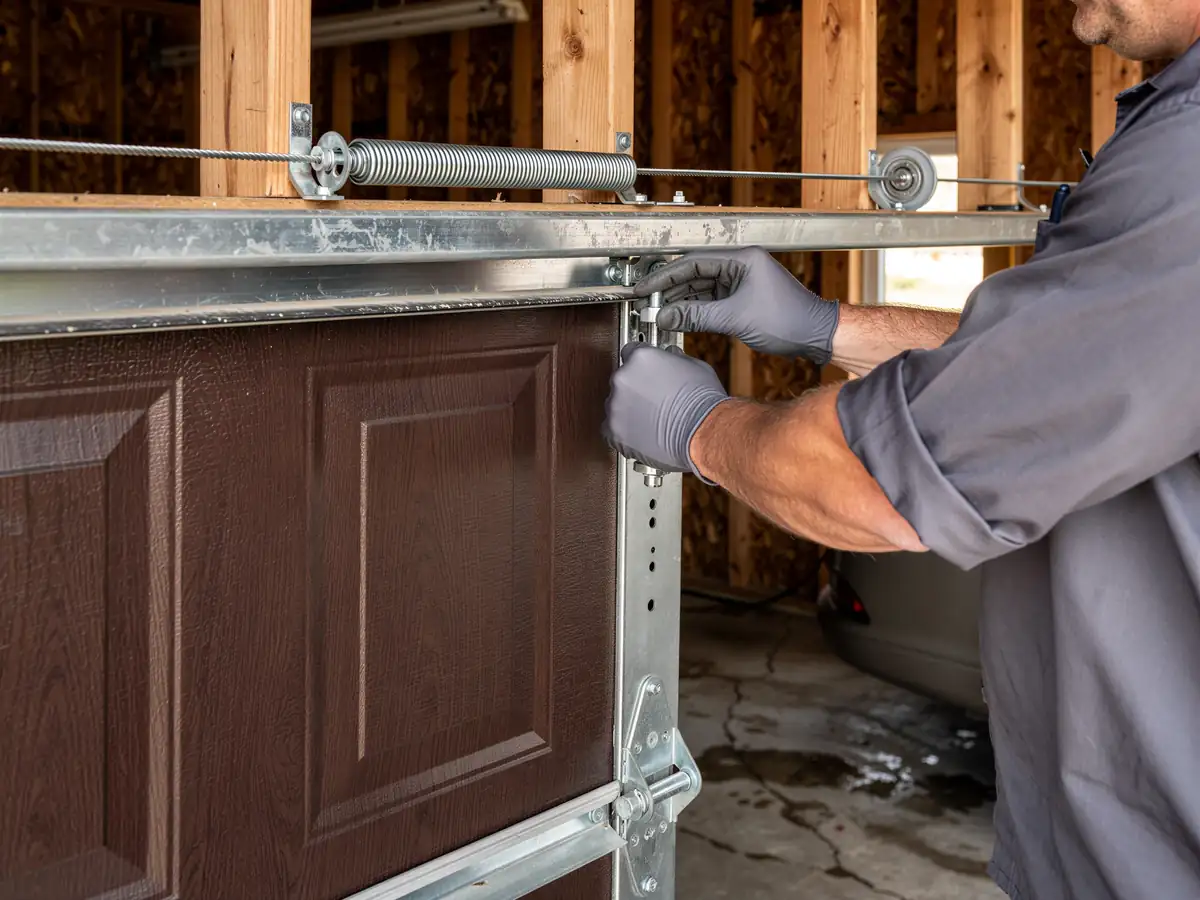
A technician wearing gloves adjusts a brown garage door with a spring and cable system.

Maintenance

Chesterfield homes built 1947-2011 run original hardware through cold winters. Maintenance tuned to this area's housing stock and climate band, not a generic checklist.

Learn more
Questions

Frequently asked

Straight answers about garage door repair in Chesterfield. Still unsure? Ask us directly.

Why did my spring break overnight and not during the day?

Steel springs lose some flex as the temperature drops, and overnight is usually when it drops the most. If the spring was already old or fatigued, a hard cold snap is often the final push. It's less about the cold causing damage and more about cold weather exposing wear that was already there.

Is it worth replacing just one spring on a double door?

On a double-spring system, we replace both at once since they wear down together and a mismatched pair strains the new one early. On an older single-spring setup, common in houses from the 1960s and 70s in this area, there's just the one to replace, which keeps that job smaller.

My door still opens with the broken spring, is it safe to keep using it?

No. Without spring tension, the opener or a person is lifting the full weight of the door with no support. That strains the opener, stresses the cables and track, and raises the risk of the door dropping. Treat it as out of service until the spring's replaced, even if it technically still moves.

Ready to get your garage door sorted?

Tell us what it’s doing and where you are in Chesterfield - we’ll take it from there.

Request a QuoteCall