What Can Go Wrong
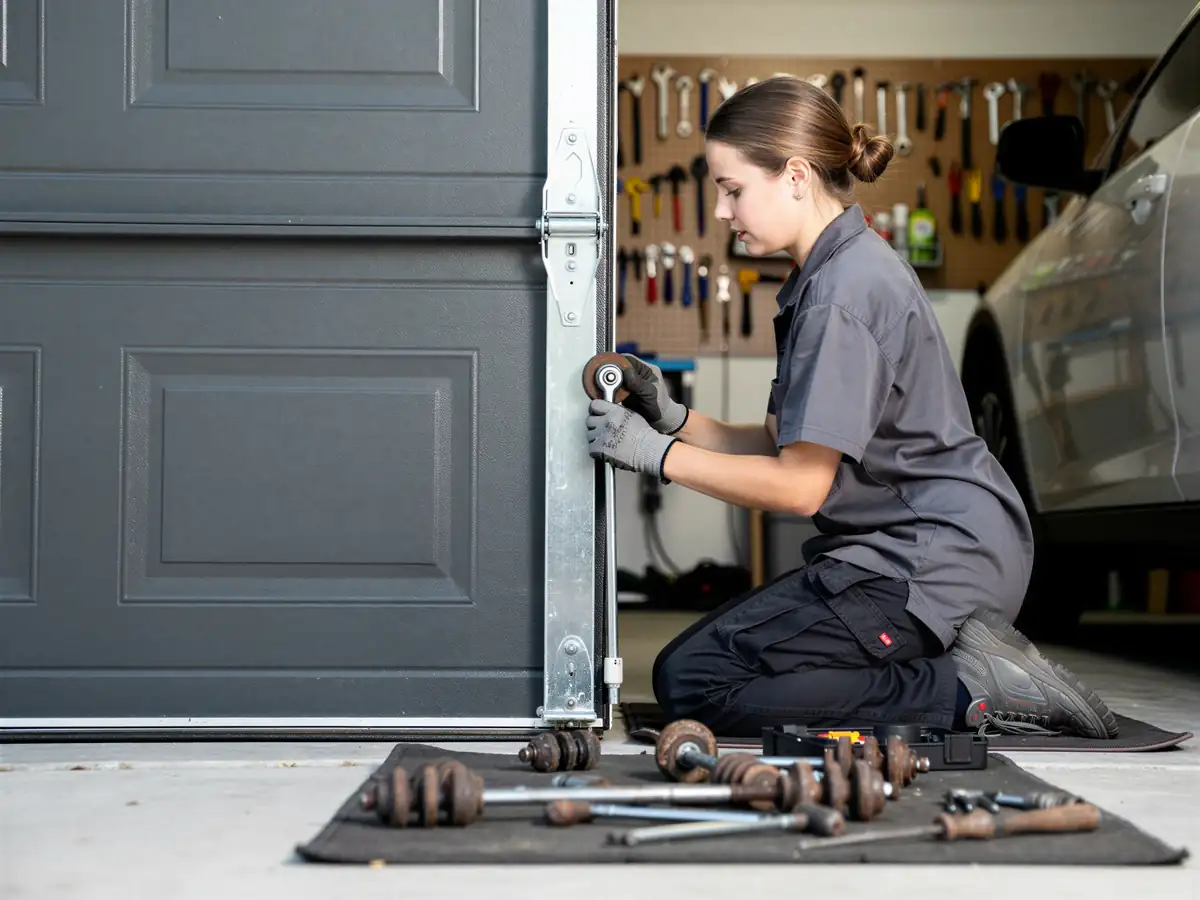
A roller that's past its life doesn't fail quietly. The most common thing we see is a cracked or chipped steel roller wheel that still spins but no longer rolls true, so the door jerks at that spot on the track every cycle. Left alone, that jerk puts side load on the roller stem, which can bend it, and a bent stem pulls the whole panel section slightly out of plane with the track. Once a roller actually comes off its stem or jams solid, the door can jump the track entirely - on a double door especially, that's enough to rack the section edge and crack the panel. Rollers at the bottom of the door take the worst of it because that's where road grit and winter de-icing residue from the driveway gets dragged into the track. We also see rust-frozen rollers on doors that sit unused for stretches, where the bearing seizes and the roller stops turning but keeps getting dragged along the track, flat-spotting the wheel.
What the Fix Involves
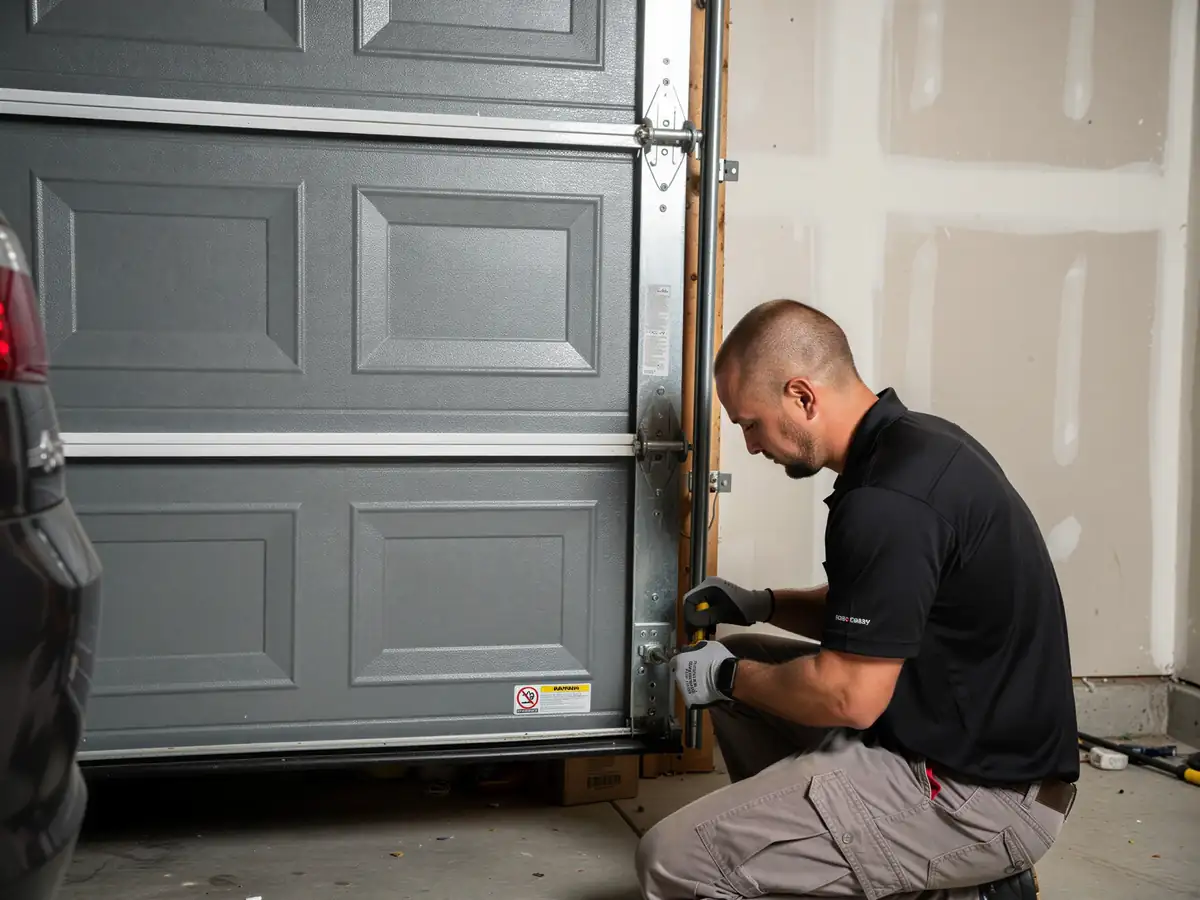
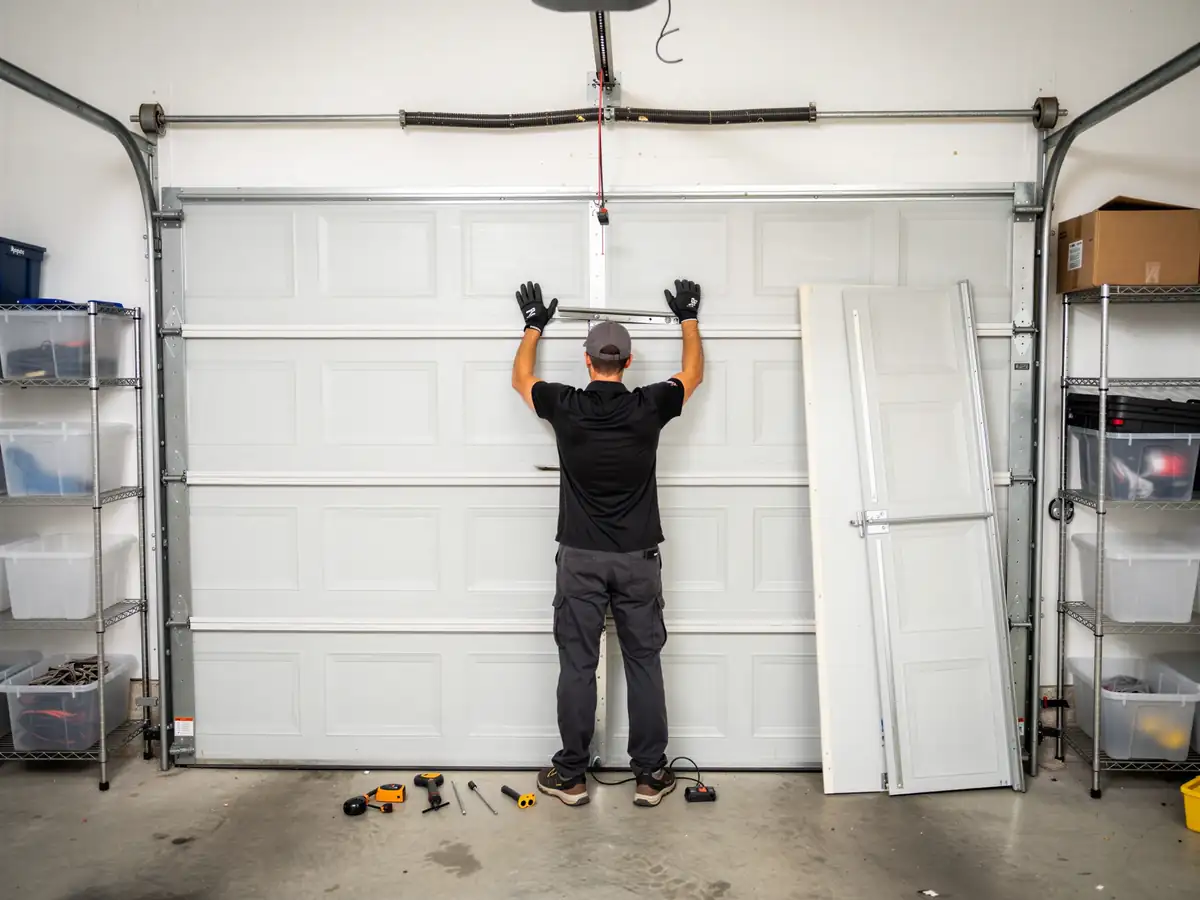
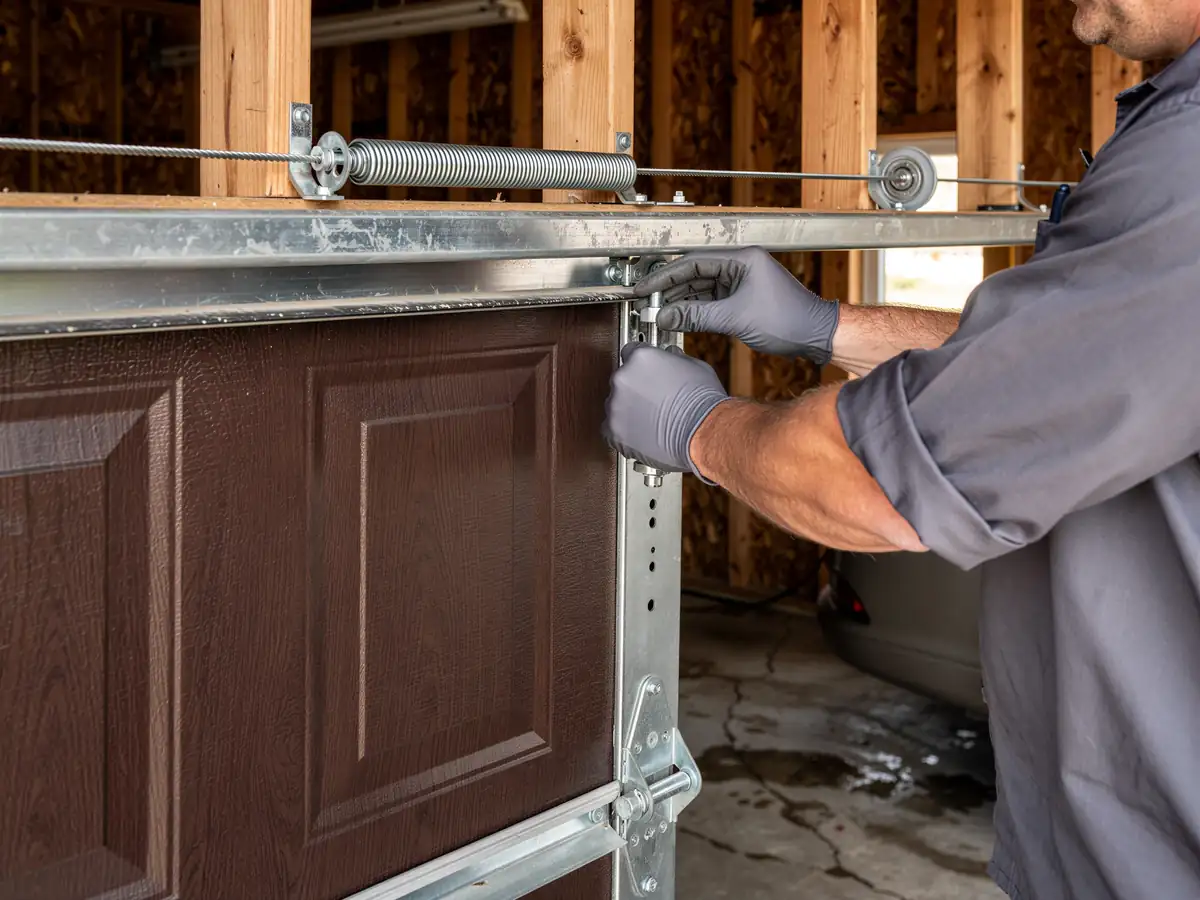
A roller replacement job means pulling the old rollers out of the track one at a time, never dropping the whole door off the track at once, and swapping in new ones while checking the track itself for the kind of wear grooves or bent sections that steel rollers leave behind over the house's original hardware life. If the track has taken damage from a seized or cracked roller, that section gets straightened or replaced, not just the roller - putting a new roller into a damaged track just repeats the failure in a year or two. We use nylon rollers with sealed bearings on these jobs because they run quieter and hold up better through the kind of seasonal swing this climate puts a garage door through. One thing worth saying plainly: if the rollers have already pulled a panel out of square or cracked a section, roller replacement alone won't fix that - at that point you're into panel or door replacement, and we'll tell you straight if that's where you are instead of selling you a roller job that won't hold.