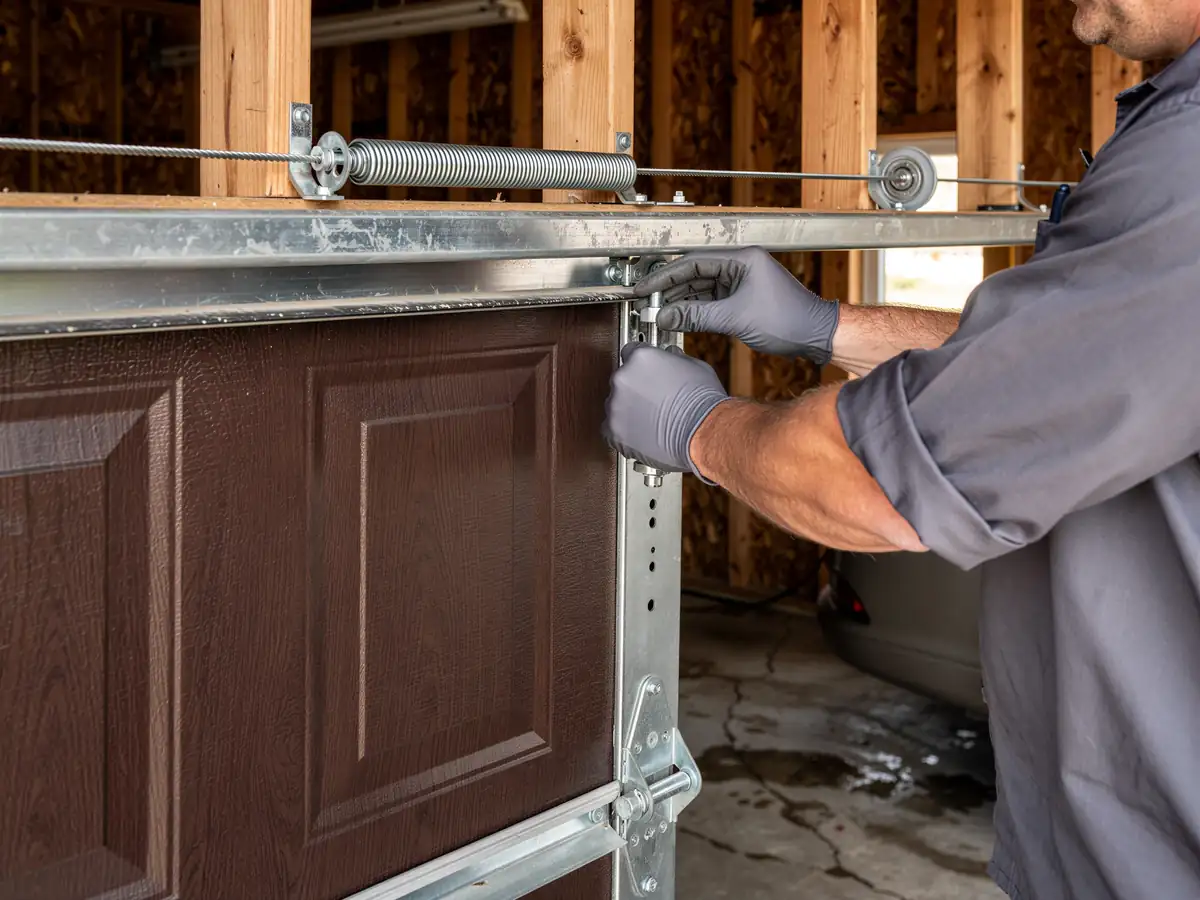
Roller Replacement for Webster Groves' 1950s Garage Doors
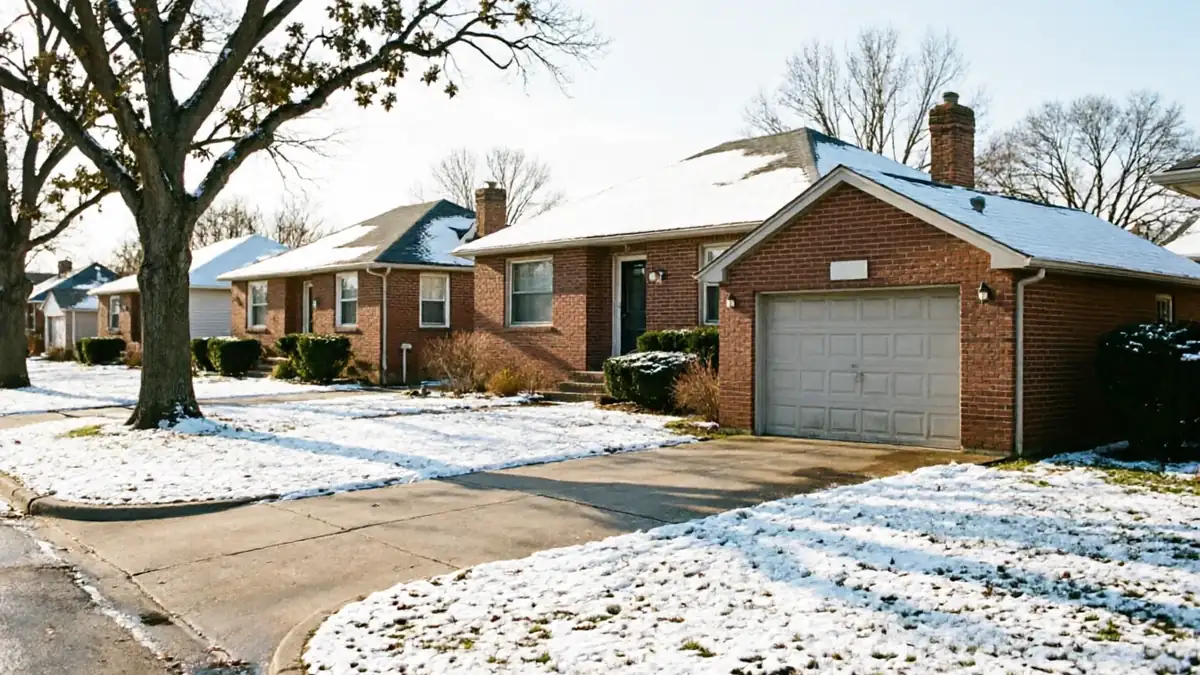
Webster Groves homes mostly went up around 1951, decades before Chesterfield's area median of 1969. That gap decides which rollers fit and how long the job takes.
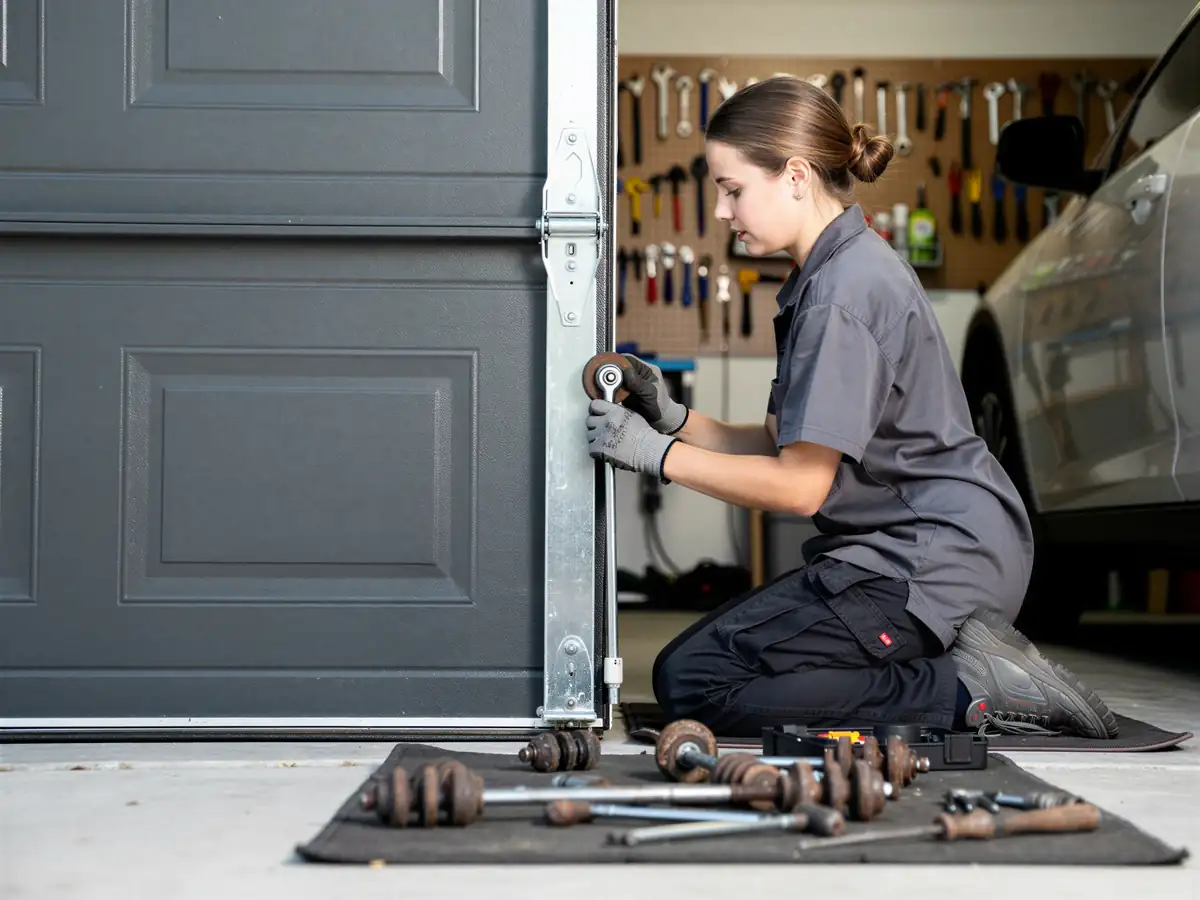
The median home in Webster Groves went up around 1951, a good eighteen years ahead of the 1969 median for the wider Chesterfield service area, and that gap shows up on the rail. Doors from that first postwar wave were hung on narrower track than what builders used once the 1960s and 70s stock (the bulk of what we see elsewhere, per the area's own numbers) came in. We carry both 2-inch and 3-inch rollers, in sealed-bearing nylon and galvanized steel, because a Webster Groves call can go either way depending on whether the original narrow track survived or got swapped out in a later remodel. What we don't carry is every odd rail width in every quantity. If a measurement comes back non-standard once we're on site, that can mean a short return trip rather than a same-visit swap. We'd rather tell you that up front than pretend every job closes in one stop. The truck stock is built around the two track widths we actually run into in this part of the service area, not a guess.
How Long It Takes
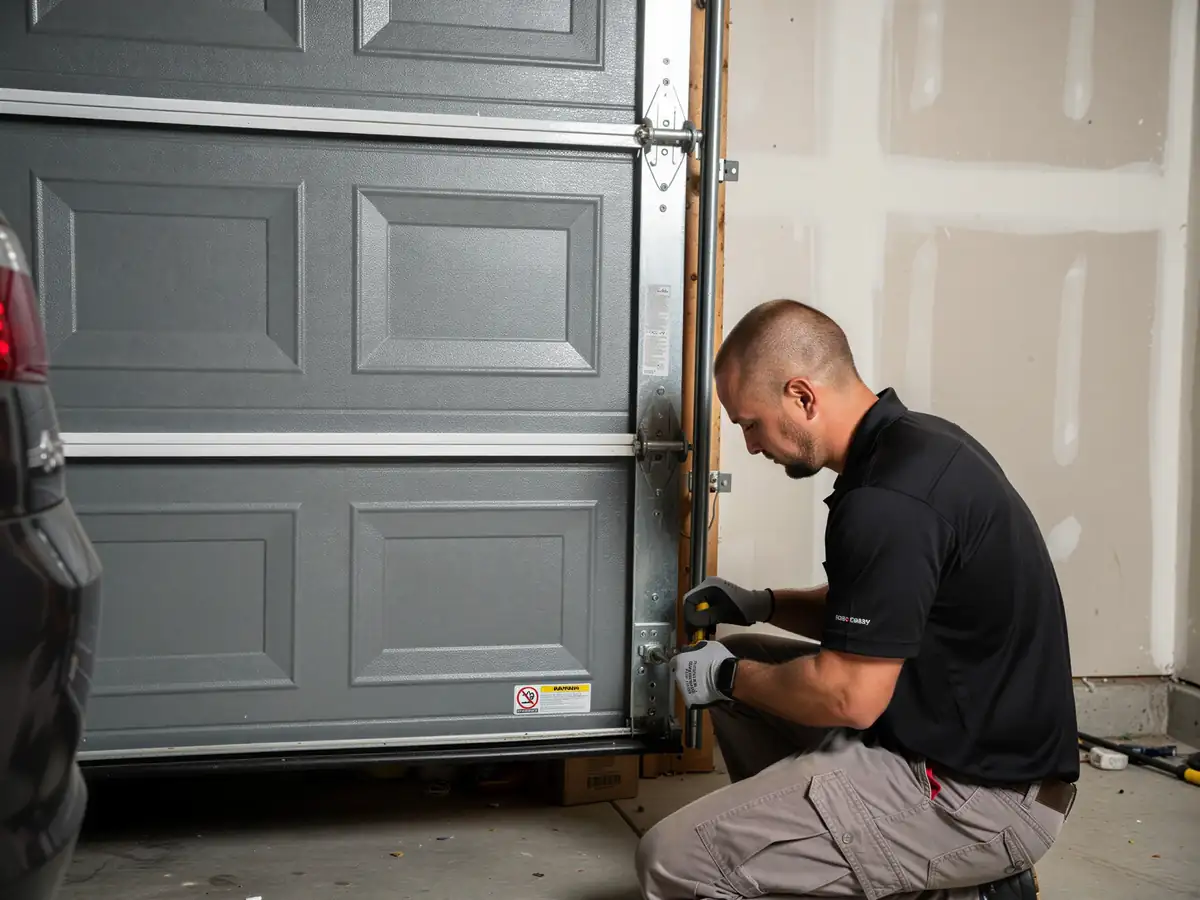
We run this job out of Chesterfield, about 13 miles off, and we build roller replacement into a single scheduled visit rather than treating it as a separate trip. Once we're on site, swapping a full set of rollers on a standard double door usually runs under an hour if the track is in decent shape and nothing else has failed alongside it. Where it slows down is the 1951-era housing stock: narrower track sometimes means the roller stems don't match our standard stock length, and fitting an undersized nylon roller into an old steel channel takes more adjustment than a straight like-for-like swap. We'd rather get the fit right than rush it and send you off with a door that rattles in six months.
The Symptom
The complaint we hear most from Webster Groves is grinding or a hard catch partway up the track, worse on cold mornings. That's not a coincidence. This region sits in a cold climate band, and open steel ball bearings from the original 1951 hardware pack with old grease that stiffens when the temperature drops. The door labors through that stiff section every time, wearing a flat spot into the roller wheel itself. Nylon rollers with sealed bearings don't suffer the same cold stiffening, which is why most owners on original postwar hardware end up switching roller type at replacement rather than buying back into steel. If your door only grinds in winter and runs quiet by summer, that's the pattern talking, not a coincidence of age.
Can You Do This Yourself
Rollers are one of the more approachable DIY jobs on a garage door, but Webster Groves' older stock raises the stakes a bit. On original 1951-era track, the roller and the track wear as a pair, so a mismatched replacement roller can bind in a channel that's been shaped by decades of the old wheel riding it. If your door is on newer standard track from a later remodel, a careful owner with the door unplugged and the spring left alone can usually manage a roller swap safely. If you're not sure which track you have, or the door is still under tension and you're uneasy around the springs, that's where we'd rather you call than guess.
How it works
From “it’s stuck” to “it’s fixed”
01
Tell us what’s wrong
Describe the symptom - won’t open, loud bang, opener runs but the door won’t move.
02
On-site diagnosis
A technician tests the door under power and by hand and finds what actually failed.
03
Clear, up-front plan
You get the fix that’s needed and what drives the cost - before any work starts.
04
Repaired & tested
The repair is done, the door is set true and tested, and the work area left clean.
Not sure which repair your door needs in Chesterfield, MO? Describe what it’s doing - every job starts with a diagnosis.
Original steel ball-bearing rollers common on Webster Groves homes built around 1951 use grease that stiffens as temperatures drop. The door has to push through that stiff spot, which wears a flat section into the roller and shows up as grinding, worse on cold mornings and quieter once things warm up.
Do you stock rollers for older, narrower track?
We carry both 2-inch and 3-inch rollers in steel and sealed nylon, which covers most of what we see on Webster Groves' postwar housing stock. Occasionally a rail measures out non-standard once we're on site, and that can mean a short follow-up visit rather than a same-day fix.
Is it worth replacing steel rollers with nylon ones?
On original 1951-era hardware in a cold climate like this one, yes, most owners find it worth it. Sealed nylon bearings don't stiffen with cold the way open steel bearings do, so the grinding and hard catches that come with winter mostly go away once they're swapped.
How far out do you travel for a roller job?
We run out of Chesterfield, about 13 miles from Webster Groves, and we schedule roller replacement as a single visit rather than a separate dispatch, so there's no extra wait built into the distance.
Ready to get your garage door sorted?
Tell us what it’s doing and where you are in Chesterfield - we’ll take it from there.